Skip to content
KlyoChat
Industry Use CasesTOFinformational

15 Donor Engagement Ideas for Nonprofits With Small Teams

15 donor engagement automation ideas a small nonprofit team can run without extra headcount — from thank-you speed to segmented WhatsApp updates.

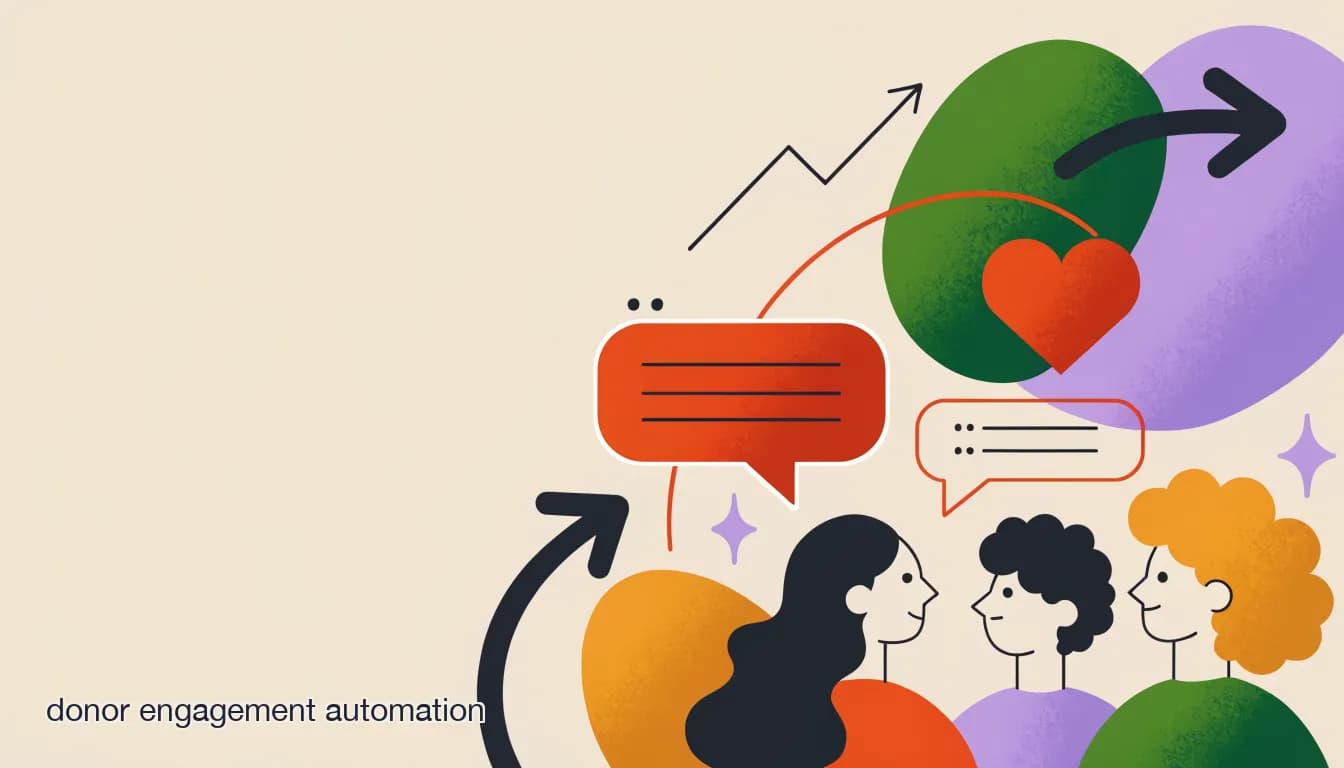
Flat illustration of a donor engagement journey with chat bubbles, a heart icon, and a small nonprofit team, on 15 Donor Engagement Ideas for Nonprofits With Small Teams

KlyoChat Team

Updated February 2026 · 6 min read

The short answer

Donor engagement automation ideas that work for small teams: fast automated thank-yous, segmented WhatsApp or social updates on where gifts went, comment-to-DM funnels on fundraising posts, and shared-inbox triage so no donor question sits unanswered. Automate the repetitive layer; keep the personal touch for anything above a threshold gift or a first-time donor.

On this page

Donor retention studies year after year point to the same culprit: donors who don't hear back after giving, or who hear back too late, don't give again. A small team can't personally call every donor, but donor engagement automation closes most of that gap without pretending to be a person when it shouldn't.

Here are 15 practical ideas, grouped by what they actually do, that a one- or two-person communications function can realistically run.

How can automation speed up the donor thank-you?

Speed is the single biggest lever in donor retention, and it's the easiest to automate honestly — an instant, factual acknowledgment isn't fake, it's just fast.

  • 1. Auto-send an acknowledgment within minutes of any online gift, with the amount and a receipt.
  • 2. Trigger a personal follow-up task for staff on gifts above a set threshold (e.g., $250+).
  • 3. Send a short WhatsApp or social 'thank you, here's what happens next' message same-day, not same-week.
  • 4. Flag first-time donors for a warmer, human-written note within 48 hours.

Automate the receipt, not the relationship

An instant acknowledgment is good practice. A generic 'thank you' standing in for a real conversation with a major or repeat donor is not — set a threshold above which a human always follows up.

What donor updates can run on a schedule?

Donors who never hear what their gift did rarely give twice. Automated, segmented updates keep that loop closed without a staffer manually emailing each donor.

  • 5. Quarterly 'here's what your support funded' broadcast, segmented by campaign donated to.
  • 6. Milestone updates when a fundraising goal is hit (50%, 100%) sent to everyone who contributed.
  • 7. Annual impact summary personalized with the donor's own giving total.
  • 8. Event photos and recap sent to donors who couldn't attend.

How do comment-to-DM funnels drive engagement, not just donations?

Not every comment on a fundraising post is ready to give — some are asking a question, some want to volunteer instead. A funnel routes each intent correctly instead of treating every comment as a donation lead.

CommentAutomated response
'DONATE'DM with a direct giving link
'How can I help?'DM with volunteer sign-up + donate option
'Where does this go?'DM with a short impact summary
Anything else / a complaintRouted to a human in the shared inbox

What else should a small team automate?

9. Birthday or giving-anniversary messages to long-time donors. 10. Event RSVP confirmations with calendar links. 11. Volunteer shift reminders 24 hours out. 12. Recurring-gift lapse alerts to staff before a card expires. 13. A saved-reply library for the ten most common donor questions. 14. Automated survey after a campaign closes. 15. A shared inbox triage rule that flags any message containing 'refund,' 'cancel,' or 'complaint' for immediate human review.

Never automate a refund or cancellation decision

Route anything involving money moving back to a donor straight to a human. This is one place where an automated 'sure, no problem' can create real financial and trust issues.

How does KlyoChat support these donor engagement flows?

KlyoChat's broadcasts support dynamic segments, so quarterly impact updates and campaign milestones go only to the donors who actually gave to that campaign. Comment-to-DM funnels handle the routing above automatically, and the shared team inbox keeps human follow-ups — thank-yous, complaints, major-gift conversations — visible and assigned.

AI agents, included from the Pro plan ($49/mo), can answer 'where does my donation go?' directly from your own impact content. Start with a 7-day free trial, no credit card required.
Frequently asked questions

What is donor engagement automation?

Using tools like auto-replies, segmented broadcasts, and comment-to-DM funnels to handle the repetitive parts of donor communication — thank-yous, updates, FAQs — so a small team can focus its limited time on personal outreach that actually needs a human.

Should thank-you messages be automated?

The instant acknowledgment/receipt, yes. The personal, warm thank-you — especially for first-time or major donors — should stay human. Set a gift threshold above which a real person always follows up.

How fast should a nonprofit thank a donor?

As close to instant as possible for the acknowledgment, and within 24-48 hours for a personal follow-up. Speed is one of the strongest, most controllable levers in donor retention.

Can comment-to-DM funnels increase donations?

They reduce friction and missed opportunities rather than manufacturing new intent — someone who comments 'DONATE' gets the link instantly instead of waiting hours for a staffer to notice the comment.

What donor messages should never be automated?

Complaints, refund or cancellation requests, and any major-gift or first-time-donor conversation. These need a human's judgment and warmth.

Is segmented broadcasting worth it for a small nonprofit?

Yes — sending a campaign update only to donors who gave to that campaign is more relevant and less likely to feel like spam than blasting your entire list every time.

Does KlyoChat include AI agents for donor questions?

Yes, from the Pro plan ($49/month), trained on your own knowledge base so it can answer program- and impact-specific questions rather than generic replies.

How do I re-engage a lapsed donor without sounding pushy?

Acknowledge the gap plainly instead of guilt-tripping — a short 'it's been a while, here's what's changed since your last gift' message outperforms a generic ask. Keep it low-pressure, mention a specific program update, and make giving again a one-tap action rather than a multi-step form.

What's a good donor engagement cadence for a small nonprofit?

Most small teams do well with one or two touches a month outside active campaigns — an impact update or a quick check-in — plus more frequent messaging during a specific appeal. Sending too often trains donors to ignore you; sending too rarely means they forget why they gave.

Can birthday or anniversary messages actually improve donor retention?

Yes, in a small but real way. A giving-anniversary or birthday note costs almost nothing to automate and signals that a donor is more than a transaction. It won't fix a weak engagement strategy on its own, but paired with fast thank-yous and segmented updates, it adds up.

How do I personalize a donor update without a big database?

Segment by the one piece of data you already have — which campaign someone gave to — and reference that specifically instead of a generic 'thank you for your support.' Even basic personalization (campaign, gift range, first-time vs. repeat) reads as far more genuine than a name merge alone.

Should volunteer coordination be part of donor engagement automation?

They're related but distinct — keep the lists and messaging separate, since a donor didn't sign up for shift reminders and a volunteer didn't sign up for donation asks. The same shared inbox and broadcast tool can run both, just as separate segments with separate content.

What channels work best for donor engagement — email, WhatsApp, or social?

Use email for longer, archival content like annual reports and receipts, and WhatsApp or social DM for anything time-sensitive or personal — a thank-you, a milestone update, an event reminder. Most small nonprofits get the best results running both, not picking one over the other.

How much does donor engagement automation cost for a small nonprofit?

KlyoChat's Basic plan starts at $19/month for core inbox and broadcast automation; AI agents for answering donor questions are included from Pro at $49/month. A 7-day free trial with no credit card lets a small team test segmented broadcasts and comment-to-DM funnels before committing budget.

How do I measure whether donor engagement automation is working?

Track repeat-gift rate, response time to first messages, and how many comment-to-DM interactions turn into a donation or reply, rather than just messages sent. A rising repeat-gift rate after adding faster thank-yous and segmented updates is the clearest signal the automation is doing its job.

donor engagement automationdonor engagement ideasnonprofit whatsapp broadcastnonprofit social media automationfundraising dm automationsmall nonprofit fundraising

Automate the routine, keep the personal touch

Start free trial — no credit card. Segment updates, speed up thank-yous, and route anything sensitive to a human. https://app.klyochat.com/signup