An Instagram lead magnet DM funnel turns a free resource — a guide, a checklist, a template, a discount code — into a repeatable system that delivers the asset, captures contact details, and starts a real conversation, all inside the direct message thread. Instead of dropping a link in your bio and hoping people dig for it, you let a comment or a keyword trigger the whole sequence: someone comments the word you chose, a DM lands in their inbox seconds later, the freebie is in their hands, and you have permission to follow up. That is the entire promise of the lead magnet instagram play, and done well it is one of the highest-intent ways to grow an audience you actually own.
This guide walks the full funnel in order: the trigger that starts it, the message that delivers the asset, the opt-in that turns a follower into a contact, the qualifying questions that separate buyers from browsers, and the nurture-to-offer path that turns interest into revenue. We will be specific about copy, give you sample DMs you can adapt, and flag the limits honestly — including one that matters: KlyoChat does not send email, so when you collect an address inside a DM you hand it off to your email tool. We build KlyoChat, so we will tell you exactly where the line is.
If you have already read our general comment-to-DM funnel walkthrough or our listicle of automation triggers, this is the lead-magnet-specific companion. The mechanics overlap, but the goal here is narrower and more commercial: deliver a freebie, earn an opt-in, and move that person toward a purchase without being pushy. Everything below is organized around that single outcome.
What is an Instagram lead magnet DM funnel, exactly?
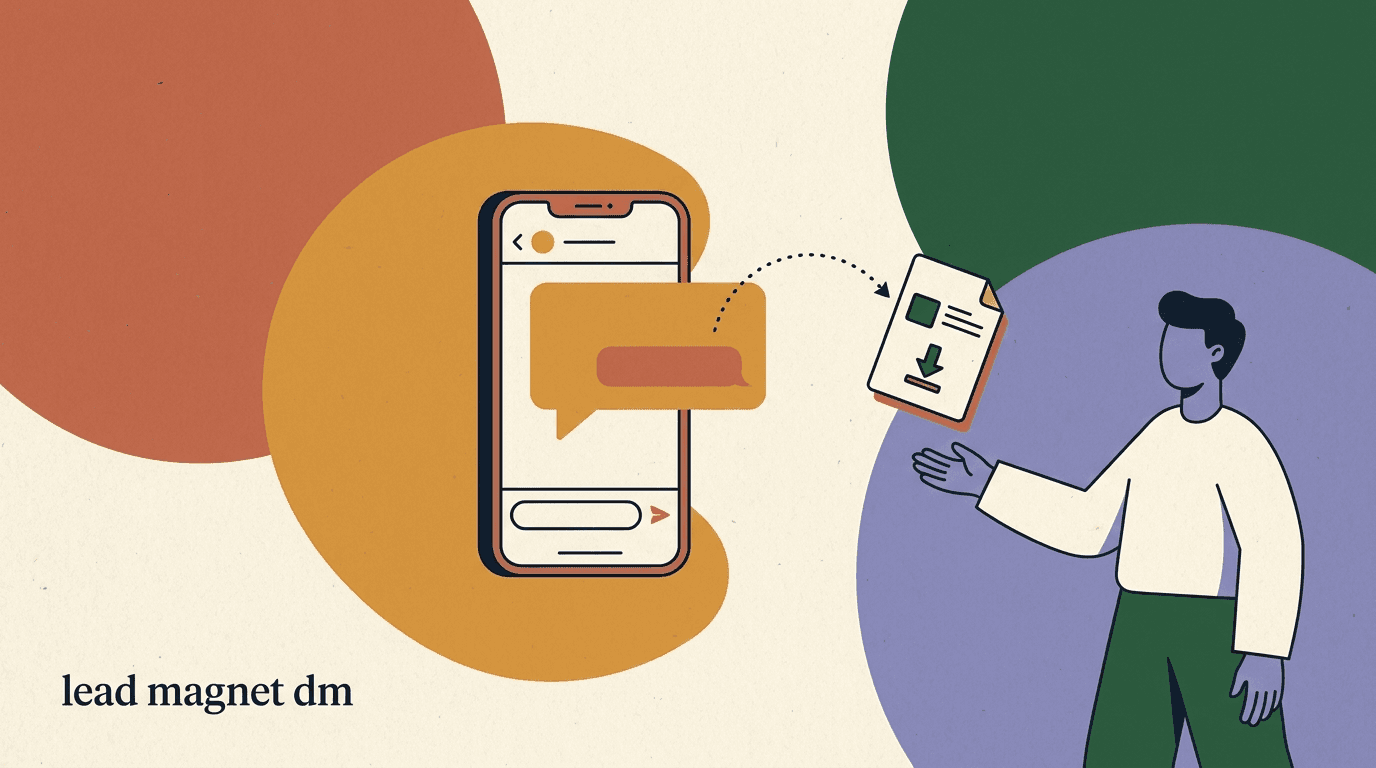
A lead magnet is anything valuable you give away in exchange for a small commitment — usually attention and contact details. On Instagram, the DM is the ideal place to deliver it because the platform rewards comments and conversations, and because a DM is a private, one-to-one channel where a link does not get buried. A lead magnet DM funnel is simply the automated path from a public trigger to a private delivery to a captured contact.
The funnel has four jobs, and they happen in sequence. First, it gets attention and an action — a comment or a keyword. Second, it delivers the asset so the person gets what you promised immediately. Third, it captures the opt-in, because a download with no follow-up is a gift, not a funnel. Fourth, it qualifies and nurtures, so the people most likely to buy get moved toward your offer while everyone else still leaves happy.
What makes this different from a generic auto-reply is intent. People who comment a keyword to get a specific resource are telling you what they care about. That single signal — they wanted the budgeting checklist, or the launch template, or the meal plan — is worth more than a like, because it maps to a problem you can solve and, eventually, sell into.
| Funnel stage | What happens | Why it matters |
|---|---|---|
| Trigger | Comment or keyword starts the DM | High-intent action, not a passive like |
| Deliver | Freebie sent inside the DM | Instant value builds trust |
| Opt-in | Email captured for follow-up | Turns a follower into a contact you own |
| Qualify | One or two short questions | Separates buyers from browsers |
| Nurture | Value then a relevant offer | Converts interest to revenue |
Own the relationship, do not rent it
Followers belong to Instagram. An email address — captured with consent inside the DM and stored in your email tool — belongs to you. The whole point of the opt-in step is to move people from a platform you rent to a list you own.
Why deliver a lead magnet in the DM instead of the bio link?
The bio link is a parking spot. It works for people who are already motivated enough to leave the comments, tap your profile, find the link, and follow it to a landing page. That is a lot of steps, and every step loses people. The DM funnel collapses all of it into one action the person takes without leaving the post they are already looking at.
There is also a relationship advantage. A landing page is a transaction; a DM is a conversation. When the asset arrives in a thread, you can immediately ask a follow-up question, gauge interest, and answer objections in real time or with automation. The medium itself invites a back-and-forth that a static page never will, and that back-and-forth is where qualifying and nurturing happen naturally.
Finally, the trigger doubles as engagement. Every comment that starts your funnel is a public signal to the algorithm that the post is worth showing to more people. A bio link generates no comments. A keyword prompt generates many, which means the post that hosts your lead magnet tends to reach further than a post that simply says link in bio.
Two paths to the same freebie
- Bio-link path
- See post → tap profile → find link → open page → scroll → submit form → wait for email
- DM funnel path
- Comment one word → DM arrives with the freebie → reply with email → done
How do you choose a lead magnet worth opting in for?
The funnel mechanics only matter if the asset is good enough that people want it. A weak lead magnet produces a long list of people who never open your follow-ups. The test is simple: would someone in your audience happily trade their email for this, and does it sit right next to something you sell?
The best lead magnets are narrow, fast to consume, and adjacent to your paid offer. A checklist that solves one specific problem beats a 40-page ebook nobody finishes. A swipe file beats a vague guide. A discount code beats a newsletter signup. The closer the freebie is to the thing you charge for, the more naturally the nurture-to-offer path will flow later.
- Checklists and cheat sheets — fast to deliver, easy to consume, high perceived value.
- Templates and swipe files — useful immediately and tied to a workflow you can sell into.
- Mini guides or one-page playbooks — narrow enough to finish in five minutes.
- Discount or early-access codes — work well for product brands and creators with a store.
- Quizzes or calculators — generate a result that doubles as a qualifying signal.
Match the magnet to the money
If you sell a coaching program on launching products, give away a launch-week checklist — not a generic productivity PDF. When the freebie is a slice of the paid offer, the person who wanted the freebie is, by definition, a warm lead for the offer.
How do you set up the trigger that starts the funnel?
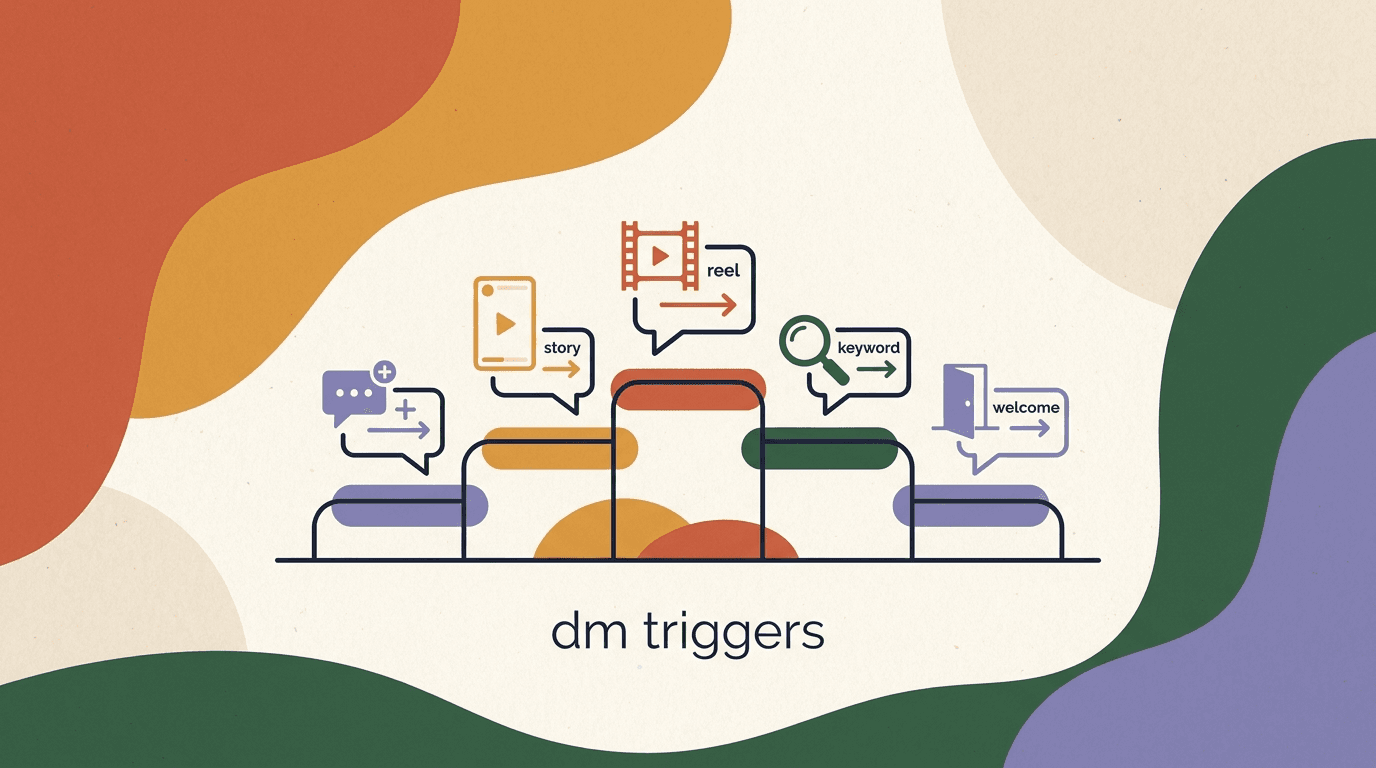
The trigger is the public action that opens the DM. On Instagram you have two practical options that work together: a comment-to-DM trigger on a specific post or Reel, and a keyword trigger that listens for a word in comments or in DMs. For a lead magnet, the comment-to-DM trigger is usually the headline mechanism, with a keyword as the word people comment.
Pick a keyword that is short, easy to spell, and unmistakable. One word is better than a phrase. Make it relevant to the asset so the comment itself markets the freebie to everyone scrolling: a word like CHECKLIST or LAUNCH or GUIDE tells other viewers exactly what they will get if they comment it too.
- Choose the post and the keywordPick the Reel or post that will host the offer, and choose one clean keyword people will comment to get the freebie. Put the keyword in the caption and say it out loud in the video.
- Set the comment-to-DM triggerConfigure the funnel so that any comment containing your keyword on that post fires a DM. In KlyoChat this is a no-code flow: pick the post, set the keyword, choose the message that goes out.
- Add a public comment reply (optional but smart)Auto-reply to the comment publicly with a friendly nudge like Check your DMs. This confirms the system worked and pulls more comments from people watching.
Respect Meta's rules and the 24-hour window
Instagram automation runs on Meta's Messenger API, which allows a standard message window of 24 hours after a user's last interaction. Deliver the asset and capture the opt-in inside that window. After 24 hours you are limited in what you can send, so do not design a funnel that depends on a free-form message two days later.
What should the delivery DM actually say?
The first DM has one job: deliver the freebie fast and confirm the person is in the right place. Do not stack three asks into the opening message. Give them what they came for, then transition to the opt-in. If you make people jump through a hoop before they get the asset, a chunk of them leave.
Keep the tone human and the message short. Lead with the deliverable, include the link or the file, and add one line that sets up the next step. The opt-in ask can come immediately after, or in the same message if you keep it light. Below is a delivery message you can adapt — note how it gives value first and asks second.
Deliver first, ask second
The fastest way to lose trust is to gate the freebie behind the email before you have given anything. Hand over the asset, prove you deliver, and then make the opt-in feel like a bonus rather than a toll.
Sample delivery DM
- Line 1
- Hey! Thanks for the comment — here is the Launch Week Checklist I promised:
- Line 2
- [link to the asset]
- Line 3
- Want me to send the bonus templates too? Drop the email you want them at and I will fire them over.
- Tone
- Warm, one deliverable, one clear next step
How do you capture the opt-in inside the DM?
This is the step that turns a follower into a contact you own, and it is where the honest limit comes in. KlyoChat is a unified inbox and automation layer — it triggers the DM, delivers the asset, and asks for the email — but KlyoChat does not have native email. So the play is: capture the address in the DM, then hand it off to your email platform, where the real nurture sequence lives.
There are two ways to capture. The simplest is to ask the person to type their email into the DM, then your flow stores it as a field or tag on that contact, and you export or sync it to your email tool. The cleaner long-term option is to send a link to a short hosted form or your email tool's landing page, so the opt-in is logged with proper consent directly in the system that will email them. Both are legitimate; the form-link route keeps your compliance tidy and your data in one place.
| Capture method | How it works | Best when |
|---|---|---|
| Email typed in DM | User types address; flow saves it as a field/tag, you sync to email tool | Speed matters and volume is moderate |
| Link to opt-in form | DM sends a link to your email tool's form or landing page | You want clean consent and one source of truth |
| Link to lead magnet gate | Freebie sits behind a form that captures the email on download | The asset itself can justify a form step |
Be honest: KlyoChat does not send the emails
KlyoChat captures the email inside the DM and can tag the contact, but the nurture emails are sent by your email platform. Plan the handoff up front — decide whether you are exporting addresses, syncing via your email tool's form, or using an integration — so leads do not pile up uncontacted.
Where does the email handoff actually happen?
Because the email lives in your email tool, the handoff is the connective tissue of the whole funnel. Get it wrong and you collect a beautiful list that never receives a single message. There are three common ways to bridge the DM to the inbox, in rough order of effort.
The lowest-effort version is periodic export: your DM contacts with captured emails get exported to a CSV and imported into your email platform on a schedule. It works, but there is lag, and lag kills lead-magnet warmth. The middle option is to skip storing the email in the DM at all and send people to your email tool's own form via a link in the DM, so the address is captured natively where the emails will be sent. The most automated option, if your email tool supports it, is to connect the two systems so a captured email or a tag flows over without manual steps.
- Decide your source of truthYour email tool should hold the canonical list. Whatever you capture in the DM is a feeder into it, not a parallel database you forget about.
- Choose the bridgePick export, a form link in the DM, or a direct connection. For warmth, a form link or a live connection beats a weekly CSV.
- Trigger the welcome email immediatelyThe moment the email lands in your email tool, fire the first nurture message while the freebie is still top of mind. Speed is the whole advantage of a DM funnel.
The DM is the front door, the email tool is the house
Think of KlyoChat as the channel that opens the conversation and collects consent, and your email platform as where the long-term relationship is nurtured. Each does what it is good at; the handoff is what makes the pair work.
How do you qualify the lead without killing the conversation?
Qualifying is the quiet superpower of a DM funnel. On a landing page you get an email and nothing else. In a DM you can ask one or two short questions that tell you whether this person is a hot prospect or a casual browser — and you can do it conversationally, so it never feels like a form.
The trick is to keep it to one or two questions, make them easy to answer (ideally tappable quick replies, not essays), and tie each answer to a useful next step. A good qualifying question does double duty: it segments the lead and it makes the freebie more relevant. If someone tells you they are launching next month versus someday, you now know exactly who to prioritize and what to say next.
- Ask about timing — are they acting now or just researching?
- Ask about the specific problem — which version of your offer fits them?
- Use quick-reply buttons so answering takes one tap, not a paragraph.
- Tag the contact based on the answer so segmentation carries into your email tool.
- Stop at two questions — a DM interrogation makes people ghost.
Sample qualifying DM
- Question
- Quick one so I send the right follow-ups — are you launching soon or still planning?
- Quick reply A
- Launching in the next 30 days
- Quick reply B
- Still in planning mode
- What you do with it
- Tag hot vs warm; route each to a different nurture track
What does the nurture-to-offer path look like?
Once the asset is delivered, the email is captured, and the lead is tagged, the nurture begins. This is where most of the actual revenue happens, and most of it happens by email rather than in the DM — both because email is built for sequences and because the 24-hour DM window limits how long you can keep messaging freely inside Instagram.
A simple nurture arc works: deliver value first, build a little trust, then make a clear, relevant offer. Do not jump from freebie to buy now in one breath. The person opted in for the checklist; earn the right to pitch by being useful for a message or two first. Because you qualified the lead, you can run different nurture tracks for hot and warm contacts and pace the offer accordingly.
| Step | Channel | Message intent |
|---|---|---|
| Welcome | Confirm the freebie, set expectations | |
| Value 1 | Teach something tied to the freebie | |
| Value 2 | Address the main objection or myth | |
| Soft offer | Introduce the paid offer as the next step | |
| Direct offer | Email + DM nudge | Clear call to buy with a reason to act now |
Let the qualifier set the pace
Hot leads who said they are acting now can reach the offer faster. Warm leads in planning mode need more value first. Use the tag from your qualifying question to branch the nurture rather than sending everyone the identical sequence.
A complete example funnel, end to end
Let's make it concrete with a single worked example so the pieces connect. Imagine a creator who sells a $200 course on launching a digital product. Their lead magnet is a one-page Launch Week Checklist. Here is the whole funnel in one view, from the Reel to the sale.
The Reel teaches three launch mistakes and ends with: comment LAUNCH and I will DM you my checklist. The comment-to-DM trigger fires on the keyword. The delivery DM hands over the checklist link and offers bonus templates in exchange for an email. The qualifying question asks whether they are launching soon. The email syncs to their email tool, which sends a four-message nurture that ends in a course offer, with a DM nudge inside the 24-hour window for the hottest leads.
Every piece earns the next
Notice how each stage is small and earns the next. The Reel earns the comment, the comment earns the DM, the DM earns the email, the email earns attention, and the nurture earns the sale. No single step over-asks, which is why the funnel converts.
Worked funnel: launch checklist to course sale
- Trigger
- Reel CTA: comment LAUNCH
- Deliver
- DM with checklist link, seconds later
- Opt-in
- Bonus templates in exchange for email, synced to email tool
- Qualify
- Launching soon or planning? — tag accordingly
- Nurture
- 4-email value-then-offer sequence ending in the $200 course
What mistakes break a lead magnet DM funnel?
Most failed lead magnet funnels fail for the same handful of reasons, and they are all fixable. Knowing them in advance saves you a launch that flops for a boring, avoidable reason.
The two biggest are a weak asset and a broken handoff. If the freebie is not genuinely useful, the list never opens your emails. If the email never makes it from the DM to your email tool, you have collected leads you cannot contact. Everything else is a tuning problem on top of those two foundations.
- Gating the freebie before delivering anything — give first, ask second.
- Asking for the email and then never moving it to your email tool.
- Designing a funnel that needs a free-form DM after the 24-hour window closes.
- Stacking too many questions and turning a friendly DM into a form.
- Choosing a keyword that is long, ambiguous, or hard to spell.
- Picking a generic lead magnet that does not connect to anything you sell.
A list you cannot email is not an asset
The single most common silent failure is captured emails that sit in a spreadsheet because the handoff to the email tool was never set up. Build the bridge to your email platform before you launch the funnel, not after the leads pile up.
How do you measure and improve the funnel?
Once it is live, treat the funnel as something you tune, not a set-and-forget machine. A few numbers tell you where it leaks. Track the comment-to-DM rate, the DM-to-opt-in rate, and the opt-in-to-sale rate, and you will know exactly which stage to fix.
If lots of people comment but few opt in, the delivery DM or the opt-in ask needs work. If they opt in but never buy, the nurture or the offer is the problem. If barely anyone comments, the Reel and the call to action are the bottleneck. Improve one stage at a time so you can see what moved the number.
| Metric | What it tells you | Fix if it is low |
|---|---|---|
| Comment-to-DM rate | Is the trigger CTA compelling? | Stronger Reel hook and clearer keyword prompt |
| DM-to-opt-in rate | Is the asset and ask working? | Better freebie, lighter opt-in ask, deliver first |
| Opt-in-to-sale rate | Is the nurture converting? | Tighter nurture, more relevant offer, better timing |
Change one variable at a time
Resist the urge to overhaul everything when results disappoint. Move one lever — the keyword, the delivery copy, the first nurture email — and watch its specific metric. Otherwise you will never know what actually worked.
How KlyoChat runs the Instagram side of this funnel
KlyoChat is the layer that handles the Instagram half of a lead magnet DM funnel. It is an AI-native, mobile-first unified inbox that connects Facebook, Instagram, Telegram, WhatsApp, TikTok, and X, so the DMs your funnel generates land in one place you can manage from your phone. The comment-to-DM and keyword triggers that start the funnel are built in, the delivery message is a no-code flow, and AI agents are included to handle the back-and-forth — answering follow-up questions, asking the qualifying question, and tagging the contact based on the answer.
Here is the honest boundary, stated plainly: KlyoChat does not send marketing email. It captures the email inside the DM and tags the contact, but the nurture sequence is sent by your email platform. So KlyoChat owns the trigger, the delivery, the opt-in capture, and the qualifying conversation; your email tool owns the long-term nurture. Plan the handoff between them and the funnel works end to end. We would rather tell you that up front than have you discover it after launch.
- Triggers, delivery, opt-in capture, and AI qualifying live in KlyoChat.
- AI agents are included — no separate AI add-on to switch on.
- Build the whole flow with no code and manage replies from your phone.
- Honest limit: no native email, so the nurture is sent by your email tool.
- Newer and smaller community than the largest incumbents — fewer third-party templates floating around, though our own template library covers the common funnels.
| Funnel job | Handled by KlyoChat | Handled by your email tool |
|---|---|---|
| Comment / keyword trigger | Yes | No |
| Deliver the freebie in DM | Yes | No |
| Capture the email opt-in | Yes (captures + tags) | Stores the list |
| Qualify with AI in the DM | Yes | No |
| Send the nurture sequence | No | Yes |
Try it on one post first
You do not need to commit your whole strategy to test this. Set up one comment-to-DM lead magnet on a single Reel during the free trial, watch the opt-ins land, and confirm the handoff to your email tool before you scale it across more posts.
KlyoChat plans at a glance
- Basic
- $19/mo — for a single creator getting started with comment-to-DM
- Pro
- $49/mo ($39 yearly) — all channels, custom AI agents, the everyday lead-magnet plan
- Business
- $129/mo — more seats, higher volume, API and integrations
- Trial
- 7-day free trial, no credit card required
How do you write the Reel or post that hosts the funnel?
The funnel can be flawless and still fail if the post that carries it does not earn the comment. The content is the top of the funnel, and on Instagram it does most of the heavy lifting. A lead magnet DM funnel lives or dies on whether the Reel makes the freebie feel worth a comment, so it is worth treating the content as a first-class part of the build rather than an afterthought you bolt the automation onto.
The structure that works is simple: hook, value, then a single clear call to action that names the keyword. The hook earns the watch, the value proves you know the subject, and the call to action tells people the exact word to comment and exactly what they get for it. Vagueness is the enemy here. Comment for more does nothing; comment LAUNCH and I will DM you my one-page checklist gives a precise instruction tied to a precise reward.
Say the keyword out loud in the video and put it in the caption, because people comment from both. Repeat the call to action once near the end rather than burying it, and keep the promised asset specific. A named, concrete freebie — a one-page checklist, a five-email swipe file, a 10 percent code — converts far better than a generic free guide, because the specificity itself signals that the thing is real and finite.
- Open with a hook tied to the freebie's problemThe first two seconds should name the pain your lead magnet solves, so the people who comment are the people who want exactly that asset.
- Deliver a little real value on cameraTeach one or two genuinely useful points. This proves the freebie is worth having and earns the trust needed for the comment and the opt-in.
- Close with one keyword call to actionName the keyword, name the reward, and say it once clearly. Put the same instruction in the caption so it works for silent viewers too.
One post, one keyword, one freebie
Resist offering three things in one Reel. A single keyword tied to a single specific freebie is easier to act on and easier to measure. Run separate posts for separate lead magnets rather than cramming choices into one.
How do you keep the funnel compliant and trustworthy?
Automation that ignores the rules gets accounts restricted, and a lead magnet funnel touches two sets of rules at once: Meta's platform policies and the basic expectations of consent that govern email. Treating both seriously is not just risk management; it is what keeps your open rates healthy, because people who genuinely opted in are people who actually read what you send.
On the Meta side, the funnel must respect the 24-hour messaging window and avoid spammy patterns — do not blast unrelated messages, do not message people who never interacted, and keep the automated DMs relevant to the action the person took. On the consent side, make the opt-in genuinely an opt-in: be clear that handing over an email means you will email them, and do not add people to sequences they did not ask for. The DM funnel makes consent easy because the person is actively asking for the asset, but you still have to honor what they agreed to.
Trust compounds. A funnel that delivers exactly what it promised, asks permission plainly, and sends relevant follow-ups builds a list that converts. A funnel that bait-and-switches — promising a checklist and delivering a sales pitch, or adding people to a daily blast they never wanted — burns the audience and the algorithm rewards none of it. The honest version is also the higher-converting version, which is a rare and convenient alignment.
- Stay inside Meta's 24-hour window for free-form DM messages.
- Only automate replies to people who took a real action, like commenting your keyword.
- Make the opt-in explicit — handing over an email means agreeing to be emailed.
- Deliver exactly what the post promised, with no bait-and-switch.
- Keep automated messages relevant to the asset the person asked for.
Consent is a feature, not a formality
Because the person actively commented to get the freebie, the DM funnel produces some of the cleanest consent in marketing. Protect that — only nurture people who opted in, and the list stays engaged instead of decaying into ignored sends.
How do you scale the funnel across more content?
Once a single lead magnet funnel works on one post, scaling is mostly repetition with small variation rather than reinvention. The instinct to build ten different funnels at once usually backfires, because you cannot tell which variable is working. The disciplined path is to prove one funnel, then expand along two axes: more posts pointing at the same proven freebie, and new freebies for different segments of your audience.
The first axis is volume. A funnel that converts on one Reel will convert on the next Reel that names the same keyword and offers the same asset. Posting more content that points at a proven lead magnet is the lowest-risk way to grow the list, because you already know the delivery, opt-in, and nurture work. You are simply feeding more attention into a machine you have validated.
The second axis is range. As you learn which segments respond, you can build a second lead magnet for a different slice of your audience — a different keyword, a different freebie, a different nurture track — and run it in parallel. This is where the qualifying tags pay off: over time you accumulate a segmented list where each contact is tagged by the freebie they wanted and the answers they gave, and your offers get sharper because you know who is who.
| Stage of scaling | What you change | What stays the same |
|---|---|---|
| Prove it | Nothing — run one funnel on one post | Everything; you are validating |
| Repeat it | More posts, same keyword and freebie | Delivery, opt-in, nurture, offer |
| Expand it | New freebie, keyword, and nurture track | The underlying funnel structure |
A segmented list beats a big one
Because the DM funnel qualifies and tags as it captures, a list grown this way is segmented from day one. Two thousand contacts tagged by interest and intent outperform ten thousand undifferentiated emails, because every nurture message can be relevant.
When is a DM lead magnet funnel the wrong choice?
Honesty cuts both ways, so here is when this play is not the right one. If your audience does not live on Instagram, the trigger has nothing to fire on. If you have no email tool and no plan to get one, the opt-in step collapses into a dead end, because KlyoChat will capture the address but cannot nurture it. And if you have no offer to nurture toward, you are building a list with no destination.
It is also the wrong tool if you need a long, multi-day automated conversation entirely inside Instagram, because Meta's 24-hour window limits free-form messaging after the last interaction. The funnel is designed to deliver and capture quickly inside that window, then move the relationship to email. If your strategy genuinely depends on days of in-DM messaging, this is not the shape for it.
- Skip it if your audience is not active on Instagram.
- Skip it if you have no email platform to receive and nurture the opt-ins.
- Skip it if you have no paid offer the funnel can point toward.
- Rethink it if your plan needs free-form DMs days after the last interaction.
The funnel is a bridge, not a destination
A lead magnet DM funnel is most powerful as the on-ramp to an email relationship and an offer. If you have both of those, it is one of the best growth plays available. If you have neither, build those first.
An Instagram lead magnet DM funnel is a tidy, high-intent system: a comment or keyword opens the DM, the freebie is delivered instantly, the email is captured with consent, a question or two qualifies the lead, and a nurture sequence carries it toward an offer. Built in that order, each stage earns the next and nothing over-asks. The two things that make or break it are an asset people actually want and a working handoff from the DM to your email tool.
KlyoChat handles the Instagram side — the trigger, the delivery, the opt-in capture, and the AI-driven qualifying — and hands the email off to your nurture platform, because we do not send email and will not pretend otherwise. If you want to see the broader pattern, our comment-to-DM funnel guide covers the mechanics in general, our DM automation guide goes deep on setup, and our triggers listicle gives you more ways to start a conversation. Start with one Reel, one keyword, and one good freebie, and grow your email list from Instagram one opt-in at a time.