Most fitness and wellness businesses do not have a lead problem. They have a follow-up problem. A great Reel pulls in fifty comments, a dozen people DM asking about pricing or a trial, and then real life happens — a class starts, a client needs spotting, the front desk gets busy — and by the time anyone replies, the interest has cooled. The lead that was warm at 7pm is gone by morning.
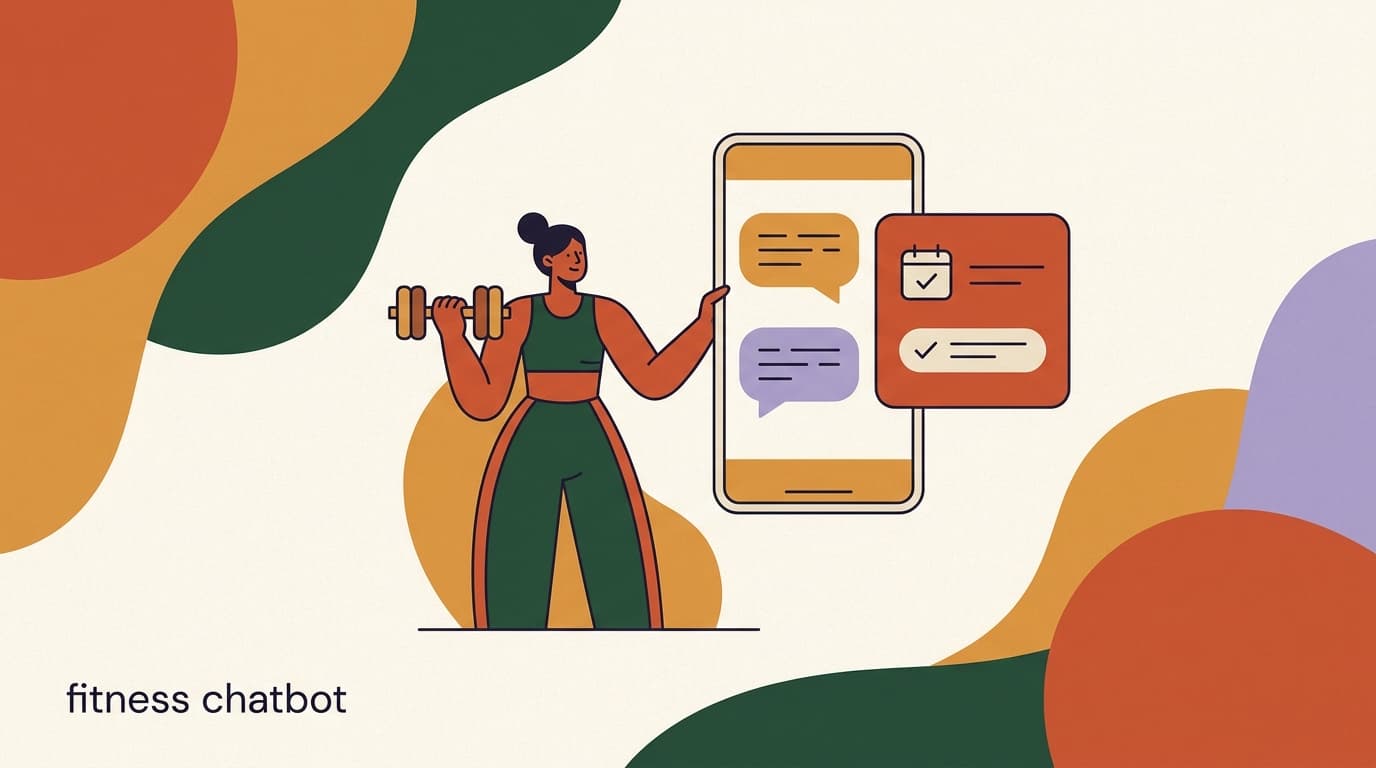
A fitness chatbot setup is the fix for that gap. It is not about replacing the human relationship that makes a gym or a coaching practice work. It is about making sure the first response is instant, the booking link arrives before the motivation fades, and the routine messages — reminders, onboarding, check-ins, win-backs — happen on their own so you can spend your energy on the people in front of you.
This is a vertical playbook written specifically for gyms, studios, personal trainers, and wellness coaches. We will go channel by channel and stage by stage: capturing leads from Instagram, booking free trials and consults, qualifying so you talk to the right people, onboarding new members, reminding them about classes, checking in so they stay, and winning back the ones who drift. There is sample copy you can adapt, industry-specific flows, and honest notes on what to automate and what to keep human.
Full disclosure up front: we build KlyoChat, a messaging and automation platform for exactly this kind of work. We will show you how it fits near the end. Everything before that is platform-agnostic playbook you can run anywhere — and we will be honest about limits, including ours, along the way.
Why do fitness businesses lose so many leads in the DMs?
The fitness buying journey is emotional and time-sensitive. Someone decides today is the day they get back in shape. They watch a transformation Reel, they feel motivated, they comment or DM. That window of motivation is short — often hours, sometimes minutes. If the reply comes a day later, the moment has passed and so has the lead.
Compounding this, fitness inquiries spike at the worst times for a reply. Evenings, weekends, right after a popular post or an ad goes live — exactly when your team is coaching, cleaning equipment, or off the clock. The messages pile up unanswered not because anyone is lazy, but because answering DMs is nobody's actual job during a busy session.
There is also a qualification cost. Plenty of DMs are not real prospects: people asking about a class you do not run, fitness-curious browsers who will never buy, or someone who lives two cities away. Sorting the serious from the casual by hand eats time. A chatbot handles the first response and the basic sorting instantly, so a human only ever picks up a conversation that is worth their time.
Speed-to-lead is the whole game in fitness
The single biggest lever in fitness lead generation is how fast the first reply lands. Motivation to start training is perishable. A chatbot that responds in seconds — at 9pm on a Sunday — captures the lead while the human reply is still hours away.
What should a fitness chatbot actually do, end to end?
Before building anything, it helps to see the whole journey the chatbot supports. A fitness chatbot setup is not one flow — it is a set of small, focused automations that each own one moment in the client lifecycle. Trying to build one giant flow that does everything is how projects stall. Build them one at a time, in priority order.
Here is the full lifecycle, from a stranger commenting on a Reel to a lapsed member coming back. Each stage maps to a flow you will build later in this guide.
| Stage | What the chatbot does | Outcome |
|---|---|---|
| Capture | Reply to comments and DMs instantly, move to a private conversation | No lead waits for a human |
| Qualify | Ask goal, location, schedule, budget fit in a friendly way | Only real prospects reach staff |
| Book | Offer trial or consult slots and confirm the booking | Calendars fill without phone tag |
| Remind | Send confirmation and pre-class reminders | Fewer no-shows |
| Onboard | Welcome new members, send what-to-bring and first-week tips | Stronger first impression |
| Retain | Check in, celebrate milestones, nudge inactive members | Better retention |
| Win back | Re-engage lapsed members and trial no-shows | Recovered revenue |
Build in order of money, not order of journey
Start with Capture and Book — they create revenue this week. Reminders cut no-shows next. Onboarding, retention, and win-back come after. Do not try to launch all seven at once; ship the first two, prove they work, then expand.
How do you capture fitness leads from Instagram?
Instagram is where most modern fitness lead generation starts, and the highest-intent moment is a comment on a post or Reel. Someone comments "price?" or "how do I join?" under your content — that is a hand raised in public. The job is to turn that public comment into a private conversation before the interest fades.
The pattern is comment-to-DM. You pick a keyword or simply detect intent in comments on a specific post, and the chatbot automatically sends that person a direct message. The comment stays public (good for social proof and reach), and the real conversation moves to the DM where you can qualify and book.
- Pick the post and the triggerChoose a high-performing Reel or an offer post. Set the trigger to a keyword like TRIAL or START, or to any comment showing intent on that post.
- Auto-reply to the public commentPost a short public reply — "Just sent you a DM!" — so other viewers see the funnel working and are nudged to comment too.
- Open the DM with value, not a pitchThe first DM should acknowledge what they asked and offer the next step: the trial, the price, or a quick question to qualify.
- Route to the right flowBased on their reply, hand off to the qualification or booking flow. The chatbot carries the conversation; a human only steps in when needed.
Respect Meta's messaging rules
Instagram and Facebook have rules about who you can message and when, including windows after a user interacts with you. Comment-to-DM works because the user engaged first. Do not try to cold-DM people who never interacted — it risks your account and breaks platform policy.
Comment-to-DM opener (Instagram)
- Public comment
- "price?" under a transformation Reel
- Public auto-reply
- "Sent you the details in your DMs!"
- DM message
- Hey! Saw your comment on the Reel. We run a free trial week so you can try the classes before deciding. Want me to grab you a spot? Just need your goal and a couple of times that work.
What does a good qualification flow look like for a gym or trainer?
Not every DM deserves a booking link straight away. A short qualification flow makes sure you offer the right thing to the right person — and protects your staff's time from inquiries that were never going to convert. The art is keeping it conversational. Nobody wants to fill out a form in their DMs; they want a quick, friendly chat.
Three or four questions is usually enough. You want to know their goal (so you can match a program or trainer), their location or availability (so you only book people who can actually attend), and a rough sense of fit (budget, experience level, or what they are looking for). Keep each question light and offer tappable options where you can.
- Goal: "What are you mainly working toward — strength, weight loss, general fitness, or something specific?"
- Schedule: "When do you usually train — mornings, evenings, or weekends?"
- Location or format: "Are you looking for in-person classes or online coaching?"
- Experience: "Totally new to this, getting back into it, or already training regularly?"
Qualify to serve, not to gatekeep
The tone matters. Questions should feel like a helpful coach figuring out how to help, not a bouncer deciding if you are worthy. If the answers show a poor fit — wrong city, out of budget — the chatbot can still point them somewhere useful rather than ghosting them.
Qualification snippet (personal trainer)
- Bot
- Awesome that you want to start! Quick question — what's your main goal right now?
- Lead
- Lose some weight and feel stronger
- Bot
- Perfect, that's exactly what my 1:1 program is built for. Do you train better mornings or evenings?
- Lead
- Evenings
- Bot
- Got it. I have evening consult slots this week — want me to book you a free 20-minute call to map out a plan?
How do you book free trials and consults automatically?
Booking is where fitness chatbots earn their keep. The classic failure mode is phone tag: a lead is interested, but pinning down a time takes three back-and-forth messages over two days, and somewhere in there they lose momentum. A chatbot collapses that into one conversation by offering real slots and confirming on the spot.
The two most common fitness offers are the free trial (a class, a week pass, a day pass) and the free consult (a discovery call for coaching or PT). Both follow the same booking pattern: present options, take the choice, confirm, and add the details they need to actually show up.
- Offer concrete time optionsDo not ask "when works for you?" — that creates work. Offer specific slots: "I have Tue 6pm, Wed 7am, or Sat 9am — which suits?"
- Confirm immediatelyOnce they pick, confirm in the same breath with the address or video link, what to bring, and what to expect.
- Capture contact detailsCollect a name and, if relevant, a phone or email so you can reach them outside the chat platform if needed.
- Hand off to the reminder flowA confirmed booking should automatically enter the reminder sequence so the no-show rate stays low.
Honest limit: a chatbot is not a full booking system
A chatbot is excellent at conversational booking and confirmation, but it is not a replacement for a class-management or scheduling platform with real-time capacity. For studios with tight class caps, connect or sync with your scheduling tool so the chatbot never books a full class. Treat the chatbot as the front door, not the whole building.
Trial booking confirmation (studio)
- Booking
- Saturday 9:00am — Intro HIIT class
- Confirmation DM
- You're booked for Sat 9am HIIT! We're at 12 Mill Street. Arrive 10 mins early, bring water and trainers — we've got mats and everything else. Can't wait to meet you!
- Auto-tag
- trial-booked → enters reminder + onboarding flows
Capture, qualify, and book are the revenue engine — get those three working and you will already see fuller calendars. The next set of flows is about keeping the people you booked: getting them to actually show up, making their first weeks great, and keeping them around long enough to see results. That is where the real money in fitness lives, because acquiring a member is far more expensive than keeping one.
How do reminders cut no-shows for classes and sessions?
No-shows are a quiet tax on fitness businesses. A trial no-show is a lost sale you already paid to acquire. A member who skips a booked PT slot is a hole in your revenue and, often, the first step toward churning. Reminders are the cheapest, highest-return automation in the entire playbook.
The rhythm that works for most fitness contexts is a confirmation right after booking, a reminder the day before, and a short nudge a few hours before. Each message should make it trivially easy to confirm, reschedule, or cancel — because a cancellation with notice lets you fill the spot, while a silent no-show does not.
| When | Message purpose | Sample line |
|---|---|---|
| At booking | Confirm and set expectations | You're booked! Here's everything you need. |
| Day before | Remind and allow easy reschedule | See you tomorrow at 6pm! Reply RESCHEDULE if your plans changed. |
| 2–3 hours before | Final nudge and reduce friction | Today's the day — 6pm. We've got your spot ready! |
Make rescheduling as easy as showing up
Counterintuitively, inviting people to reschedule reduces lost revenue. A member who can tap RESCHEDULE will tell you they can't make it, freeing the slot and keeping them engaged. The alternative — a no-show who feels guilty and avoids you — is worse for retention.
What should a new-member onboarding sequence include?
The first two weeks decide whether a new member stays for two years or two months. Most cancellations trace back to a weak start: the member felt lost, unsure what to do, or invisible. An onboarding sequence delivered through the chat channel they already use closes that gap and makes people feel like they joined something that noticed them.
Onboarding is not a sales sequence — it is a hospitality sequence. The goal is confidence and connection. Space the messages out over the first week or two so it feels like a coach checking in, not a drip campaign.
- Day 0 — Welcome and logisticsWarm welcome, how to book classes, opening hours, what to bring, and who to ask for help. Remove every unknown.
- Day 2 — First win nudgeEncourage them to book their first session or class if they haven't, and reassure beginners that everyone starts somewhere.
- Day 5 — Tips and communityShare a beginner tip, point them to the community or a popular class, and invite a question.
- Day 10 — Check-inAsk how it's going, surface any blockers, and offer help. This is where you catch a wobbling member before they quit.
Tell people when a human is listening
Onboarding messages should make clear that real people are on the other end. "Reply here, a coach reads these" turns a one-way drip into a relationship. The automation starts the conversation; the human makes the member feel they belong.
Day 0 welcome (gym)
- Message
- Welcome to the team! You can book any class right here in chat. We're open 6am–10pm. For your first session, just bring water, trainers, and a towel. Anything you're unsure about? Reply here — a real human reads these.
How do check-in and retention sequences keep clients around?
Retention is the least glamorous and most profitable part of any fitness business. A member who trains consistently renews; a member who quietly stops coming cancels. The chatbot's retention job is to notice the drift early and re-engage with warmth, not guilt. Automation is good at noticing patterns a busy team misses.
Two kinds of retention messaging work well. The first is positive reinforcement — celebrating milestones and consistency, which makes people feel seen and reinforces the habit. The second is gentle re-engagement when someone goes quiet, because a member who hasn't attended in two weeks is on the edge and a single human-feeling message can pull them back.
- Milestone celebration: "That's your 10th class this month — incredible consistency. Proud of you."
- Streak nudge: "You've been crushing it on Tuesdays. Same time this week?"
- Soft re-engagement: "Haven't seen you in a couple of weeks — everything okay? Want help getting a session back on the calendar?"
- Feedback ask: "Quick one — how are you finding the classes so far? Anything we could do better?"
Do not promise results you can't guarantee
Retention copy should motivate without overpromising. Avoid guarantees about weight, health outcomes, or transformations — they are both unethical and, in many places, against advertising and platform rules. Celebrate effort and consistency, which are things the member actually controls.
Re-engagement check-in (coach)
- Trigger
- No session logged in 14 days
- Message
- Hey, noticed it's been a couple of weeks — life gets busy, totally normal. Want me to help you get one short session back on the calendar this week? Even 20 minutes counts.
- Goal
- Restart the habit before it becomes a cancellation
How do you win back lapsed members and trial no-shows?
Some people will drift away no matter what — a move, an injury, a life change. But a meaningful share of lapsed members and trial no-shows are recoverable, and they are the cheapest leads you will ever work because they already know you. A win-back sequence is a structured, respectful attempt to restart the relationship.
There are two distinct audiences here. Trial no-shows never started, so the message is low-pressure and re-offers the trial. Lapsed members had a relationship that faded, so the message acknowledges the gap, removes friction, and sometimes offers a reason to return. Keep it short, human, and easy to say yes to — and easy to ignore, because pestering damages your brand.
| Audience | Tone | Offer angle |
|---|---|---|
| Trial no-show | Light, no guilt | Re-offer the same trial with a fresh time |
| Recently lapsed (1–2 months) | Warm, we miss you | Make returning easy; offer a re-orientation session |
| Long lapsed (3+ months) | Fresh start, what's new | Highlight new classes or a comeback offer |
One good win-back beats five pushy ones
Win-back is where businesses get spammy and pay for it with blocks and bad will. Send a single thoughtful message, maybe a gentle follow-up after a week if there's no reply, then stop. A respectful no is worth more than a annoyed unsubscribe.
Trial no-show win-back
- Message
- Hey! You grabbed a trial spot a while back and life probably got in the way — happens to all of us. The offer's still open whenever you're ready. Want me to find you a new time? No pressure either way.
Which channels should a fitness business automate first?
You do not need to be on every platform. You need to be responsive on the platforms your clients actually use. For most fitness and wellness businesses, that means Instagram first, because it is where discovery and high-intent comments happen. WhatsApp and Messenger often come next for ongoing conversation, reminders, and onboarding.
The right answer depends on your audience and region. A boutique studio with a strong Instagram presence lives in IG DMs. A coach with an international client base might run everything through WhatsApp or Telegram. The principle is the same everywhere: pick the one or two channels where your leads already are, and make those instant and reliable before adding more.
- Instagram: best for discovery, comment-to-DM lead capture, and first contact.
- WhatsApp: strong for booking confirmations, reminders, and ongoing client relationships (note Meta's per-conversation fees apply).
- Messenger / Facebook: useful where your audience skews toward Facebook groups and Pages.
- Telegram: popular for communities and international coaching audiences.
- TikTok: rising for discovery; pair viral content with comment-to-DM capture.
Honest limit: no native SMS or email here
We build KlyoChat, and we focus on social and chat channels — we do not offer native SMS or email. Many fitness businesses lean on those for reminders. If SMS or email is core to your operation, plan to keep a separate tool for them, or weigh whether chat-channel reminders cover your needs.
Where do AI agents fit versus rule-based flows?
There are two ways a chatbot can respond: scripted flows that follow a fixed path, and AI agents that understand free-text questions and answer in natural language. The best fitness chatbot setups use both. Flows handle the predictable, structured moments — booking, reminders, onboarding steps. AI agents handle the messy, open-ended questions people actually ask.
Fitness leads ask things no script anticipates: "Do you have a class for someone with a bad knee?" "Is the 6am class beginner-friendly?" "What's your cancellation policy?" A rule-based flow gets stuck; an AI agent trained on your gym's information answers instantly and accurately, then routes to a booking flow or a human when it should.
| Job | Best tool | Why |
|---|---|---|
| Booking a trial slot | Rule-based flow | Structured, predictable, needs exact data capture |
| Sending reminders | Rule-based flow | Time-triggered, identical every time |
| Answering "do you do prenatal classes?" | AI agent | Open-ended, needs your specific knowledge |
| Qualifying with follow-ups | AI agent + flow | AI reads intent, flow captures the structured answer |
| Escalating a complaint | AI agent → human | AI detects tone, hands off to a real person |
Train the AI on your real FAQs
An AI agent is only as good as what it knows. Feed it your actual policies, class descriptions, pricing rules, and the questions your front desk answers ten times a day. Then it deflects routine work accurately and only escalates what genuinely needs a human.
How do you measure whether the chatbot is working?
A fitness chatbot setup is not a set-and-forget project. The businesses that get the most from it treat it like a class schedule — reviewed and adjusted based on what the numbers say. You do not need a complex dashboard; a handful of metrics tell you almost everything about whether it is earning its place.
Track the funnel, not just activity. It is easy to feel good about "messages sent." What matters is how many leads captured turned into booked trials, how many trials showed up, and how many became paying members. If one stage leaks badly, that is where you focus your next edit.
- Response rate and speed: what share of inquiries get an instant first reply.
- Capture rate: comments and DMs that turn into qualified conversations.
- Booking rate: qualified leads that book a trial or consult.
- Show rate: bookings that actually attend (your reminder flow's report card).
- Conversion rate: trials and consults that become paying clients.
- Retention signals: re-engagement messages that bring inactive members back.
Fix the leakiest stage first
If you book plenty of trials but few show up, your reminder flow needs work, not your lead capture. If lots show up but few join, the in-person experience or the offer is the issue, not the chatbot. Let the funnel point you to the real problem.
How do you write chatbot copy that sounds like a coach, not a robot?
The fastest way to kill a fitness chatbot is copy that reads like a corporate form. People can feel the difference between a message written by a coach and one generated by a template, and in fitness — an industry built on personal relationships and trust — that difference decides whether someone replies or ghosts. The good news is that warm, human copy is a skill you can learn, and a few principles cover most of it.
Write the way you actually talk to a member at the front desk. Use their language, not industry jargon. Keep sentences short. Ask one thing at a time. Use the person's name when you have it. And always make the next step obvious and small — a single tap or a one-word reply beats a paragraph of instructions every time.
- Lead with empathy: acknowledge where the person is before you offer anything. "Getting started is the hardest part — let's make it easy."
- One ask per message: never stack three questions; you'll get none answered. Ask, wait, then ask the next.
- Offer tappable choices: "Mornings or evenings?" beats "When are you free?" because it removes effort.
- Match their energy: if they're excited, be excited; if they're nervous, be reassuring. Read the room.
- Sign off human: "a real coach reads these" or a first name turns automation into a relationship.
Read every message out loud before you publish it
If it sounds odd spoken aloud, it will read odd in a DM. The out-loud test catches stiff phrasing, run-on questions, and anything that sounds like a form letter. Coaches talk like humans, so your chatbot should too.
Robotic versus human (same moment)
- Robotic
- Thank you for your inquiry. Please provide your availability, fitness goals, and preferred location to proceed with booking.
- Human
- Love that you want to start! Quick one to get you sorted — are you more of a morning or evening person?
What are the most common fitness chatbot mistakes to avoid?
Plenty of fitness businesses build a chatbot, see disappointing results, and conclude the whole approach doesn't work. Almost always, the problem is one of a handful of avoidable mistakes — not the concept. Knowing them in advance saves weeks of trial and error and a lot of wasted leads.
Most mistakes fall into two buckets: doing too much automation (so it feels cold and spammy) or doing too little follow-through (so leads still slip). The sweet spot is automating the predictable while keeping humans visible and responsive where it counts.
| Mistake | Why it hurts | Fix |
|---|---|---|
| No human handoff | Real questions hit a dead end and leads leave | Always offer "talk to a person" and escalate |
| Too many questions upfront | Feels like a form; people drop off | Ask 3–4 max, conversationally, one at a time |
| No reminder flow | Bookings turn into no-shows | Confirm at booking, remind day-before and same-day |
| Spammy win-backs | Blocks, bad will, reported messages | One thoughtful message, one follow-up, then stop |
| Set and forget | Flows go stale, metrics drift | Review the funnel monthly and edit |
The dead-end DM is the cardinal sin
If your chatbot can't answer a question and offers no way to reach a human, you've turned a warm lead into a frustrated one. Every flow needs an escape hatch to a real person. Automation that traps people is worse than no automation at all.
How does a chatbot help with class packages, memberships, and upsells?
Lead capture and booking get most of the attention, but a chatbot also quietly supports the revenue moments that come after someone joins: moving a trial-goer onto a membership, nudging a class-pack holder to renew before it runs out, and surfacing relevant add-ons like personal training or nutrition coaching. Done with restraint, these are helpful; done aggressively, they annoy. The difference is timing and relevance.
The principle is to make the offer at the moment it's genuinely useful to the member, not on a fixed sales schedule. A class-pack holder with two sessions left is the right person to remind about renewal. A member who just hit a consistency milestone is a natural fit for a conversation about a bigger goal. The chatbot can watch for those moments and start the conversation; a human closes it.
- Trial-to-membership: after a positive trial, offer the join step while the experience is fresh.
- Pack renewal: when a class pack is nearly used up, send a friendly top-up reminder.
- Relevant add-ons: suggest PT or nutrition coaching to members whose goals point that way — not to everyone.
- Referral nudge: ask happy, consistent members if they'd bring a friend, with an easy share option.
Upsell by being useful, not pushy
An offer that lands at the right moment feels like good service. The same offer sent on a blast to everyone feels like spam. Let behavior — not a calendar — trigger upsell conversations, and always make it easy to say no.
Trial-to-membership nudge
- Trigger
- Trial completed, attended 2+ sessions
- Message
- You showed up and put in the work this week — that's the hard part done! Want me to set you up on a membership so you can keep the momentum? Happy to walk you through the options here.
How does KlyoChat run a fitness chatbot setup?
Everything above is platform-agnostic — you can build this playbook on several tools. Here is how it comes together on KlyoChat, which we make. We built it as an AI-native, mobile-first platform precisely for owner-operators and small teams who run their business from their phone between sessions, not from a desk.
KlyoChat puts Facebook, Instagram, Telegram, WhatsApp, TikTok, and X into one unified inbox, so every DM across every channel lands in a single place your team can answer from their phones. On top of that sit the building blocks this guide describes: comment-to-DM capture, no-code flows for booking, reminders, onboarding, and win-back, broadcasts for announcements, and custom AI agents that qualify leads, book, and answer questions using your gym's own knowledge — included in your plan, not a separate add-on.
- Comment-to-DM turns Instagram and TikTok comments into booked trials automatically.
- Custom AI agents qualify, book, and answer FAQs from your knowledge base — included, not a paid add-on.
- No-code flows handle reminders, onboarding, check-ins, and win-back on a schedule.
- A shared team inbox means front-desk staff and coaches answer from one place, on mobile.
- Analytics show capture, booking, and show rates so you can fix the leaky stage.
Being straight about the trade-offs
KlyoChat is a newer, smaller platform than the biggest incumbents, so the community and template library are still growing. We do not offer native SMS or email. WhatsApp's per-conversation fees are charged by Meta and apply on any platform, including ours. We would rather you know that now than discover it later.
KlyoChat plans at a glance
- Basic
- $19/mo — for a solo trainer testing automation on a couple of channels
- Pro
- $49/mo ($39 billed yearly) — all channels, 10,000 contacts, custom AI agents; the typical fit for a studio or growing coach
- Business
- $129/mo — for multi-location or higher-volume operations with a bigger team
What's a sensible 30-day rollout plan?
You do not have to build the whole playbook at once — in fact you shouldn't. The fastest path to results is to ship the revenue flows first, prove they work with real leads, then layer on retention. Here is a realistic month that an owner-operator can run alongside their actual job.
- Week 1 — Capture and bookConnect your main channel, set up comment-to-DM on your best post, and build the trial/consult booking flow. This alone starts capturing leads you were losing.
- Week 2 — Qualify and remindAdd a short qualification flow before booking and turn on the reminder sequence. Watch your show rate climb.
- Week 3 — Onboard and FAQBuild the new-member onboarding sequence and train an AI agent on your real FAQs so routine questions answer themselves.
- Week 4 — Retain and win backAdd check-in and re-engagement flows for inactive members and a win-back sequence for trial no-shows. Review your funnel metrics and adjust.
Ship something live in week one
The most common reason these projects fail is over-planning. A single live comment-to-DM flow capturing real leads on day three teaches you more than a perfect plan you never launch. Start small, ship fast, improve weekly.
The bottom line: a fitness chatbot setup is not about replacing the human touch that makes fitness work — it is about protecting it. Automate the parts that don't need you (instant replies, reminders, routine FAQs, scheduled check-ins) so your time goes to coaching, programming, and the relationships that keep members for years.
Start where the money is — capture and booking — then build toward retention. Keep the copy human, respect platform rules, never promise outcomes you can't guarantee, and let your funnel metrics tell you what to fix next. For related plays, see our guides on salon booking chatbots, coaching DM sequences, and AI agents for booking appointments, and explore how KlyoChat's AI agents and flows fit your business.