Faceless brand automation is how theme pages, niche accounts, and no-face content brands turn reach into conversations, and conversations into revenue — without a single selfie or talking-head video. On a face-led account, trust rides on the person: their voice, their story, their reactions to camera. A faceless content brand does not have that lever. What it has instead is a repeatable format, a tight niche, and a direct message channel where the brand voice can do the persuading. That is why automation matters so much here. The direct message is not a side channel for a faceless account. It is the place where an anonymous page becomes a business.
This guide is a practical walk-through of how to build that system: the comment-to-DM funnel, the lead magnet, the DM copy that sounds like a brand instead of a bot, the AI agent that carries the voice at scale, and the product or affiliate handoff at the end. We include sample copy you can adapt, tables you can plan against, and step-by-step builds you can follow in an afternoon.
We build KlyoChat, so we have a point of view — but we have kept this honest. AI can draft in your brand voice, yet you should review what it sends. There are no income guarantees here, only a mechanism. And everything you automate has to respect Meta's platform rules and the 24-hour messaging window. We flag those limits where they matter rather than pretending they do not exist.
What is a faceless brand account, and why does it need DM automation?
A faceless brand account is a page built around a topic rather than a person. Think a motivation quotes page, a personal-finance tips account, a home-decor inspiration feed, an AI-tools roundup, a fitness-form library, or a niche meme brand. The content is the product of a format — carousels, Reels, quote cards, listicles — not of a founder's face. This kind of format-driven content creation is what lets a theme page publish consistently without a single person on camera. That structure is why these accounts scale so fast. Anyone on the team can produce the next post because the format, not a personality, is the constant. It is also why a faceless content brand can run across several niches at once without a single creator burning out.
The catch is trust. A follower of a face-led creator feels they know that person, so a recommendation lands with borrowed credibility. A follower of a faceless Instagram page likes the content but has no human to attach loyalty to. When it comes time to buy, download, or click an affiliate link, there is no face to vouch for the offer. The direct message is where you rebuild that missing trust — one conversation at a time, in a voice that is consistent enough to feel like a brand.
Automation is what makes that possible at the scale a theme page operates. A faceless account that posts daily and occasionally goes viral cannot answer every comment and DM by hand. Automated triggers catch the intent while it is hot, a lead magnet gives a reason to open the thread, and an AI agent keeps the conversation moving when the human is asleep. Without automation, a faceless brand leaks nearly every warm lead its content produces. With it, the page becomes a funnel.
Faceless does not mean voiceless
The word faceless describes the absence of a person on camera, not the absence of personality. The strongest theme pages have a distinct point of view, vocabulary, and tone. That voice is exactly what your DM automation has to reproduce, because it is the only thing standing in for a human relationship.
Why does faceless brand automation depend on the DM funnel more than a face-led account?
On a face-led account, a lot of the selling happens in public. The creator shows their face in a Reel, tells a story, and the audience decides they trust the person before a single DM is exchanged. The direct message is often just the checkout step. For a faceless content brand, the public content is strong at attracting attention but weak at closing, precisely because there is no person to bond with. The closing has to move into the DM, where a longer, more personal exchange can do the work the feed cannot.
This shifts where you invest. A face-led creator might spend most of their energy on presence and personality in public. A faceless account should spend a disproportionate share of its effort on the DM system: the trigger that starts the conversation, the first message that sets the tone, the qualifying questions that surface intent, and the handoff that turns intent into a click or a sale. The feed's job is to earn the comment. The DM's job is to earn the customer.
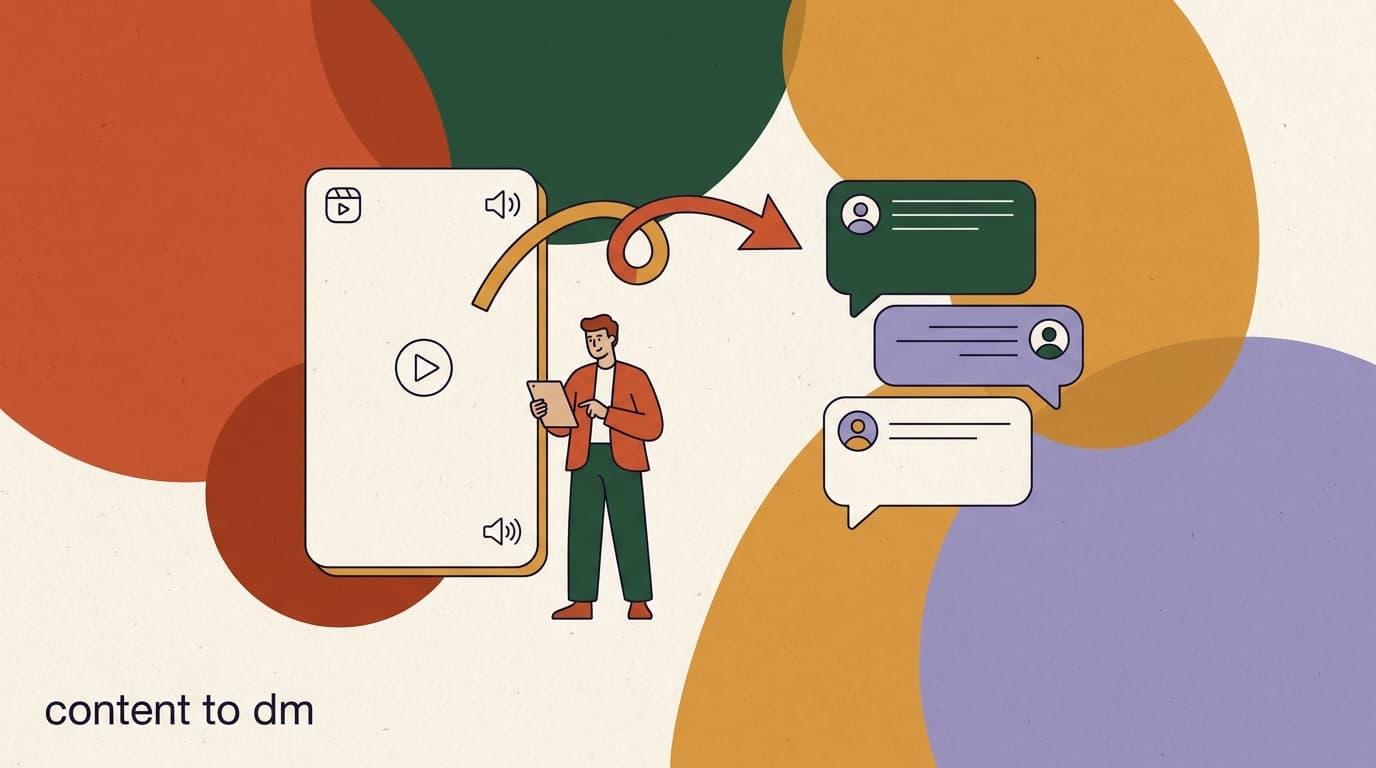
It also raises the stakes on consistency. When a person runs the DMs, their natural voice ties everything together even if the wording changes. When a brand runs the DMs, wording is the voice — so a template that goes off-tone, or an AI reply that sounds generic, breaks the illusion of a coherent brand faster than it would for a human creator. That is the core tension of faceless account DM work: you need automation for scale, and you need it to sound handmade. We deal with resolving that tension throughout this guide, and there is a fuller treatment in our piece on turning content into DM conversations.
Where the selling happens
- Face-led account
- Trust built in public via the creator; DM is mostly the checkout step
- Faceless brand account
- Content earns attention; the DM builds trust and closes the offer
What can you actually automate on a faceless account?
It helps to separate what automation does well from what it does poorly, because faceless brands are tempted to automate everything and end up sounding like a machine. The useful frame is this: automate the mechanics, guide the judgment, and keep a human on the exceptions. Mechanics are the repeatable steps that happen the same way every time. Judgment is the reading of tone and intent that decides what to say next. Exceptions are the messages that do not fit any script.
The table below maps the common building blocks of theme page automation to how much you should lean on automation for each. Treat it as a starting point, not a rulebook — your niche may push a line one way or the other.
- Automate anything that is identical every time — greetings, link delivery, FAQ answers.
- Use AI to draft the parts that need reading between the lines, then review the drafts.
- Keep a human in the loop for money, complaints, and anything that could damage the brand.
- Never automate a reply that pretends to be a specific named person the follower can check up on.
| Building block | Automate? | Notes |
|---|---|---|
| Comment-to-DM trigger | Fully | A keyword in the comments opens the thread instantly |
| Lead-magnet delivery | Fully | Send the link or file the moment they reply |
| First DM / greeting | Fully | A templated opener in brand voice sets the tone |
| Qualifying questions | Mostly | Menu buttons work well; keep it short |
| Objection handling | AI-assisted | AI drafts a reply; review before it sends on high-value threads |
| Affiliate / product handoff | Mostly | Automate the link; a human checks edge cases |
| Complaints and refunds | Human | Route to a person; do not let a bot improvise here |
Start with one flow, not ten
The fastest way to a working faceless account DM system is to nail a single comment-to-DM flow end to end before you build a second. One trigger, one lead magnet, one handoff. Prove it converts, then clone the pattern into your other post types.
How do you build a comment-to-DM funnel for a faceless brand?
The comment-to-DM funnel is the backbone of faceless brand automation. The mechanic is simple: you post content with a call to action to comment a specific word, and when someone comments that word, an automation opens a direct message with them. It works so well for theme pages because it converts a low-commitment public action — a one-word comment — into a private one-on-one channel where you can actually make an offer. The follower raised their hand in public; you meet them in the DM.
Here is a build you can follow. It assumes you are working in a tool with comment triggers and a visual flow builder; the exact clicks vary by platform, but the sequence is the same. If you want the deeper strategy behind each step, our guide on the comment-to-DM strategy goes further than we can here.
- Pick one post format and one keywordChoose a Reel or carousel that already performs, and a single trigger word like GUIDE or LINK. One word is easier for followers to remember and for you to track.
- Write the call to action into the contentTell viewers exactly what to do: comment the word to get the thing. Put it in the caption and, for Reels, say it on screen or in the voiceover.
- Set the comment triggerConfigure the automation to fire when the keyword appears in comments on that post. Reply publicly to the comment too, so others see the funnel working.
- Send the opening DM with the lead magnetThe first message greets them in brand voice and delivers the promised link or file immediately. Do not make them wait or jump through hoops.
- Add one qualifying questionAfter delivery, ask a single question that segments them — what they are working on, or which option fits. Use buttons so the reply is one tap.
- Route to the handoffBased on the answer, send the next step: a product link, an affiliate link, or a booking page. Tag the contact so you can follow up later.
Respect the messaging window
Meta's messaging rules give you a limited window — generally 24 hours from a user's last interaction — to send standard messages, and public-comment automation must follow platform policy. Design your funnel to make the offer inside that window, and read the current rules before you scale. We cover this in detail further down.
What makes a good lead magnet for a faceless account?
The lead magnet is the reason someone opens the DM thread, so it carries a lot of weight for a faceless content brand. Because there is no personal relationship pulling the follower in, the magnet has to be worth the tap on its own merits. The good news is that a theme page usually sits on a mountain of potential magnets — the format that earns its followers is the same format that makes a great free resource. A finance page can offer a budgeting template. A decor page can offer a shopping checklist. An AI-tools page can offer a curated stack list.
The strongest faceless-account lead magnets share a few traits. They are specific enough to feel valuable, small enough to consume in one sitting, and tightly matched to whatever you sell or promote next. A magnet that is loosely related to your offer attracts people who will never buy. A magnet that is a natural first step toward the offer attracts people who are already on the path.
- Specific over broad: a Notion budget template beats a generic finance ebook.
- Fast to consume: a one-page checklist converts better than a forty-page PDF nobody finishes.
- Matched to the offer: the magnet should make the paid or affiliate product the obvious next step.
- Cheap to deliver: a link or a file, not something that needs manual fulfillment per person.
- On-brand: the design and voice of the magnet should match the feed, since it is often the first thing off-platform they see.
The magnet is a promise you have to keep
Whatever you advertise in the post, deliver it in the DM without a catch. A bait-and-switch — promising a template and sending a sales pitch — burns trust a faceless brand cannot easily rebuild, because there is no face to apologize with next time.
Magnet-to-offer fit by niche
- Finance theme page
- Free budget template opens the thread; the offer is a paid course or a broker affiliate
- Home-decor page
- Free room checklist opens the thread; the offer is a furniture affiliate or a digital styling guide
- AI-tools page
- Free curated tool stack opens the thread; the offer is an affiliate signup or a paid prompt pack
How do you write DM copy that carries the brand voice without a face?
This is the hardest and most important part of faceless brand automation, so it is worth slowing down. When a person runs the DMs, small inconsistencies read as human. When a brand runs them, every word is a brand asset, and the copy has to do the job a personality would. The aim is a voice specific enough that a regular follower would recognize it as yours, warm enough that it does not read as corporate, and short enough that it works on a phone screen.
Start by writing your voice down. Define three or four traits — for example, direct, encouraging, a little dry, never salesy — and a short list of words you use and words you avoid. Then write every templated message against that definition. Below is sample opening copy for a finance theme page, written to sound like a brand rather than a bot. Adapt the specifics to your niche; keep the structure.
- Lead with the promised value, not a pitch — deliver the magnet in the first message.
- Use contractions and short sentences; brand DMs that read like press releases feel robotic.
- Ask one question at a time; a wall of questions kills the reply rate.
- Keep a consistent sign-off or signature phrase so repeat visitors recognize the brand.
Write a voice guide once, reuse it everywhere
A one-page voice guide — traits, sample lines, words to use and avoid — is the single highest-leverage document for a faceless brand. It keeps every template, every AI reply, and every team member on the same tone. Write it before you scale, not after.
Sample opening DM (finance theme page)
- Greeting
- Hey — thanks for grabbing the budget template. Here it is, no strings.
- Deliver
- Link: [your template link]. It is a one-pager, takes about ten minutes to fill in.
- Qualify
- Quick one so I point you right: are you mostly trying to save, pay off debt, or invest?
- Handoff
- Got it. Here is the next step most people in your spot take: [offer link].
How should a faceless brand use an AI agent for DMs?
Templates cover the predictable messages, but real conversations wander. Someone replies with a question your buttons did not anticipate, or an objection, or an off-topic aside. This is where an AI agent earns its place in a faceless content brand's stack: it reads the free-text reply, understands the intent, and drafts an on-voice response drawing on a knowledge base you provide. For an anonymous page that cannot staff a 24-hour DM desk, the agent is what keeps the conversation alive at 2 a.m. when a Reel is peaking. Our overview of the modern creator automation stack puts the AI agent in context with the rest of the tools.
The way to get value without getting burned is to feed the agent well and to review its output. Give it your voice guide, your product details, your frequently asked questions, and clear boundaries about what it must not do — never promise refunds, never invent prices, never claim to be a specific named human. Then, on anything high-value or sensitive, keep the reply in a review step so a person approves it before it sends. A KlyoChat AI agent is built to draft in your brand voice, and the honest instruction is the same one we give every customer: review it before you trust it on your best threads.
Used this way, the agent is not replacing your judgment; it is scaling your first draft. It handles the volume of routine questions so your team only touches the ones that matter, and it holds the brand voice steady across thousands of conversations no human could staff. What it should not be is an unsupervised closer making promises on the brand's behalf. Set it up as a fast, on-tone drafter with a human backstop, and it becomes the most useful hire a faceless brand never made.
- Load the voice guide and knowledge baseGive the agent your tone traits, sample lines, product details, and FAQs so its drafts sound like the brand and answer from facts, not guesses.
- Set hard boundariesTell it what it must never do — invent prices, promise refunds, or claim to be a specific named person. Boundaries prevent the worst automated mistakes.
- Route high-value threads to reviewOn anything involving money, complaints, or a big commitment, hold the reply for a human to approve before it sends.
- Sample and correct weeklyRead a batch of real agent conversations every week, note where the tone or facts drifted, and update the knowledge base to close the gap.
Review AI replies before they represent your brand
AI drafts in your voice, but it can still get a fact wrong, miss a nuance, or over-promise. On any thread involving money, a complaint, or a big commitment, put a human review step in front of the send. The convenience is not worth a brand-damaging reply that went out unread.
How do you handle affiliate and product handoff in the DM?
The handoff is where the funnel either makes money or does not, and faceless brands have two main paths: sell your own product, or promote someone else's for a commission. Niche page monetization often starts with affiliates because there is nothing to build — you recommend a tool, a product, or a service you already talk about, and you earn on the referral. The DM is a strong place to do this because you can match the recommendation to the answer the follower just gave you, which converts far better than a link dropped in a bio.
Whichever path you take, the mechanics of a clean handoff are the same. Make the transition feel like help, not a pivot to selling. Give context for why this is the right next step for the specific person. Use a single, clear link. And disclose affiliate relationships honestly — it is both the right thing and, in many places, a legal requirement. The table below compares the two handoff types so you can pick what fits your stage.
| Handoff type | Best for | Watch out for |
|---|---|---|
| Affiliate link | New pages with no product yet | Disclose the relationship; only promote things you would use |
| Own digital product | Pages with a clear niche and audience trust | Fulfillment and support fall on you |
| Booking / call link | Higher-ticket services behind the page | Needs a qualified lead or you waste calls |
| Waitlist / email capture | Not ready to sell yet | Slower to revenue but builds an owned list |
Honest disclosure protects the brand
Undisclosed affiliate links are a fast way to lose a faceless audience and can violate advertising rules. A one-line disclosure costs you nothing in conversion when the recommendation is genuine, and it keeps the trust you spent months building.
Sample affiliate handoff (AI-tools page)
- Context
- Since you said you are mostly writing content, the tool I lean on for that is [name].
- Disclose
- Heads up, that is an affiliate link — it does not cost you extra and it supports the page.
- Link
- Here you go: [affiliate link]. The free plan is enough to test it this week.
How do you keep the brand voice consistent at scale?
Consistency is the whole game for a faceless content brand, and it gets harder as you add posts, channels, and team members. The failure mode is drift: the first ten templates sound like the brand, and by the fiftieth, written by three different people across two channels, the voice is mush. Since wording is the only thing carrying your identity in the DM, drift is not a cosmetic problem — it is the brand slowly dissolving. The fix is systems, not willpower.
Three systems keep the voice steady. The first is the voice guide we described earlier, treated as the single source of truth every template and every AI reply is checked against. The second is a shared flow library, so a new post type reuses a proven, on-voice flow instead of someone reinventing the DM copy from scratch. The third is periodic review: read a sample of real conversations every couple of weeks and correct anything that drifted. None of this is glamorous, but it is what separates a theme page that feels like a brand from one that feels like a spam account.
Automation actually helps here more than it hurts, as long as it is set up right. A visual flow builder that stores your templates centrally means one edit updates the copy everywhere it is used, instead of you hunting through a dozen scattered automations. Reusable flows keep the mechanics identical across post types. And an AI agent anchored to one voice guide holds tone across a volume of conversations no team of writers could match by hand. The tooling does not create the voice — you do — but it stops the voice from eroding.
- Maintain one voice guide as the source of truth; check every new message against it.
- Reuse proven flows instead of writing fresh DM copy per post type.
- Review real conversation samples on a schedule and correct drift early.
- Store templates centrally so one edit updates the copy everywhere.
What rules and limits do you have to respect?
Faceless brand automation runs on Meta's platforms, which means it runs on Meta's rules — and those rules are not optional. The most important one is the messaging window. Standard, non-promotional messages generally have to be sent within roughly 24 hours of the user's last interaction with your account. Outside that window, you are limited to specific message types under Meta's policies. Comment-to-DM automation is permitted but governed by platform policy, and aggressive or spammy patterns can get an account restricted. Before you scale a funnel, read the current guidance in the Instagram Help Center rather than relying on a blog post's summary, including ours.
The practical implications shape how you design. You want your offer to land inside the window, so the flow should move from trigger to value to handoff without long stalls. You should avoid anything that looks like mass unsolicited messaging, keep your automations tied to a genuine user action like a comment or a message, and never buy or scrape contacts. And you should keep a human path open, because platforms expect real accounts to be reachable by real people, not walled off behind a bot. For an overview of what the platform intends here, Instagram's own business resources are a better primary source than any third party.
Beyond platform policy, there are the honest limits of automation itself. It will not manufacture demand your content did not create. It will not make a weak offer convert. And it cannot promise income — anyone selling you a faceless brand automation setup with a revenue guarantee is selling a fantasy. What automation does is capture and convert the interest your content already earns, more consistently than manual work can. That is a real and valuable thing. It is just not magic, and treating it as magic is how accounts get themselves restricted.
Policy is a moving target — check the source
Meta updates messaging policies and the 24-hour window rules periodically. Anything specific in this article is a snapshot. Confirm the current rules in Meta and Instagram's official help resources before you build, and design your funnel to comply comfortably rather than skate the edge.
How do you measure whether faceless brand automation is working?
A faceless account cannot rely on gut feel about whether the DM system is paying off, because the whole point is scale, and scale hides individual wins and losses. You need a small set of numbers that tell you where the funnel leaks. The mistake most theme pages make is watching vanity metrics — follower count, likes — that say nothing about whether conversations turn into revenue. Track the funnel, not the feed.
The useful metrics fall along the path a follower takes. How many people who see the post comment the trigger word? Of those, how many open and reply in the DM? Of those, how many reach the handoff? And of those, how many click or buy? Each stage has its own fix. A weak comment rate is a content-and-CTA problem. A weak DM reply rate is an opening-message problem. A weak handoff rate is an offer-fit problem. Watching the stages separately tells you exactly what to change, instead of guessing.
| Funnel stage | What to measure | If it is low, fix |
|---|---|---|
| Post to comment | Trigger-word comment rate | The content hook and the call to action |
| Comment to DM open | Reply rate on the first message | The opening DM copy and delivery speed |
| DM to handoff | Share reaching the offer step | The qualifying question and offer relevance |
| Handoff to action | Click or purchase rate | The offer itself and how it is framed |
Fix one stage at a time
Do not overhaul the whole funnel when one number is low. Isolate the weakest stage, change one thing, and watch that stage's metric. A faceless brand's advantage is volume, which means you get statistically meaningful results from small tests quickly.
What mistakes sink faceless account DM automation?
Most failed faceless account DM systems fail for a handful of repeatable reasons, and they are easy to avoid once you know them. The first is sounding like a bot. When the copy is generic and the replies are obviously canned, followers disengage, because the one thing a faceless brand had going for it — a consistent, human-feeling voice — is gone. The fix is the voice work in this guide: specific traits, real contractions, one voice guide behind everything.
The second mistake is over-automating. Teams get excited and try to automate refunds, complaints, and nuanced objections, and the bot makes a promise it should not or misreads a frustrated customer as a happy one. The fix is the automate-the-mechanics, human-on-exceptions rule from earlier. The third is a mismatch between magnet and offer, which fills the DM with people who will never buy. The fourth is ignoring the platform rules until an account gets restricted. And the fifth, quieter one is neglecting measurement, so a leaking funnel keeps leaking because nobody is watching the stages.
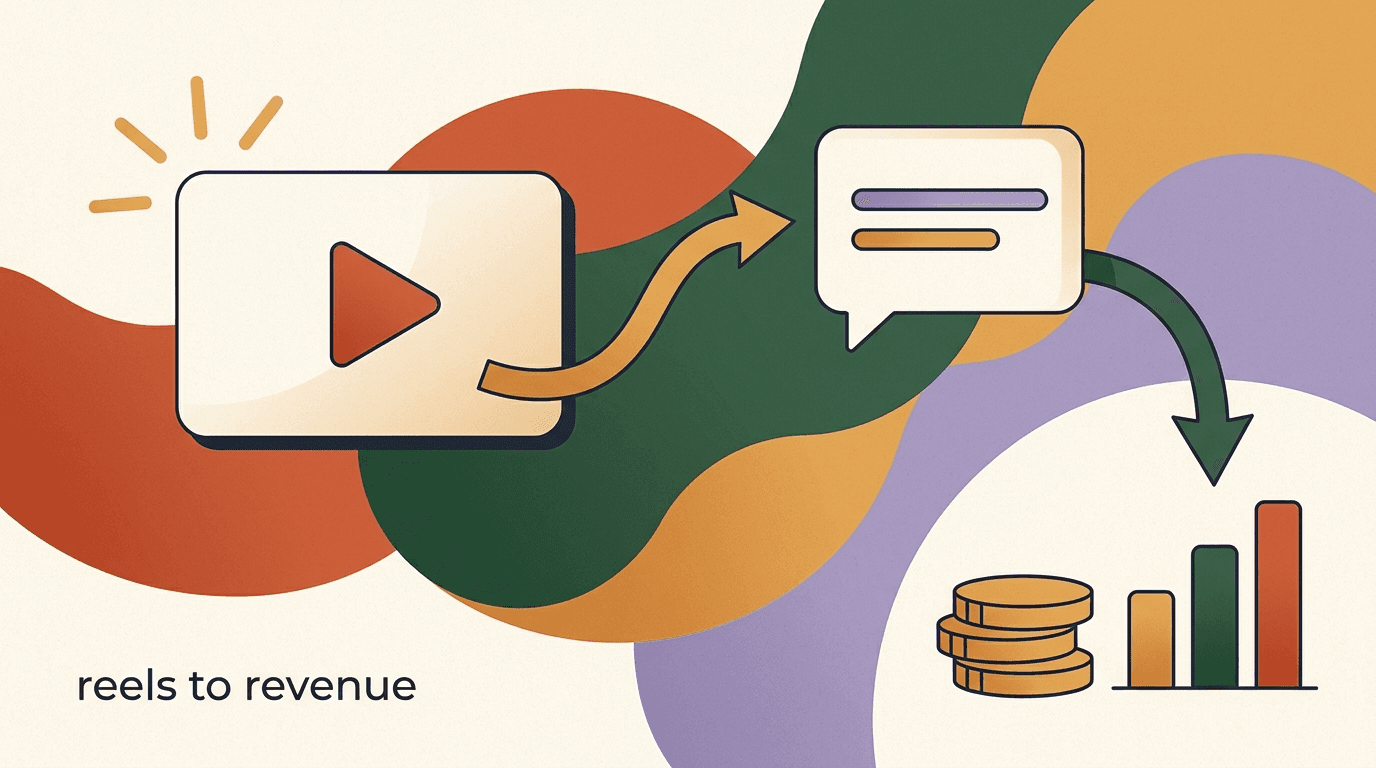
There is also a strategic mistake worth naming: expecting automation to fix a content or offer problem. If the posts do not earn attention, there are no comments to convert. If the offer is weak, no DM copy will save it. Automation multiplies what is already working; it does not create something from nothing. Faceless brands that treat the funnel as the last mile of a strong content-and-offer engine do well. Ones that treat it as a substitute for that engine do not. For revenue-specific tactics on the content side, our breakdown of Reels-to-DM revenue pairs well with this piece.
- Sounding like a bot: fix with a real voice guide and human-feeling copy.
- Over-automating sensitive threads: keep humans on money and complaints.
- Magnet-offer mismatch: attract buyers, not freebie hunters.
- Ignoring platform rules: comply comfortably, do not skate the edge.
- Skipping measurement: watch the funnel stages, not the vanity metrics.
How does KlyoChat fit a faceless brand's automation stack?
If you are choosing a tool to run this, here is where KlyoChat fits — and where it does not, because a straight answer is more useful than a pitch. KlyoChat is an AI-native, mobile-first unified inbox that brings your channels into one place and layers automation on top. For a faceless content brand, three pieces do most of the work: comment-to-DM triggers to start conversations from your posts, no-code flows to build the funnel and handoff, and AI agents that draft replies in your brand voice from a knowledge base you control. Because the whole thing runs from a phone, a small theme-page team can manage the DMs from wherever they are.
The pricing is flat, which matters specifically for faceless brands. Theme pages live and die by the occasional viral post, and on tools that bill by contacts, a viral Reel that floods your funnel also spikes your bill — you did everything right and got punished for it. KlyoChat's plans bundle contacts into a flat tier, so a spike in reach does not spike the invoice. Basic is 19 dollars a month, Pro is 49 dollars a month or 39 billed yearly, and Business is 129 dollars a month, each with a 7-day free trial and no credit card required to start. You can see the current details on the pricing page, set up the DM logic with no-code flows, and configure a brand-voice responder with AI agents.
Now the honest limits. KlyoChat's AI drafts in your voice, but you should review its replies before trusting it on high-value threads — that is a feature-shaped instruction, not a disclaimer we bury. It does not offer native SMS or email, so if your faceless brand's strategy leans on those channels, you will need something else alongside it. WhatsApp's per-conversation fees are charged by Meta and apply on any platform, ours included. And we are a newer, smaller community than the incumbents, so you will find fewer third-party templates and tutorials. None of that is a reason not to use it; it is the information you need to decide honestly. There are no income guarantees here either — the tool captures and converts the interest your content earns, and the rest is up to your content and your offer.
A tool is a multiplier, not a strategy
KlyoChat, or any platform, only amplifies a faceless brand that already has content people want and an offer worth clicking. Get those right first. The automation then captures the interest you are currently leaving on the table — which, for most theme pages, is most of it.
KlyoChat plans at a glance
- Basic
- 19 dollars per month — a small faceless brand getting its first funnel live
- Pro
- 49 dollars per month (39 yearly) — all channels, custom AI agents, room to scale a growing theme page
- Business
- 129 dollars per month — multiple pages or a larger team with higher volume
The core idea of faceless brand automation is simple: your content earns attention, and your DM system converts it, with the brand voice standing in for the personal relationship a face-led account gets for free. Build one comment-to-DM funnel end to end — a trigger, a matched lead magnet, on-voice copy, an AI agent you supervise, and a clean handoff — prove it converts, then clone the pattern across your post types. Keep the voice consistent with a single guide, watch the funnel stages, and respect the platform rules that govern all of it.
None of this promises income, and any tool that does is not being honest with you. What a well-built system does is stop a faceless account from leaking the warm leads its content already produces — which, for most theme pages, is the difference between a page and a business. Start with one flow this week. If you want a place to build it, our companion pieces on the comment-to-DM strategy and Reels-to-DM revenue go deeper on the content side, and the KlyoChat trial lets you stand up the whole funnel without a credit card.