Most creators treat content and selling as two separate jobs. You post Reels to grow, and somewhere else — a link in bio, a launch week, a sales page — you try to make money. The two rarely talk to each other. A Reel goes viral, thousands of people watch, and almost none of that attention turns into a conversation, let alone a sale.
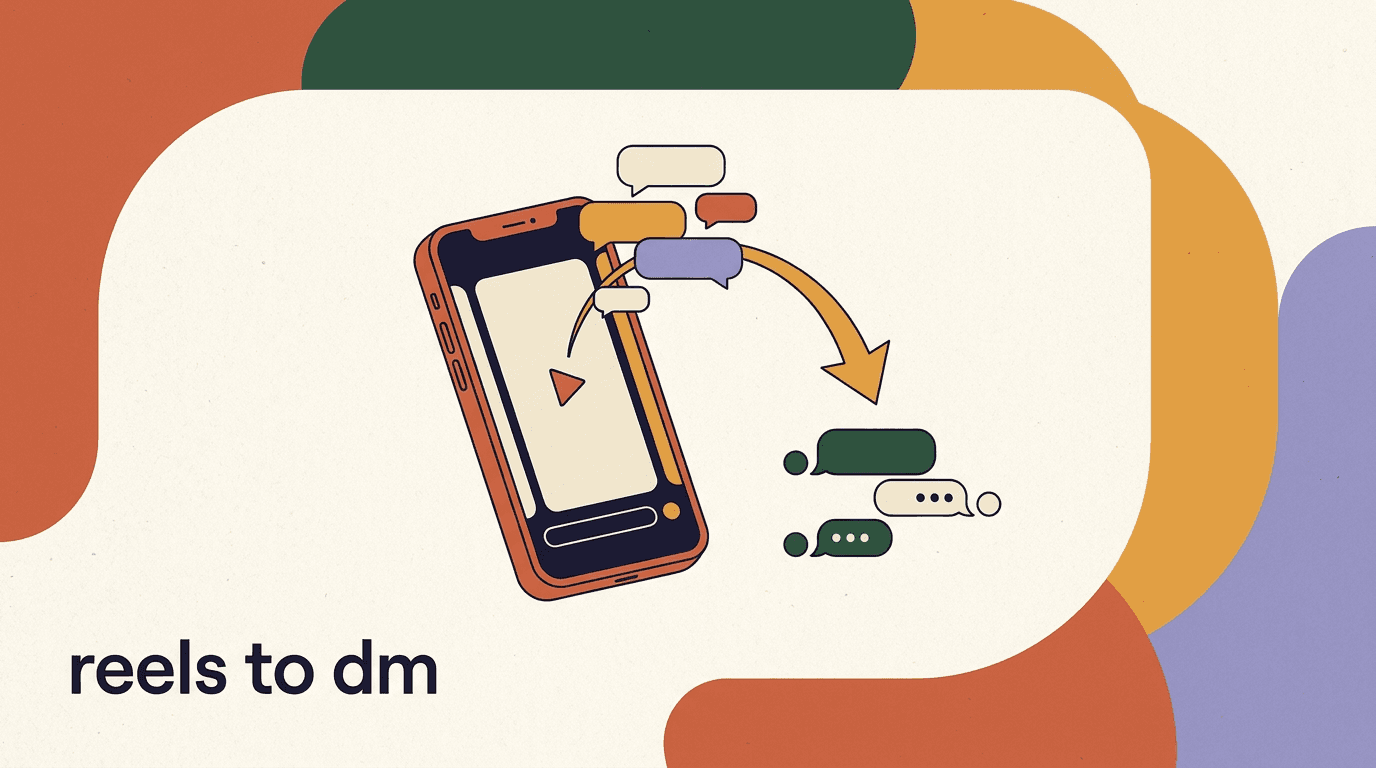
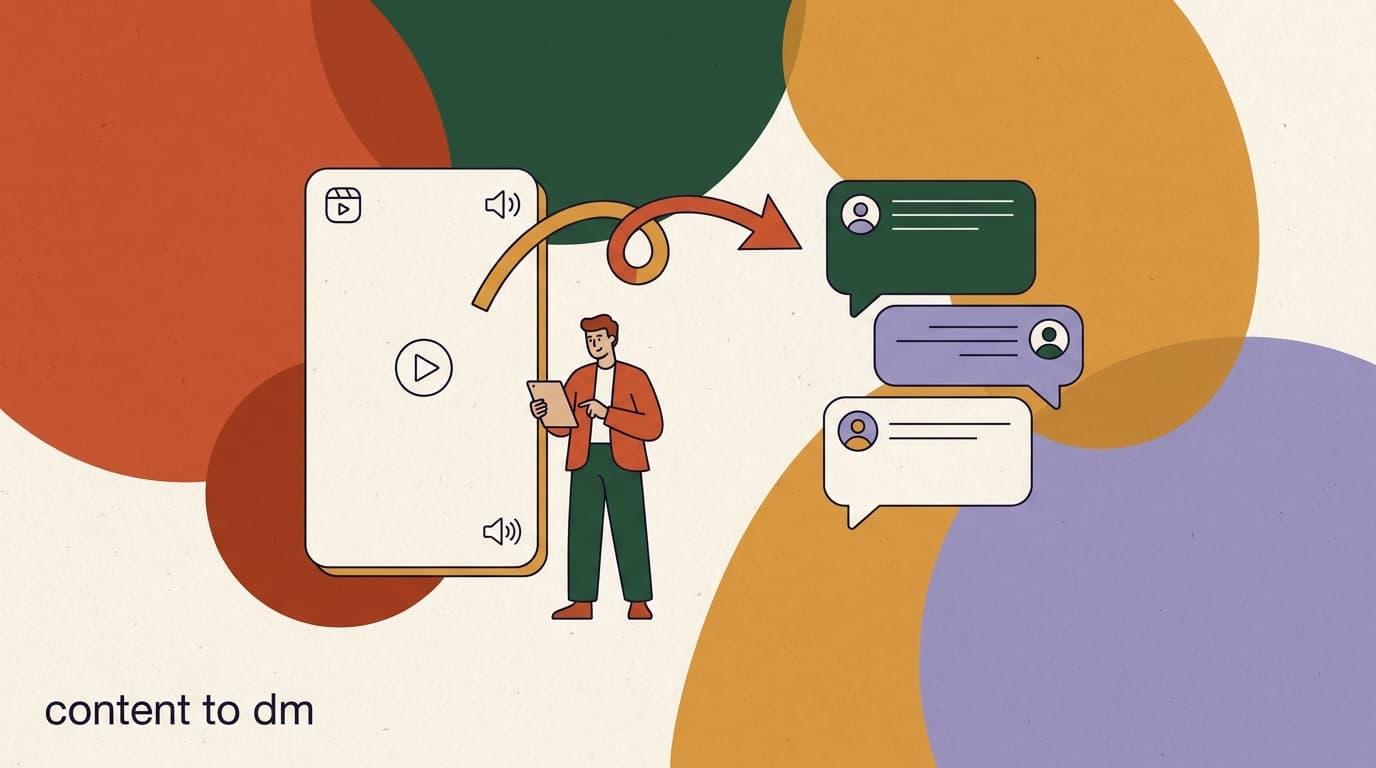
A content to DM strategy closes that gap. The idea is simple: design every piece of content so it has a clear, deliberate path into a direct message, because the DM is where attention becomes a conversation and a conversation becomes a sale. Instead of hoping a viewer remembers you later, you give them one obvious next step — comment a word, reply to a story, tap a sticker — and you meet them in the inbox while they are still interested.
This is a planning piece, not a tactics dump. We will cover how to structure your content pillars, the CTA-to-DM mechanic that moves a viewer into the inbox, how to match offers to the content that earns them, and the measurement loop that tells you which content drives DMs that convert. Full disclosure: we build KlyoChat, a tool that automates the DM side of this, so we have a point of view. But the strategy here works regardless of the tool you use, and we have kept the product talk to one section near the end.
What is a content-to-DM strategy, exactly?
A content-to-DM strategy is a system where every piece of content you publish is built to move the right viewer into a direct message conversation. The content earns the attention; the DM does the selling. You stop relying on the link in bio and the algorithm's memory, and you start engineering the moment a viewer decides to reach out.
The mechanics matter, but the mindset matters more. In a normal content workflow, the goal of a Reel is views. In a content-to-DM workflow, the goal of a Reel is a specific number of qualified conversations. Views are a means; the conversation is the outcome. That single reframe changes how you write hooks, how you end videos, and how you measure success.
It works because the DM is the highest-intent surface on any social platform. Someone who comments a keyword or replies to your story has raised their hand. They have moved from passive scroller to active participant. Selling to a raised hand is a fundamentally different job than selling to a feed.
The DM is the funnel, not the afterthought
Most creators bolt selling on at the end of a content plan. A content-to-DM strategy puts the conversation at the center and treats content as the thing that feeds it. The order matters: decide what conversation you want, then make content that earns it.
Two ways to end the same Reel
- Views-first ending
- "Follow for more tips like this." — vague, no next step, attention evaporates
- DM-first ending
- "Comment GUIDE and I'll send you the full breakdown." — one action, one conversation started
Why does most content fail to turn into conversations?
The gap between attention and revenue is rarely a content-quality problem. Plenty of creators make genuinely good Reels and still make almost nothing. The failure is structural: there is no path from the watch to the conversation.
Three patterns cause it. The first is the vague call to action — "check the link in bio" — which asks a viewer to leave the app, find your profile, tap a link, and remember why they came. Each step loses people. The second is no call to action at all, which is most content; the video ends and the viewer scrolls on. The third is a mismatched ask, where the content was about one thing and the call to action points somewhere unrelated, so the intent the content built does not transfer.
There is also a timing problem. Even when a viewer does want to act, the window is short. Interest spikes during and just after the watch, then decays fast. If your only path is a link they have to find later, you are betting against your own audience's attention span. The DM closes that gap because the action — a comment, a reply — happens in the same place and the same moment as the interest.
- Vague CTAs ("link in bio") leak people at every step out of the app.
- Most content has no CTA at all, so attention simply dissipates.
- Mismatched asks waste the intent the content just built.
- Interest decays within minutes — a delayed path captures almost none of it.
Good content with no path is still a leak
It is tempting to blame reach or the algorithm when content does not convert. More often the content did its job and there was simply nowhere for an interested viewer to go. Fix the path before you blame the content.
How do content pillars feed your DM funnel?
A content pillar is a recurring theme you make content about. Most creator advice frames pillars as a way to stay consistent and on-brand. In a content-to-DM strategy, pillars do something more specific: each one is designed to feed a particular kind of conversation, which in turn maps to a particular offer.
Think of three to five pillars. Too few and your content gets repetitive; too many and you dilute the connection between content and offer. Each pillar should answer a question for a specific person at a specific stage — and each should have a natural DM destination. A how-to pillar feeds people who want the deeper resource. A myth-busting pillar feeds people who realize they have been doing something wrong and want help fixing it. A behind-the-scenes pillar builds trust that makes a later offer land.
The discipline is to map every pillar to a conversation before you make the content. If you cannot name the DM a pillar is supposed to start, it is a vanity pillar — it might grow your follower count, but it will not feed the funnel.
| Pillar type | What it does | DM it feeds |
|---|---|---|
| How-to / educational | Teaches one useful thing | "Send me the full guide / template" |
| Myth-busting / mistakes | Reframes a belief, creates urgency | "Help me fix this / audit me" |
| Proof / results | Shows outcomes, builds belief | "How do I get that result?" |
| Behind-the-scenes / story | Builds trust and relatability | Warms the audience for later offers |
| Offer / product | Directly explains what you sell | "Tell me more / I'm interested" |
Name the conversation before you make the content
For each pillar, write down the exact DM you want it to start. If you cannot, the pillar is decorative. The strongest content plans have a one-to-one line from pillar to conversation to offer.
What is the CTA-to-DM mechanic, and how does it work?
The CTA-to-DM mechanic is the specific instruction at the end of a piece of content that moves a viewer into the inbox. It is the hinge of the whole strategy. Get it right and your conversation volume jumps; get it vague and even great content goes nowhere.
There are three reliable mechanics, and they map to the three main content surfaces. On Reels and posts, the dominant mechanic is comment-a-keyword: "Comment PLAN and I'll DM you the template." The comment is public, low-friction, and doubly useful — it triggers the DM and it boosts the post's engagement signal at the same time. On stories, the mechanic is reply or sticker tap: a question sticker, a poll, or a simple "DM me the word X." In the feed, a strong post caption can do the same with a comment prompt.
Whatever the surface, the mechanic has to be specific, singular, and easy. Specific means one clear word or action. Singular means one ask, not three. Easy means the action lives where the viewer already is. The most common mistake is giving people a choice — comment, or DM, or visit the link — which feels generous but splits the response and lowers the total.
- Pick one keyword per pieceChoose a short, memorable, relevant word — GUIDE, PLAN, AUDIT. One word, one action. Avoid asking for two things.
- Say it clearly and twiceState the CTA in the video and put it in the caption. Spoken plus written catches both the listeners and the muted scrollers.
- Promise something specific in return"I'll send you the full breakdown" beats "DM me." The viewer needs to know exactly what they get for acting.
- Deliver instantly in the DMWhen the keyword fires, the first message should arrive in seconds. Speed is what makes the comment feel worth it and keeps the conversation alive.
One ask beats three
A single, specific CTA almost always outperforms a menu of options. Choice creates friction and splits your response across actions you cannot easily track. Pick the one path you want and remove the rest.
How do you match offers to the right content?
The fastest way to kill a content-to-DM funnel is to mismatch the offer and the content. If a Reel teaches a free quick win and the DM immediately pushes a high-ticket program, the jump is too big and people drop. If a piece of content builds serious intent and the DM only offers a freebie, you leave money on the table. The offer has to fit the temperature of the content that earned the conversation.
Think of it as offer-to-content fit. Cold, top-of-funnel content — broad how-to, entertaining hooks — earns conversations that want a low-commitment next step: a free guide, a checklist, a quick assessment. Warmer content — proof, detailed teaching, story — earns conversations ready for a real offer: a paid product, a call, a program. The DM is where you make the right-sized ask based on what the content already did.
This is also where qualification belongs. Not every commenter is a buyer, and that is fine. The DM conversation can ask one or two questions that sort the curious from the ready, so you spend your selling energy on the people the content actually warmed up. Matching the offer is partly about size and partly about timing — and the conversation is where you read both.
| Content temperature | What the viewer wants | Right-sized DM offer |
|---|---|---|
| Cold (broad how-to, hooks) | A quick, free win | Lead magnet, checklist, free assessment |
| Warm (proof, deep teaching) | Help applying it | Low-ticket product, mini-course, workshop |
| Hot (story, offer content) | To work with you | Call, program, high-ticket offer |
Matched vs mismatched offer
- Mismatched
- Free 30-second tip Reel → DM pitches a $2,000 program → viewer ghosts
- Matched
- Free tip Reel → DM sends the free guide, then asks one question → conversation continues
What does a full content-to-DM flow look like end to end?
It helps to see the whole path in one place. Here is a single piece of content followed all the way from the hook to the sale, with the DM doing the work in the middle.
The point of laying it out like this is that every stage is a design decision. The hook is chosen to attract the right person, not the most people. The CTA is chosen to start a specific conversation. The DM opener is chosen to deliver value fast and earn the next message. None of it is left to chance.
- Hook for the right viewerOpen the Reel speaking to the exact person who would buy. A precise hook attracts fewer but better conversations.
- Deliver one clear value pointTeach or prove one thing well. The content must earn the right to ask for a comment.
- Make the CTA-to-DM"Comment PLAN and I'll send the full version." One word, one promise, said out loud and in the caption.
- Open the DM with the promised thingDeliver instantly. The first message gives exactly what was promised — no bait and switch.
- Qualify with one questionAsk a single, natural question that sorts intent: "Are you doing this for yourself or a client?"
- Make the right-sized offerBased on the answer and the content temperature, offer the next step that fits — free, low-ticket, or a call.
The conversation is the product demo
In a content-to-DM funnel, the DM is not a sales pitch bolted onto content. It is where you demonstrate that you understand the person's problem. Lead with the thing you promised and a genuinely useful question, and the offer becomes the natural next line.
So far this has been about design — pillars, mechanics, offers, the end-to-end flow. The other half of a content-to-DM strategy is measurement. Without it, you are guessing which content is worth making more of. With it, the strategy compounds: every week you learn which pillars and which CTAs actually produce conversations that convert, and you pour effort into those.
The next sections cover the measurement loop, the metrics that matter, common mistakes, and how to scale the whole thing without burning out — including where automation fits and where it does not.
How do you measure which content drives DMs that convert?
Most creators measure content with reach and likes. Those tell you what the algorithm liked, not what your business liked. A content-to-DM strategy needs a different scoreboard, one that follows the line from a specific piece of content to a specific conversation to a specific outcome.
The measurement loop has four numbers per piece of content: how many people saw it, how many started a DM (the CTA conversion), how many of those conversations qualified, and how many turned into a sale or booked call. The ratios between those numbers tell you where to fix things. High views but low DM starts means the CTA is weak. High DM starts but low qualification means the content is attracting the wrong person. High qualification but low sales means the offer or the conversation needs work.
Track this at the level of content type, not just individual posts. After a few weeks you will see that one pillar consistently produces conversations that buy and another produces volume that never converts. That is the signal to rebalance your calendar. The goal is not a perfect dashboard; it is a weekly habit of asking which content earned real conversations and doing more of it.
| Metric | What it tells you | Fix if it's low |
|---|---|---|
| DM starts per 1,000 views | Is the CTA-to-DM working? | Sharpen the keyword and the promise |
| Qualified rate | Right person reaching out? | Tighten the hook and pillar targeting |
| Reply / engagement rate in DM | Is the opener earning the next message? | Lead with value, ask better questions |
| Conversion to sale / call | Does the offer fit the content? | Re-match offer size to content temperature |
Measure per content type, not just per post
Individual posts are noisy. Group results by pillar and by CTA style, and patterns appear within a couple of weeks. That grouped view is what tells you how to rebuild next month's calendar.
Which metrics actually matter (and which to ignore)?
It is easy to drown in numbers. The content-to-DM strategy needs only a handful, and a clear sense of which vanity metrics to stop worrying about. Reach and likes are inputs at best; they matter only insofar as they produce conversations. A Reel with a million views and zero DMs did nothing for your business, and a Reel with ten thousand views and forty buying conversations did a great deal.
Focus on the conversation metrics. The single most important number is DM starts from content, because it is the first point where attention becomes intent. Right behind it is the qualified conversation rate, then conversion. Those three, tracked over time, are your real growth dashboard.
- Track: DM starts per piece, qualified rate, conversion to sale or call.
- Track: which keyword and which pillar produced each conversation.
- Mostly ignore: raw likes and saves unless they correlate with DM starts.
- Be skeptical of: follower count growth that does not move conversation volume.
Followers are not the goal
A growing follower count feels like progress, but a content-to-DM strategy is judged on conversations and revenue. Plenty of large accounts make little money because nothing they post starts a sales conversation. Optimize the line to the DM, not the line to the follower count.
How do you plan a week of content-to-DM content?
Strategy only pays off when it survives contact with a real calendar. Here is a practical way to plan a week so that every piece has a job and a path. The aim is not to turn every post into a hard sell — it is to make sure your output as a whole feeds the funnel rather than just the algorithm.
A useful default mix is to spend the majority of your posts on attention and trust — how-to, proof, story — and a smaller share on direct offer content, while keeping a clear CTA-to-DM on most of them. The trust content earns the right to make offers; the offer content converts the warmth the rest built.
- Assign each slot a pillarBefore writing anything, label each planned post with its pillar so the week covers your mix on purpose, not by accident.
- Attach a CTA-to-DM to eachGive every piece a keyword and a promised deliverable. Even story slots get a reply or sticker mechanic.
- Pre-write the DM openerFor each keyword, draft the first message so delivery is instant and consistent when the comments come in.
- Decide the offer for each conversationMatch the offer to the content temperature in advance so you are not improvising mid-conversation.
- Review last week's numbers firstStart planning by looking at which pillars and CTAs converted, and weight the new week toward what worked.
A sample content-to-DM week
- Mon — How-to Reel
- Keyword TEMPLATE → free template → soft offer
- Tue — Story
- Question sticker → reply → quick chat
- Wed — Proof / results post
- Keyword RESULTS → case breakdown → call invite
- Thu — Myth-busting Reel
- Keyword FIX → audit offer
- Fri — Offer / product Reel
- Keyword INFO → product details → buy link in DM
What are the most common content-to-DM mistakes?
The strategy is simple to describe and easy to execute badly. A handful of mistakes account for most failed funnels, and almost all of them are fixable in a week once you see them.
The biggest is treating the DM as an afterthought — running great content with no consistent, fast, value-first opener waiting on the other side. The second is the menu CTA, asking people to comment or DM or visit the link, which splits and dilutes the response. The third is mismatched offers, where the jump from content to ask is too big or too small. And the fourth, quieter one is ignoring the platform rules that govern automated messaging.
- Bolting the DM on at the end instead of designing it first.
- Giving viewers a menu of actions instead of one clear CTA.
- Pushing a big offer off the back of a small piece of content.
- Slow or generic DM openers that kill the momentum the content built.
- Making content for reach that never maps to a conversation.
- Ignoring Meta's rules and the 24-hour messaging window.
Respect the platform rules and the 24-hour window
Automated DMs on Instagram and Facebook operate under Meta's policies, including a 24-hour window for standard messaging after a user interacts. Build your flow to deliver value inside that window and to follow the rules — getting flagged or restricted undoes everything the content earned. Whatever tool you use, design for compliance.
How do you write hooks that attract the right conversations?
The hook is where a content-to-DM strategy quietly succeeds or fails, and it does so before the CTA ever appears. A hook's job in this model is not to win the most views; it is to win the right views — the viewers who, three lines later, will want the thing your DM offers. A hook that is too broad pulls in a crowd that will never convert, and a wide crowd that does not convert is just expensive noise.
The fix is to write hooks that pre-qualify. Name the person, name the problem, or name the stage. "If you're a coach struggling to fill your calendar" filters harder than "Here's a growth tip," and the people who stay are the people your offer is for. You will get fewer comments, but a far higher share of them will turn into conversations worth having. In a content-to-DM strategy, a smaller number of qualified DMs beats a flood of curious ones every time.
A useful habit is to write the hook and the CTA together, as a pair, before you write the middle. If the hook attracts someone and the CTA promises that exact person a relevant next step, the content in between almost writes itself. When the hook and the CTA are designed separately, they drift apart, and the conversations that result are mismatched from the first line.
Write the hook and CTA as a pair
Draft the opening line and the closing ask together before you fill in the middle. When they are designed in sync, the content attracts the exact person the offer is for, and the conversations that follow are pre-qualified by the time they hit your inbox.
Broad hook vs pre-qualifying hook
- Broad
- "Here's a tip to grow on Instagram" → many comments, mostly curious, few convert
- Pre-qualifying
- "If you sell services and your DMs are dead, watch this" → fewer comments, mostly buyers
How do stories fit into a content-to-DM strategy?
Reels get most of the attention in this conversation because they carry reach, but stories are the quieter engine of a content-to-DM strategy. Reels bring new people in; stories convert the people who already follow you. Treating them as the same job wastes both. The right mental model is that Reels feed the top of the funnel and stories work the middle, turning warm followers into conversations.
Stories have mechanics Reels do not. Question stickers, polls, quizzes, and the swipe-up or link sticker all create low-friction ways to start a DM without asking someone to type a keyword in a public comment. A poll that asks "Which of these is your biggest struggle?" both segments your audience and gives you a reason to follow up in the inbox with the people who picked the option your offer solves. The interaction is the trigger; the DM is the follow-up.
Because stories reach a warmer audience, the offers attached to them can run hotter. A follower who replies to your story already knows you, so a story is a fair place to invite a call, share a product, or open a deeper conversation that a cold Reel viewer would not be ready for. Sequencing matters: a week of value-led stories that ends in an offer story will convert better than a single cold pitch dropped on people who have not heard from you in a while.
- Reels bring new viewers; stories convert the followers you already have.
- Use question stickers, polls, and quizzes as low-friction DM triggers.
- Stories reach a warmer audience, so hotter offers fit better there.
- Sequence value-led stories before an offer story rather than pitching cold.
How long does a content-to-DM strategy take to work?
It is worth setting honest expectations, because the strategy rewards patience and punishes impatience. The mechanics — the keyword fires, the DM goes out — work on day one. What takes time is the learning: figuring out which pillars produce conversations that convert, which hooks attract the right person, and which offers fit which content. That feedback loop needs volume, and volume needs weeks.
A reasonable arc looks like this. In the first couple of weeks you are mostly proving the plumbing works and getting your DM openers consistent. Over the following month, with a steady posting cadence and the measurement loop running, patterns emerge: certain pillars and certain CTAs clearly outperform. By the second or third month, you are no longer guessing — you are weighting your calendar toward what converts and the strategy starts to compound. The creators who give up usually quit in the first three weeks, before the data has had a chance to teach them anything.
The single biggest accelerant is consistency of input. The measurement loop only works if there is enough content flowing through it to compare. A few posts a week, each with a clear CTA-to-DM and a tracked outcome, will teach you more in a month than a flurry of posts with no consistent mechanic. Treat the first month as data collection, not as a verdict on whether the strategy works.
Give the loop a month before you judge it
The mechanics work immediately, but the learning — which content earns conversations that convert — needs weeks of consistent input to surface. Most people who abandon the strategy quit before the data could have helped them. Treat month one as data collection.
How do you scale this without doing every DM by hand?
The content-to-DM strategy has one obvious bottleneck: the DMs themselves. When a Reel works, you can get hundreds or thousands of keyword comments in an hour. Answering each by hand is impossible, and slow replies kill the momentum that made the strategy work in the first place. This is the point where most creators either give up on the strategy or burn out trying to keep up.
The answer is to automate the predictable part of the conversation and keep the human part human. The predictable part is the trigger and the opener: when someone comments the keyword, the first message — delivering exactly what you promised — should fire instantly and automatically. From there, an AI agent can handle the common follow-up questions, qualify with a question or two, and hand off to you when the conversation is genuinely ready for a person. You stay in the loop for the high-value conversations and out of the loop for the repetitive ones.
Automation does not replace the strategy; it removes the bottleneck that stops the strategy from scaling. The pillars, the CTA design, the offer matching, and the measurement are still your job. Automation just makes sure that when the content works, the conversation actually happens — fast, consistently, and within the rules.
Automate the opener, keep the relationship human
The first message after a keyword comment should always be instant and automated. The conversation after that can blend an AI agent for common questions with you stepping in for the moments that matter. Speed on the opener is non-negotiable.
How does KlyoChat support a content-to-DM strategy?
We built KlyoChat for exactly this workflow, so it is fair to show where it fits. KlyoChat is an AI-native, mobile-first unified inbox for Facebook, Instagram, Telegram, WhatsApp, TikTok, and X. The parts that matter most for a content-to-DM strategy are comment-to-DM and keyword triggers, custom AI agents, and analytics that tie content to DM conversions.
In practice, you set a keyword like PLAN on a Reel; when someone comments it, KlyoChat fires the opener you wrote instantly, then a custom AI agent — included in your plan, trained on your knowledge base — handles common questions, qualifies, and hands off to you when a conversation is ready. The analytics close the measurement loop by showing which content and which keywords produced conversations that converted, so your weekly planning is grounded in real numbers rather than guesses.
We will also be honest about the limits. KlyoChat does not do native SMS or email, so if those channels are core to your funnel you will need something else for them. We are a newer, smaller company than the largest incumbents, with a smaller community and template library. And like every tool in this space, KlyoChat operates within Meta's rules and the 24-hour messaging window — automation has to respect the platform, and ours is built to.
- Comment-to-DM and keyword triggers turn the CTA into an instant conversation.
- Custom AI agents are included — no separate AI add-on.
- Analytics tie specific content to the DMs that convert.
- Mobile-first, so you can run the whole funnel from your phone.
- Honest limit: no native SMS or email; newer and smaller than the incumbents.
- 7-day free trial, no credit card required.
| Strategy need | KlyoChat capability |
|---|---|
| Move viewers from content to DM | Comment-to-DM and keyword triggers across channels |
| Instant, consistent opener | Automated first message fires in seconds |
| Handle volume without burnout | Custom AI agents (included) qualify and hand off |
| Close the measurement loop | Analytics tying content to DM conversions |
| Run it from your phone | Mobile-first unified inbox for all channels |
The tool serves the strategy, not the other way around
Automation only matters once you have pillars that feed conversations and a CTA mechanic that earns them. Get the strategy right first; then a tool like KlyoChat removes the bottleneck so the strategy can scale.
KlyoChat plans at a glance
- Basic
- $19/mo — entry plan for a single creator getting started
- Pro
- $49/mo ($39 billed yearly) — all channels, 10,000 contacts, custom AI agents
- Business
- $129/mo — higher limits and team features for growing operations
When is a content-to-DM strategy the wrong fit?
It would be dishonest to pretend this works for everyone. The content-to-DM model fits creators, coaches, service providers, and small brands who sell something a conversation can move — a course, a program, a service, a considered product. It fits anyone whose audience lives on social platforms and whose offer benefits from a human or AI conversation before the sale.
It fits less well in a few cases. If your product is a pure impulse buy with no conversation needed, a direct link may convert better than a DM detour. If your audience is entirely off-platform — email-first, search-first — then the social DM is not where your buyers are. And if you have no offer at all yet, no amount of conversation volume will turn into revenue; build the offer first, then the funnel.
Even in those cases, the underlying principle holds: design content with a deliberate next step rather than hoping attention converts itself. The DM is one good next step among several. For most creators selling something that benefits from a conversation, it is the best one.
- Strong fit: creators, coaches, service providers, considered-purchase brands.
- Strong fit: audiences that live on Instagram, TikTok, and other social platforms.
- Weaker fit: pure impulse products where a direct link converts fine.
- Weaker fit: email-first or search-first audiences who are not in your DMs.
- No fit yet: accounts with no offer — build the offer before the funnel.
The core of a content-to-DM strategy is one shift: stop treating content and selling as separate jobs, and design every Reel, post, and story to start a specific conversation. Build three to five pillars that each feed a real conversation, attach one clear CTA-to-DM mechanic per piece, match the offer to the content's temperature, and measure which content drives DMs that convert — then make more of that.
Get the design right and the strategy compounds. Each week you learn what works, your calendar tilts toward it, and your conversations get more qualified. When the volume outgrows what you can answer by hand, automate the opener and the repetitive questions so the strategy scales without breaking. For the wider system this fits into, see our piece on building an Instagram revenue system; for the mechanics of the comment trigger, see our guide to Reels comment automation; and for the selling side, see how to monetise Instagram DMs.