Conversational marketing in 2026 is no longer a niche tactic bolted onto a social strategy — for a growing number of creators and brands it is the strategy. The shift is simple to describe and hard to ignore: people would rather send a message than fill out a form, and they expect a reply in seconds, not days. The channels where that happens — Instagram DMs, WhatsApp, Telegram, TikTok messages — have quietly become where buying decisions actually get made.
This piece is a state-of-the-practice read. It is not a pitch and not a prediction deck. It covers what is genuinely working in conversational marketing right now, what is losing steam, how the channel mix has shifted, where AI fits, and a practical framework you can use to start without overcommitting. The goal is to leave you with a clear picture and a first move, whatever tool you end up using.
Quick disclosure up front: we build KlyoChat, a unified inbox and automation tool for social messaging. That gives us a vantage point on what teams are doing, but it also gives us a bias, so we have kept this educational and flagged the one section where we talk about our own product. Where we cite trends we frame them qualitatively rather than inventing numbers.
What is conversational marketing, really, in 2026?
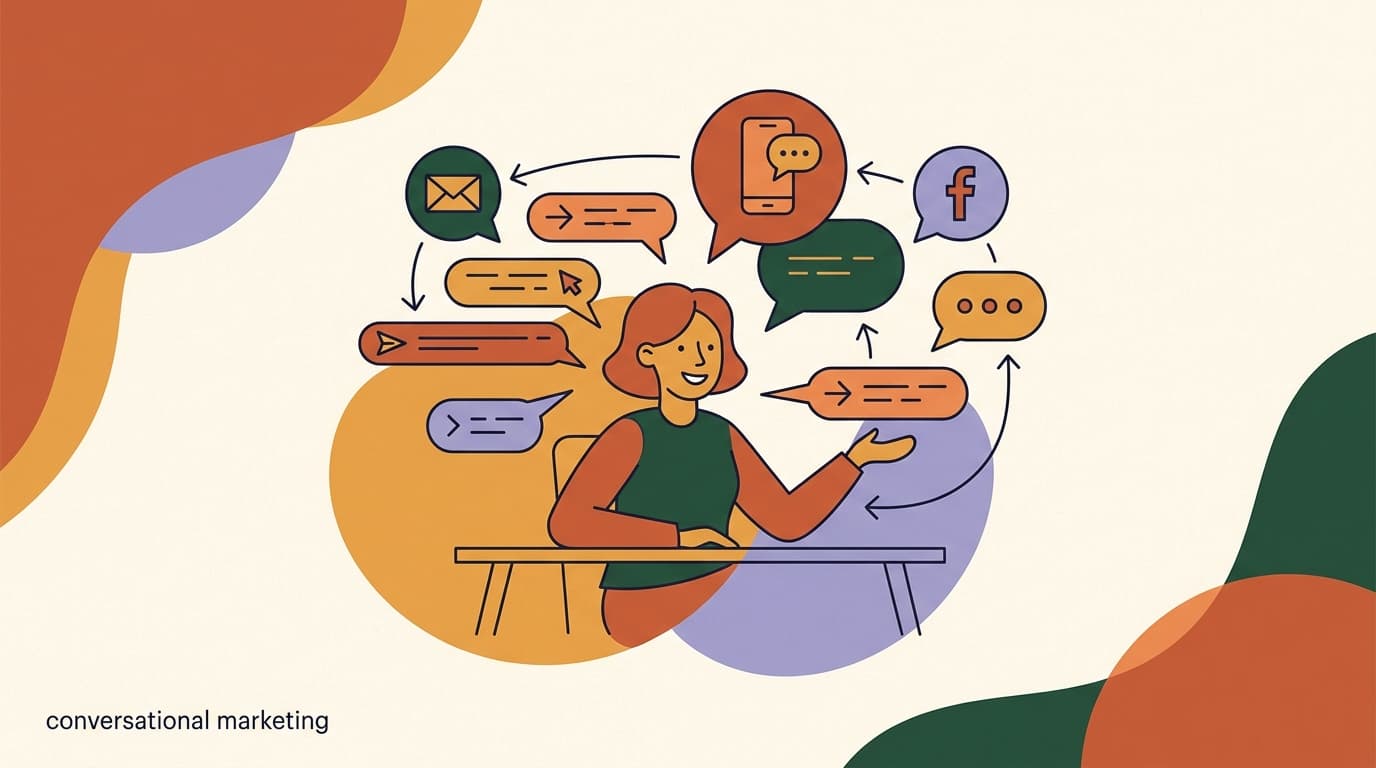
Conversational marketing is the practice of moving prospects and customers toward a decision through real two-way messaging rather than one-way broadcast. Instead of pushing someone to a landing page and hoping they convert alone, you meet them in a chat thread, answer the actual question they have, and guide them to the next step. The conversation is the funnel.
It overlaps with a few terms people use interchangeably, and it helps to separate them. Chat marketing usually refers to the automation layer — flows, keywords, triggers. Conversational commerce is the subset where the conversation ends in a purchase. DM marketing and messaging marketing describe the channels. Conversational marketing is the umbrella over all of it: the strategy of using dialogue, automated or human, to sell and support.
What changed by 2026 is maturity. Five years ago this meant clunky chatbots that frustrated people into leaving. Today it means AI agents that understand intent, human handoff that is fast and contextual, and channels that buyers already live in. The tactic grew up, and the bar for doing it well rose with it.
It is worth being precise about what conversational marketing is not, because the term gets stretched. It is not a live-chat widget that nobody answers. It is not an autoresponder that replies once and goes silent. It is not a chatbot that exists to deflect people away from a human. Each of those is a degraded version that gives the category a bad name. Real conversational marketing assumes the other person will reply, and it is built to handle that reply well — quickly, relevantly, and with a path to a human when the moment calls for it.
The distinction matters for how you measure success, too. A broadcast campaign is judged on reach and opens. A conversational campaign is judged on whether dialogue happened and where it led. That reframe — from how many people saw it to how many people talked to us and what came of it — is the mental shift that everything else in this article builds on.
The one-line definition worth remembering
Conversational marketing treats a message thread as the place where interest becomes a decision. If a prospect can ask, get answered, and act without leaving the chat, you are doing conversational marketing — everything else is detail.
Why has conversational marketing taken over in 2026?
Several forces converged. First, attention moved into messaging. People spend more of their day inside chat apps than inside feeds, and a DM lands with a directness that a post in an algorithmic feed cannot match. A message is a one-to-one signal in a one-to-many world. When something arrives in a messaging inbox, it gets read in a way a feed post — glimpsed and scrolled past — rarely does.
Second, expectations changed. The speed of a good consumer chat experience reset what people tolerate everywhere else. A prospect who gets an instant, useful reply from one brand will hold every other brand to that standard. Slow replies now read as disinterest, and disinterest loses sales. The window in which a prospect is willing to wait shrank — interest is perishable, and an answer that arrives an hour later often arrives after the moment has passed.
Third, the economics of attention got harder. Reach is more expensive and more crowded, so the marketing that earns a direct conversation — rather than renting a moment of feed attention — compounds better. A conversation is owned in a way an impression is not. That is the structural reason conversational marketing keeps gaining ground rather than fading as a fad.
There is a fourth force that gets less attention but matters quietly: trust moved. People have grown skeptical of polished, one-way marketing and more receptive to direct, responsive contact. A brand that answers a real question in a DM, in plain language, with no detour, earns a kind of credibility that a beautifully produced ad cannot. The conversation is the proof. In a market saturated with claims, being the brand that actually responds is itself a differentiator.
Put together, these forces explain why conversational marketing is not just another channel to add to the plan. It is a response to where attention, expectation, economics, and trust all moved at once. That is rare, and it is why the teams treating it as core rather than experimental tend to pull ahead.
- Messaging is where attention concentrated — one-to-one beats one-to-many for intent.
- Buyers expect near-instant, useful replies and penalize slowness.
- Conversations are owned and reusable in a way paid impressions are not.
- AI made fast, personal responses possible at a scale a human team could not reach alone.
What is actually working in conversational marketing right now?
Let's get concrete. Across creators, D2C brands, local services, and small agencies, a handful of plays consistently produce results in 2026. None of them are exotic — what separates the teams winning with them is execution speed and follow-through, not secret tactics.
Before the list, a pattern worth naming: every one of these plays converts a low-commitment action into a higher-commitment one without asking for a leap. A comment becomes a DM. A DM becomes a question answered. A question becomes a recommendation. A recommendation becomes a purchase. Each step is small enough that saying yes feels natural. The plays that fail are the ones that ask for the leap too early — the cold pitch, the form before the conversation, the buy button before the question is answered.
Here is the short list of what is working, with the reason each one holds up.
| Tactic | Why it works in 2026 | Best for |
|---|---|---|
| Comment-to-DM | Turns public engagement into a private one-to-one thread automatically | Creators, product launches, lead magnets |
| WhatsApp campaigns | High open rates and a channel buyers check constantly | D2C, local services, re-engagement |
| AI first-response agents | Instant, useful replies around the clock without a night shift | Any account with after-hours volume |
| Chat-to-sale flows | Removes the landing-page detour; the buy happens in-thread | Conversational commerce, high-consideration goods |
| Qualification-then-handoff | AI screens and routes; humans close the ones worth closing | Services, higher-ticket sales |
Pick one play, not five
The teams that struggle try to run every tactic at once. The teams that win pick the single play that matches their goal — usually comment-to-DM for creators or WhatsApp re-engagement for brands — get it genuinely good, then add a second. Depth beats breadth here.
Why is comment-to-DM the standout tactic this year?
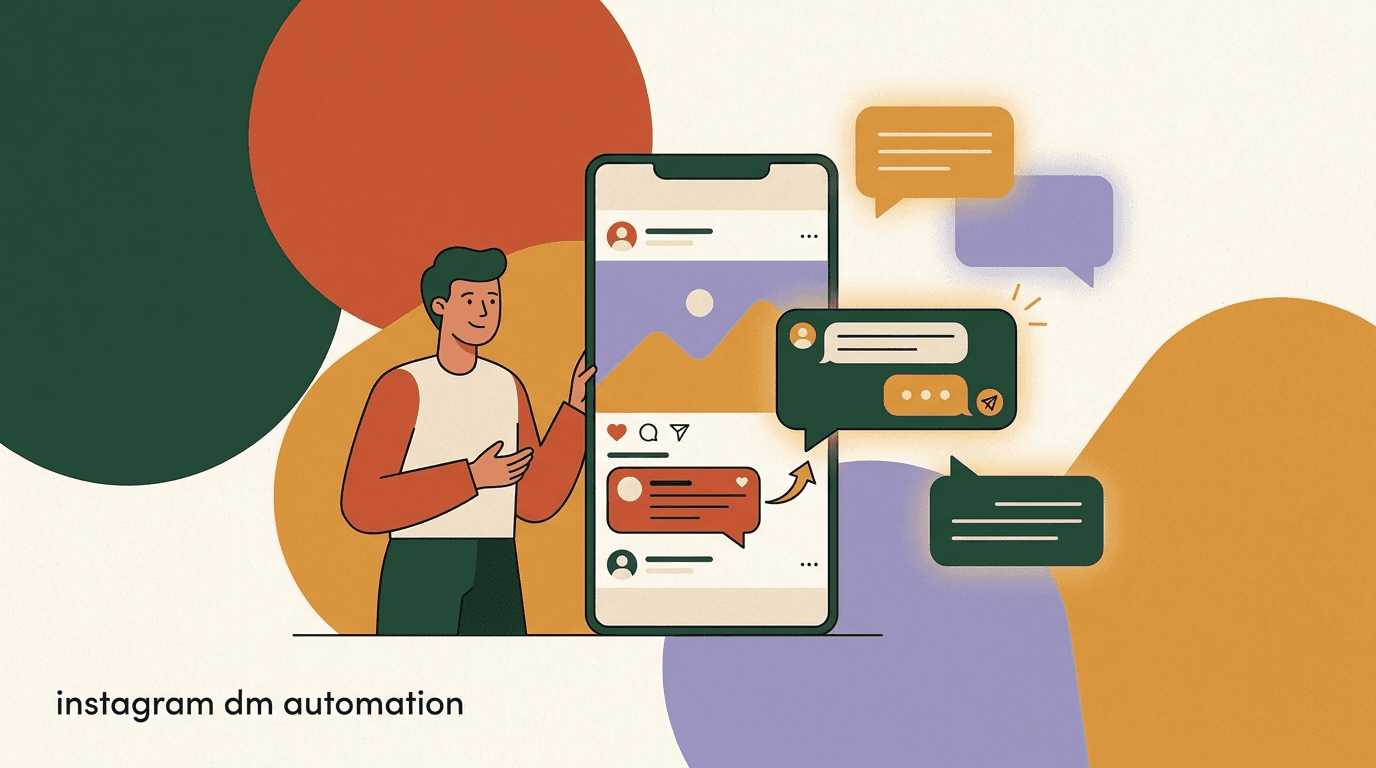
If one tactic defines conversational marketing in 2026, it is comment-to-DM. The mechanic is simple: someone comments a keyword on your post or Reel, and an automation opens a private DM with them. A public, low-commitment action becomes a private, high-intent conversation — at the exact moment the person is most interested.
It works because it respects how people actually behave. Commenting is easy and social; clicking out to a form feels like work. By meeting the comment with a DM, you remove every step between curiosity and conversation. And because it fires automatically, a single post that performs well can open thousands of threads without anyone watching a screen.
The teams getting the most from it treat the DM as the start of a relationship, not a dump. The first message answers the implied question, the second offers the next step, and a human or AI agent is ready if the person replies with something off-script. Done well, it feels like a fast, helpful concierge. Done badly, it feels like a robot, and people can tell instantly.
There is a content side to this that is easy to miss. Comment-to-DM only works if the content earns the comment. The most effective creators design the post around the trigger: the hook promises something specific, the call to action names the exact keyword, and the payoff in the DM matches the promise. When the post and the DM are designed together as one experience, conversion is high. When the trigger is bolted onto a post that was not built for it, comments are sparse and the threads that do open feel disconnected.
A common failure mode is over-automating the DM itself. Some teams build elaborate branching menus that make the prospect tap through three choices before getting anything. That recreates the exact friction comment-to-DM was supposed to remove. The better pattern is to deliver value in the very first message and let the conversation branch only if the person engages further. Give first, ask second.
Comment-to-DM in practice
- Post
- Reel: a short tip with the line 'comment GUIDE for the full checklist'
- Trigger
- Anyone commenting GUIDE gets an automatic DM
- DM 1
- Here's your checklist — link plus a one-line summary
- DM 2
- Want the version with examples? Reply YES
- Handoff
- An off-script reply routes to an AI agent or a person
How big has WhatsApp and messaging-app marketing become?
WhatsApp has moved from a support afterthought to a primary marketing channel for many brands, especially outside the US where it is the default way people communicate. The appeal is straightforward: messages get opened, and a WhatsApp thread carries a sense of permission and intimacy that a marketing email rarely does. People treat their WhatsApp inbox as personal space, which is both the opportunity and the responsibility.
Telegram, Instagram DMs, and increasingly TikTok messaging fill out the picture. The common thread is that buyers already live in these apps for personal reasons, so a brand that earns a place there is meeting them where attention already is rather than competing for a new slice of it. The channel that wins for a given business is usually the one its audience already prefers for personal messaging — which is why the answer differs so much by region and demographic. There is no single right channel; there is the right channel for your specific people.
The discipline that separates good messaging-app marketing from spam is consent and relevance. A WhatsApp broadcast to people who opted in, timed well, and genuinely useful performs. The same broadcast sent to a scraped list, untimed, and self-serving gets reported — and reports damage your ability to use the channel at all. The channel rewards restraint.
There is also a structural detail worth understanding before you build on WhatsApp: it has its own rules and its own costs. Business messaging is organized around conversation windows and message templates that the platform reviews, and there are per-conversation fees charged by the platform that apply regardless of which software you use to send. None of this is prohibitive, but it does mean WhatsApp is not a free blast channel. The cost structure actually nudges you toward the right behavior — because every conversation has a price, you are incentivized to make each one count rather than spray.
The most effective WhatsApp programs in 2026 lean on a small set of use cases: re-engaging people who already bought, recovering an abandoned intent, answering pre-purchase questions, and sending genuinely useful updates people asked for. Notice that none of those are cold. WhatsApp rewards warm relationships and punishes cold ones harder than almost any other channel, which is exactly why it pairs so well with an inbound tactic like comment-to-DM that warms the relationship first.
Permission is the whole game on WhatsApp
Messaging apps treat unwanted contact harshly — both the platforms and the people. Build on explicit opt-in, keep frequency low, and make every message worth opening. A reported account loses the channel. Treat someone's messaging inbox as the privilege it is.
Bridge: from tactics to the bigger shift
The individual tactics matter, but they are symptoms of a larger move. Marketing is migrating from interruption toward invitation — from buying attention in a feed toward earning a conversation in an inbox. To use the tactics well, it helps to see the shift they belong to: the change in channel mix, and the change in who, or what, does the responding.
How has the channel mix shifted away from email and feeds?
Email and feed posting are not dead — they are being rebalanced. For top-of-funnel reach, feeds still matter; for transactional and lifecycle messaging, email still has a role. What changed is the middle, where interest turns into action. That middle increasingly happens in chat, because chat is faster, more personal, and more likely to be seen.
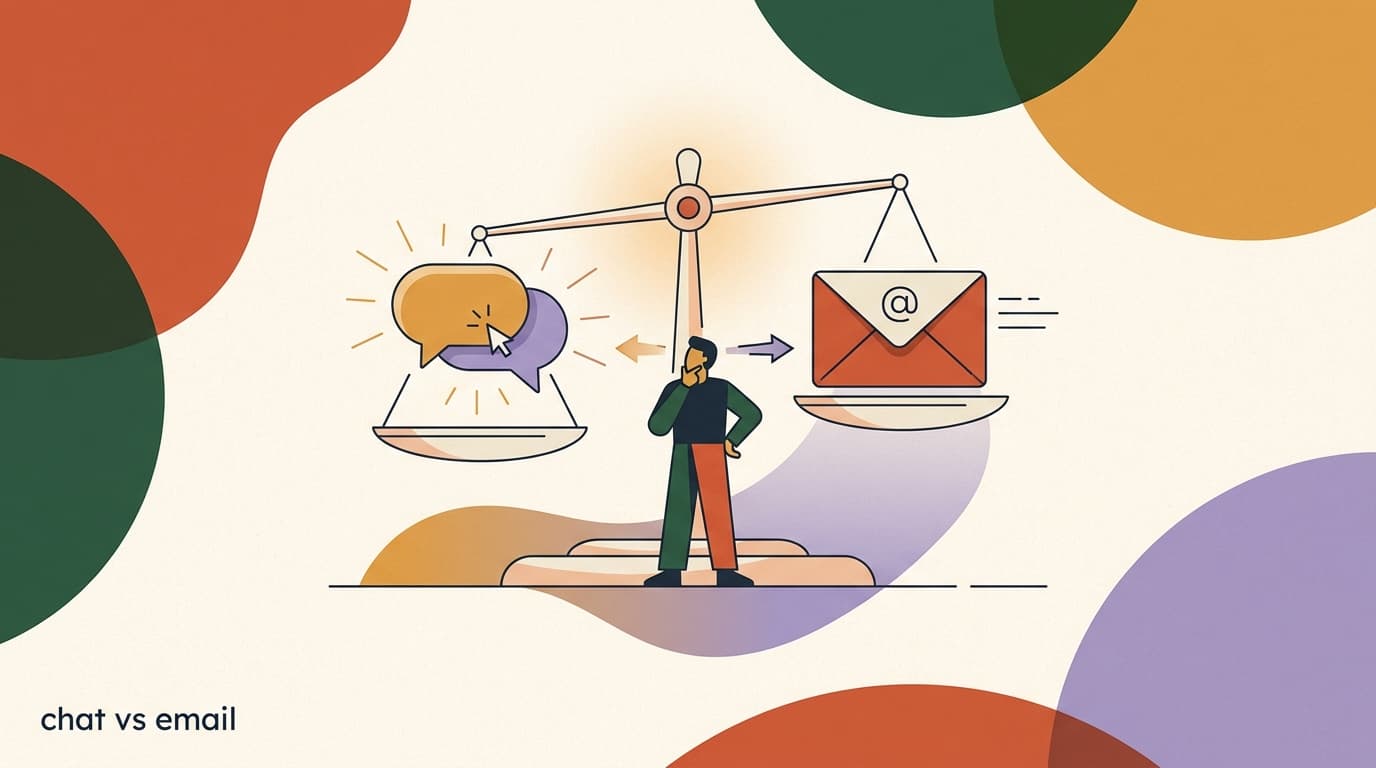
The honest framing is that these channels do different jobs, and the smart move is to use each for what it is good at rather than declaring a winner. We compare email and chat head-to-head in a companion piece, but the short version is below.
One way to think about it: feeds are how you get found, chat is how you get chosen, and email is how you stay remembered. A prospect discovers you in a feed, decides in a chat, and is retained over time by email. Problems arise when teams ask a channel to do a job it is bad at — running a high-velocity sales conversation over email, or trying to nurture someone for six months in a DM thread they will eventually mute. Match the job to the channel and each one does more with less.
| Channel | Strength | Weakness | Best job in 2026 |
|---|---|---|---|
| Owned, detailed, good for long content | Crowded inbox, slower to open, lower engagement | Receipts, lifecycle, long-form nurture | |
| Feed posts | Discovery and reach to new people | One-way, algorithm-dependent, fleeting | Top-of-funnel awareness and the comment trigger |
| Chat / DM | Fast, personal, two-way, high open rate | Needs fast response; spam-sensitive | Turning interest into a decision |
| SMS | Direct and immediate | Costly, easily seen as intrusive | Time-critical alerts where permission is strong |
Not a replacement — a rebalance
The most effective setups in 2026 do not abandon email for chat. They route discovery to feeds, decisions to chat, and durable lifecycle messaging to email. The mistake is forcing one channel to do every job.
What is the role of AI in conversational marketing now?
AI is what made conversational marketing scale without breaking. A few years ago, the bottleneck was obvious: real conversations need real responses, and a human team can only answer so many at once. The choice was slow-but-personal or fast-but-robotic. AI agents collapsed that trade-off.
In 2026 the strongest setups use AI for the first response and the repetitive middle — answering common questions, qualifying, surfacing the right product, booking a call — and reserve humans for the moments that need judgment, empathy, or a real decision. The agent does not pretend to be human; it is fast, accurate, and knows when to hand off. That handoff is the part teams most often get wrong, and the part that most determines whether the experience feels good.
The cautionary note is real. An AI agent that guesses, that loops, or that buries a frustrated person in canned replies does more damage than no automation at all. The value comes from grounding the agent in your actual knowledge — products, policies, FAQs — and giving it a clean path to a human. We go deeper on the state of the technology in a dedicated piece.
It also helps to be clear-eyed about what AI is good and bad at in this context. It is good at retrieving the right fact, maintaining patience across repetitive questions, working in multiple languages, and never sleeping. It is poor at reading a delicate emotional situation, making a judgment call that is not in its knowledge base, or owning a mistake in a way that rebuilds trust. The design principle that follows is simple: let AI carry volume and speed, let humans carry nuance and stakes. A setup that respects that division feels good to the person on the other end; one that ignores it feels cold exactly when warmth was needed.
Transparency is the other half. The strongest setups do not try to trick anyone into thinking the AI is a person. They let the agent be useful and obviously an assistant, with a person clearly available. Customers in 2026 are comfortable with a capable assistant — what they resent is being deceived, or being trapped. Honesty about what they are talking to, paired with a real exit to a human, consistently outperforms a bot that pretends.
- AI handles first response and repetitive questions so nothing waits.
- Humans take the high-judgment, high-empathy, high-value moments.
- Grounding the agent in real knowledge is what separates helpful from harmful.
- A fast, clean handoff to a person is non-negotiable for quality.
Judge AI by its handoff, not its cleverness
The quality of a conversational AI setup shows in how gracefully it admits a limit and routes to a human. An agent that hands off fast and with context beats a flashier one that traps people in loops. Optimize the seam, not just the bot.
What is fading in conversational marketing?
Just as useful as knowing what works is knowing what to stop doing. A few practices that were tolerated, or even effective, a few years ago now actively hurt.
The throughline is that one-way, high-volume, low-relevance tactics are losing, and two-way, permission-based, high-relevance ones are winning. Audiences got better at spotting the difference, and platforms got stricter about enforcing it.
| Fading | Why it stopped working | What replaced it |
|---|---|---|
| Spray-and-pray broadcasts | Low relevance gets ignored or reported | Segmented, opt-in, timely sends |
| Robotic decision-tree bots | Frustrate people who have a real question | AI agents that understand intent |
| Cold DM outreach to strangers | Reads as spam, risks account limits | Comment-to-DM and inbound triggers |
| Human-only inboxes | Cannot keep up with after-hours volume | AI first response with human handoff |
| Link-out-to-form funnels | Every extra step loses people | Chat-to-sale that stays in-thread |
Volume without relevance is now a liability
The old reflex — reach more people with the same message — backfires in messaging. Reports, blocks, and account limits punish irrelevance directly. In 2026, sending less but better is not just polite; it is what keeps the channel open to you.
What does conversational commerce look like in practice?
Conversational commerce is the part of this that ends in a sale, and it has become concrete enough to describe step by step. The idea is to compress the distance between a question and a purchase to almost nothing — the buyer asks, gets the right answer, and buys, all inside one thread.
For higher-consideration purchases, the chat handles the back-and-forth that a static product page cannot: which size, will it work for my case, what is the return policy, can I see another color. Each answered question removes a reason not to buy. For simpler purchases, the chat just removes friction — confirm, pay, done.
The reason this outperforms a traditional funnel is subtle but important. A landing page is a monologue: it has to anticipate every objection and answer it in advance, for everyone, which means it answers no one perfectly. A conversation is a dialogue: it answers the specific objection this specific person has, and nothing else. That precision is why a good chat-to-sale flow can convert prospects a page would have lost — it deals with the actual reason they were hesitating instead of a generic average of all reasons.
Conversational commerce also changes what happens after the sale, which is where a lot of the long-term value lives. The thread does not close; it becomes the channel for delivery updates, questions, and the next offer. A buyer who already has an open, helpful thread with you is far easier to bring back than one you have to re-acquire from scratch through an ad. The conversation is an asset that keeps paying out.
Here is a representative flow for a small brand selling a considered product.
- Trigger the conversationA Reel or post invites a comment, which opens a DM — or an ad clicks straight into a chat thread.
- Answer the real questionAn AI agent grounded in the product catalog answers sizing, fit, and policy questions instantly.
- Recommend and reassureThe agent surfaces the right item, shares social proof, and addresses the last objection.
- Close in-threadA payment link or checkout happens inside the conversation — no detour to a separate page.
- Follow up and retainPost-purchase, the same thread handles delivery questions and re-engagement later.
Why in-thread beats link-out
- Link-out funnel
- Comment -> DM -> click link -> landing page -> form -> checkout (many drop-off points)
- Chat-to-sale
- Comment -> DM -> question answered -> pay in thread (few drop-off points)
How does conversational marketing look across different businesses?
The tactics are shared, but the emphasis shifts by business type. A creator and a local service business both use comment-to-DM and AI agents, yet they optimize for different outcomes and weight the channels differently. Seeing how the same toolkit adapts makes it easier to picture your own setup.
These are illustrative patterns, not rules — your mix will depend on where your audience actually is and what you sell.
| Business type | Lead play | Primary channel | What success looks like |
|---|---|---|---|
| Creator / educator | Comment-to-DM for lead magnets | Instagram DMs | List growth and product or course sales in-thread |
| D2C brand | Chat-to-sale and re-engagement | WhatsApp + Instagram | Recovered intent and repeat purchases |
| Local service | Qualification then booking | WhatsApp / Messenger | Booked appointments from inbound questions |
| Small agency | Qualification then human handoff | Instagram / Telegram | Qualified calls without manual triage |
Steal the pattern, not the exact stack
Find the row closest to your business and start there, but treat it as a starting point. The right channel is wherever your specific audience already messages, which sometimes differs from the typical pattern for your category.
What are the most common conversational marketing mistakes?
Most failures in conversational marketing are not strategic — they are operational. The strategy is sound, but the execution undermines it in predictable ways. Knowing the common mistakes in advance is the cheapest way to avoid them.
Here are the ones that show up again and again, and the fix for each.
- Replying too slowlyFix: put an AI agent on first response so nothing waits, even after hours. Speed is the single biggest lever.
- Automating away the human entirelyFix: keep a clear handoff so high-intent or frustrated people reach a person quickly. Automation should add a human, not remove one.
- Treating DMs like a broadcast listFix: respect that a DM is personal. Segment, get consent, and keep frequency low. Volume without relevance gets you reported.
- Building elaborate flows before proving the simple oneFix: launch one play that replies fast and converts, then add branching. Complexity should follow evidence, not precede it.
- Measuring reach instead of conversationsFix: track conversations started and converted. If your dashboard shows impressions, you are watching the wrong screen.
- Ignoring the post that feeds the funnelFix: design the content and the DM together. A weak trigger post means an empty inbox no automation can rescue.
The expensive mistake is silence
Every other mistake is recoverable. The one that quietly costs the most is a conversation nobody answered — the prospect who messaged, waited, and moved on. Cover response time first; refine everything else after.
How do you actually get started with conversational marketing?
If all of this sounds like a lot, the good news is that starting is small. You do not need every channel, every tactic, or a big team. You need one channel, one play, and a fast response. Here is a framework that gets a beginner to a working setup without overcommitting.
- Pick one channel and one goalChoose where your audience already is — usually Instagram or WhatsApp — and one outcome, like leads or sales.
- Run one comment-to-DM playAttach a keyword trigger to your best-performing content type. Keep the DM short and genuinely useful.
- Add an AI agent for first responseGround it in your FAQs and product info so off-script replies still get a fast, accurate answer.
- Set a human handoff ruleDecide when a thread should reach a person — high intent, frustration, or anything the agent is unsure about.
- Measure, then expandTrack conversations started and conversations that converted. Once the first play works, add a second channel or tactic.
Speed beats sophistication at the start
A simple setup that replies in seconds outperforms an elaborate one that replies slowly. Get a fast first response live before you build branching flows. You can always add depth; you cannot get back the lead who waited an hour.
What metrics actually tell you it is working?
Conversational marketing has its own scoreboard, and the vanity metrics from feed marketing do not transfer. Impressions and follower counts say little about whether conversations turn into outcomes. The numbers worth watching are about dialogue and results.
Track these, and you will know within a couple of weeks whether a play is earning its place.
A practical note on benchmarks: do not chase someone else's numbers. The right benchmark is your own trend line. Your conversation-to-action rate this month against last month tells you more than any industry average, because your audience, offer, and channel mix are specific to you. Start measuring, establish your baseline, and improve against it. The teams that obsess over external benchmarks often optimize for the wrong thing; the teams that watch their own trend improve steadily.
- Conversations started — how many threads your triggers actually open.
- Response time — how fast the first reply lands, since speed drives outcomes.
- Conversation-to-action rate — the share of threads that reach your goal.
- Handoff rate and resolution — how often AI passes to a human and how those resolve.
- Repeat engagement — whether people come back to the thread, a sign of trust.
Outcomes per conversation, not reach
The right north-star metric is how many conversations led to your goal, not how many people saw a post. A small number of high-converting threads beats a large number of impressions that go nowhere. Measure the dialogue, not the broadcast.
Where does a tool like KlyoChat fit in?
Everything above is tool-agnostic — you can run conversational marketing with whatever stack fits you, and plenty of teams start by hand before automating anything. We mention KlyoChat here only because the practices in this article map directly to what we built, and it is fair to show you where it slots in. Treat this as one option, not a requirement.
KlyoChat is an AI-native, mobile-first unified inbox that brings Facebook, Instagram, Telegram, WhatsApp, TikTok, and X into one place. On top of that it adds no-code automation, comment-to-DM funnels, broadcasts, custom AI agents, a team inbox, and analytics — which is, more or less, the toolkit for the tactics described above. The AI agents are included rather than sold as a separate add-on.
We will also be straight about the limits so you can judge fit. KlyoChat does not do native SMS or email, so if those are central to your plan you will need them elsewhere. And we are a newer, smaller community than the long-established players, which means fewer third-party templates and a smaller forum, even as the core product is current. If the fit is right, you can try the whole thing on a 7-day free trial with no credit card.
Start with the practice, not the product
The framework in this article works regardless of tooling. Pick your channel and your one play first; choose software second, based on which tool runs that play with the least friction. KlyoChat is one fit among several — the strategy is what matters.
Tactics in this article, mapped to features
- Comment-to-DM
- Built-in comment-to-DM automation
- WhatsApp + multi-channel
- One inbox across six channels
- AI first response
- Custom AI agents, included
- Human handoff
- Team inbox with routing
- Measure outcomes
- Conversation analytics
What should you take away about conversational marketing in 2026?
The honest summary is that conversational marketing in 2026 is less a trend to chase than a default to adopt. Attention moved into messaging, buyers expect fast and personal replies, and AI finally made it possible to deliver that at scale. The teams winning are not the ones with the most channels — they are the ones who picked one play, made it fast and genuinely helpful, and expanded from a base that worked.
What is fading is everything one-way and irrelevant: blast broadcasts, robotic bots, cold outreach, slow inboxes, and funnels that make people click away to convert. What is working is two-way, permission-based, and fast: comment-to-DM, WhatsApp done with consent, AI first response with human handoff, and chat-to-sale that stays in the thread.
If there is a single mindset to carry out of this article, it is to stop thinking in campaigns and start thinking in conversations. A campaign ends; a conversation compounds. The thread you open today with one helpful answer is the channel you use to sell to that person next month and the one after. That is the quiet advantage of conversational marketing — it does not just convert, it accumulates relationships you own. The teams that internalize that play a longer, steadier game than the ones still chasing the next reach spike.
If you take one action from this, make it the first one in the framework — pick a channel and a single play, and get your first response time under a minute. For the channel debate see our chat versus email comparison, for the comment-to-DM mechanics see our Instagram DM automation guide, and for the AI layer see our state of conversational AI piece.