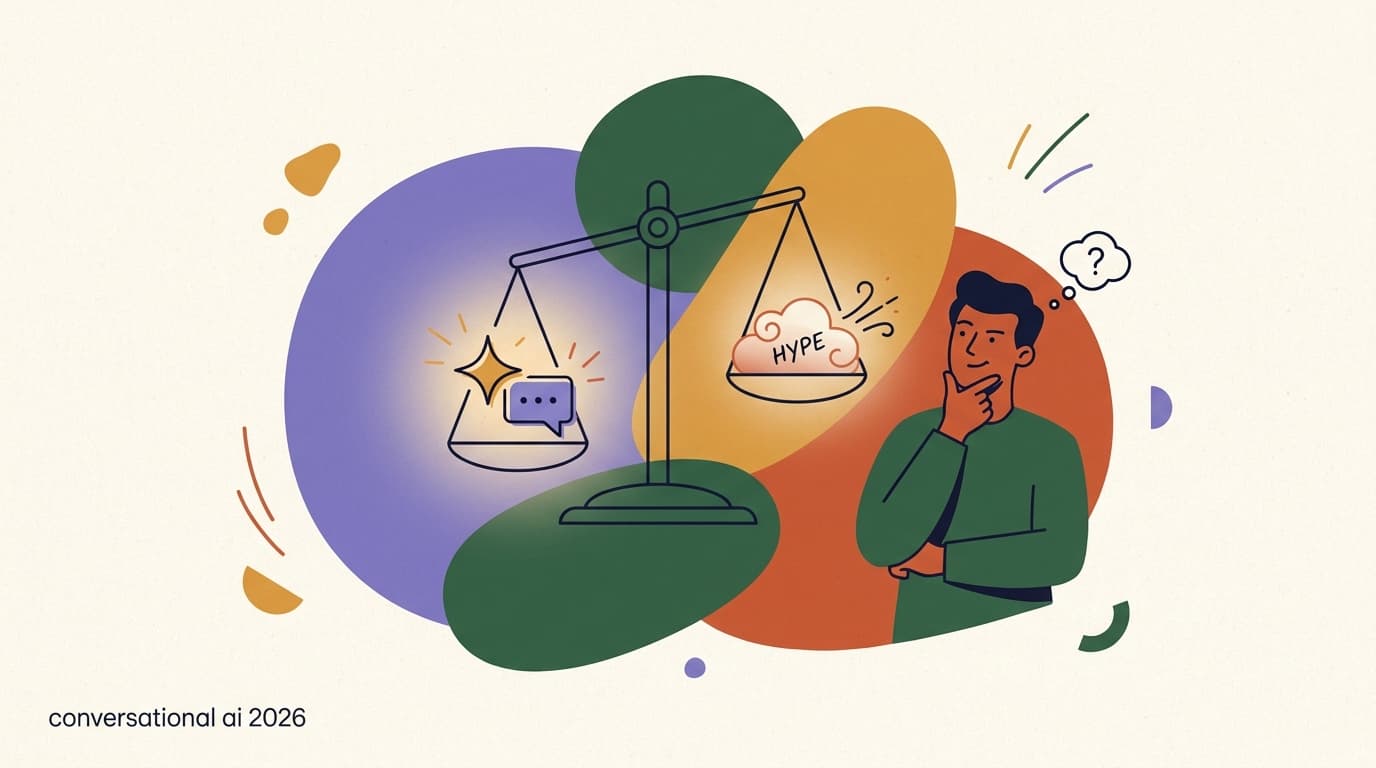
Conversational AI in 2026 is in a strange place. The technology is genuinely more capable than it was even a year ago — and the marketing around it is more inflated than ever. If you read the headlines, AI has already replaced support teams, books every meeting, and holds conversations indistinguishable from a person. If you actually deploy it, you find something more useful and more humbling: tools that work well inside clear boundaries and break in predictable ways outside them.
This piece is our attempt to draw the line honestly. We will separate what is real and shippable today from what is still a demo, name the constraints that nobody puts on a slide, and point to where conversational AI is actually heading. The goal is not to dampen the excitement — there is plenty to be excited about — but to make you a more literate buyer and builder, so you spend your budget and attention on the parts that pay off.
Full disclosure: we build KlyoChat, an AI-native messaging platform, so we have skin in this game. That is exactly why we are allergic to the hype. We have watched too many teams burn trust on an over-promised bot. Our bias is toward grounded, controllable AI with a human in the loop, and you will see that bias here. We have tried to keep every claim accurate and general rather than dressing the argument up in invented numbers.
One more note on how to read this. We have deliberately avoided precise statistics, because the honest truth is that nobody has clean, comparable numbers for a field moving this fast, and a fabricated figure is worse than an admitted uncertainty. Where we reference something concrete — that low-latency voice models exist, that language models hallucinate — it is a well-established fact stated generally. Everywhere else the argument stands on reasoning and on what actually happens when these systems meet real customers, which is the evidence that should matter most to you anyway.
What does 'conversational AI' actually mean in 2026?
The phrase has been stretched to cover everything from a rules-based FAQ widget to an autonomous agent that takes actions on your behalf. That vagueness is part of the hype problem — when a word means everything, it means nothing, and every vendor gets to claim they have it.
It helps to be precise. Conversational AI in 2026 spans a spectrum, and where a product sits on that spectrum tells you most of what you need to know about how well it will work and how much it will cost to run.
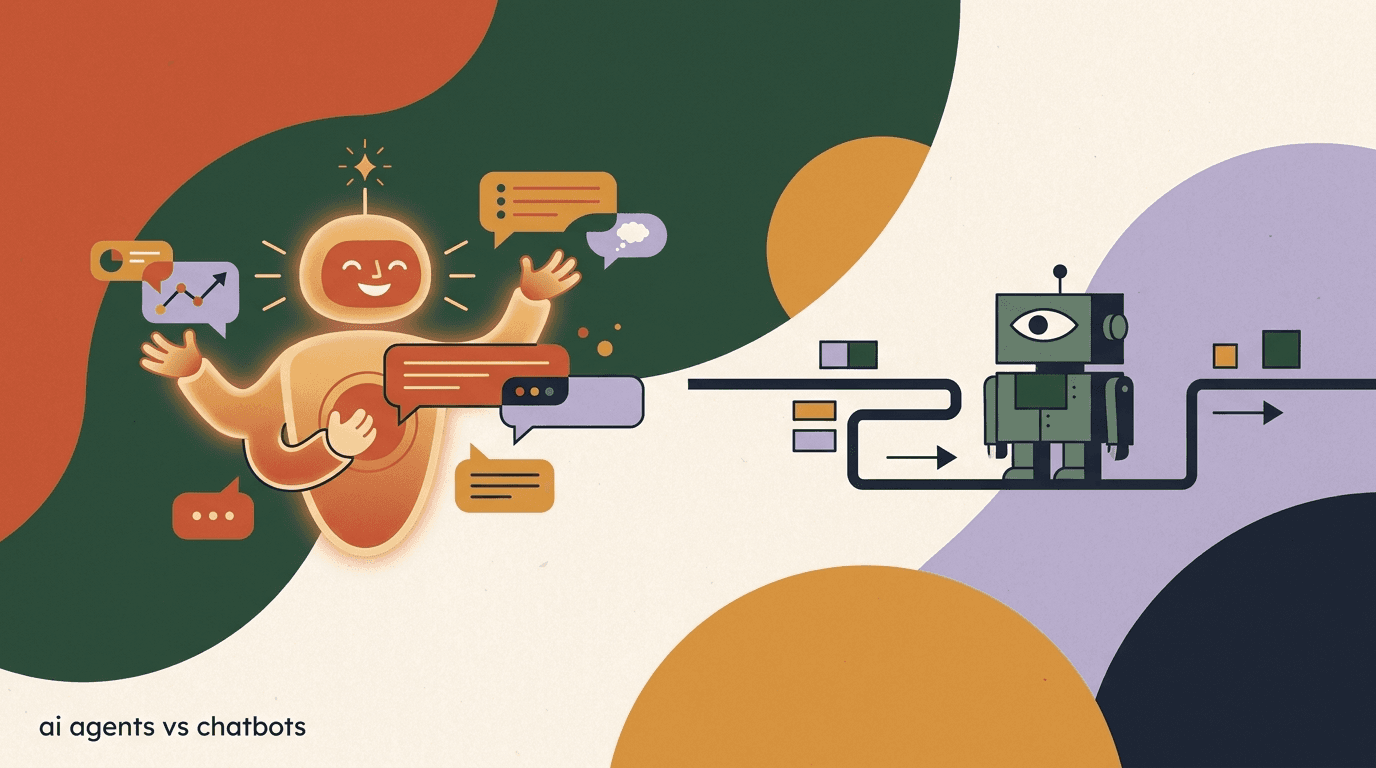
The spectrum runs roughly from rigid to open-ended. At one end sits the scripted bot — a decision tree dressed up as a conversation, where every path is hand-built and nothing surprises you. At the other end sits the autonomous agent that is supposed to figure out goals and take actions with little supervision. In between are the two categories that matter most for real businesses today: the retrieval agent that answers in natural language from a trusted source, and the action-taking agent that can do a few defined things on your behalf.
Reliability falls as you move toward the open-ended end, and so does predictability of cost. That trade is the whole story. A scripted bot never surprises you and never delights you. An autonomous agent might do something impressive and might do something you have to apologize for. The retrieval agent is the sweet spot for most teams in 2026 because it captures most of the natural-language magic while staying inside a boundary you can actually reason about.
| Type | What it is | Maturity in 2026 |
|---|---|---|
| Scripted bot | Decision-tree flows, button menus, keyword triggers | Mature, reliable, limited |
| Retrieval AI agent | LLM grounded in a knowledge base, answers in natural language | Production-ready when scoped |
| Action-taking agent | Agent that calls tools, updates records, completes tasks | Promising, needs tight guardrails |
| Autonomous agent | Open-ended, self-directed, minimal human oversight | Mostly demo-stage and overhyped |
The spectrum matters more than the label
When a vendor says 'conversational AI,' ask which row of that table they mean. A grounded retrieval agent and an autonomous agent are wildly different in reliability, cost, and risk — even though both get marketed with the same two words.
What is genuinely working right now?
Start with the good news, because it is substantial. Several things that were aspirational a couple of years ago are now dependable enough to build a business on, provided you respect their limits. The improvement is not just in the models; it is in the tooling around them — the connectors to messaging platforms, the retrieval systems that fetch the right passage, the dashboards that let a human watch and step in. The whole stack matured, not just the brain at the center.
The common thread across all of them is grounding and scope. The wins are real wherever the AI is pointed at a defined body of knowledge and a defined job. They get shaky the moment you ask it to be everything to everyone. If you remember one principle from this entire article, make it that one: capability is not the constraint anymore — scope is. The teams getting value are the ones who decided, deliberately, what their AI would and would not try to do.
- Grounded AI agents that answer from your own content — docs, FAQs, product info — rather than from the model's open-ended memory. This is the single biggest practical advance.
- First-response automation in DMs: handling the repetitive 60 to 80 percent of inbound questions instantly, then handing the rest to a human with full context.
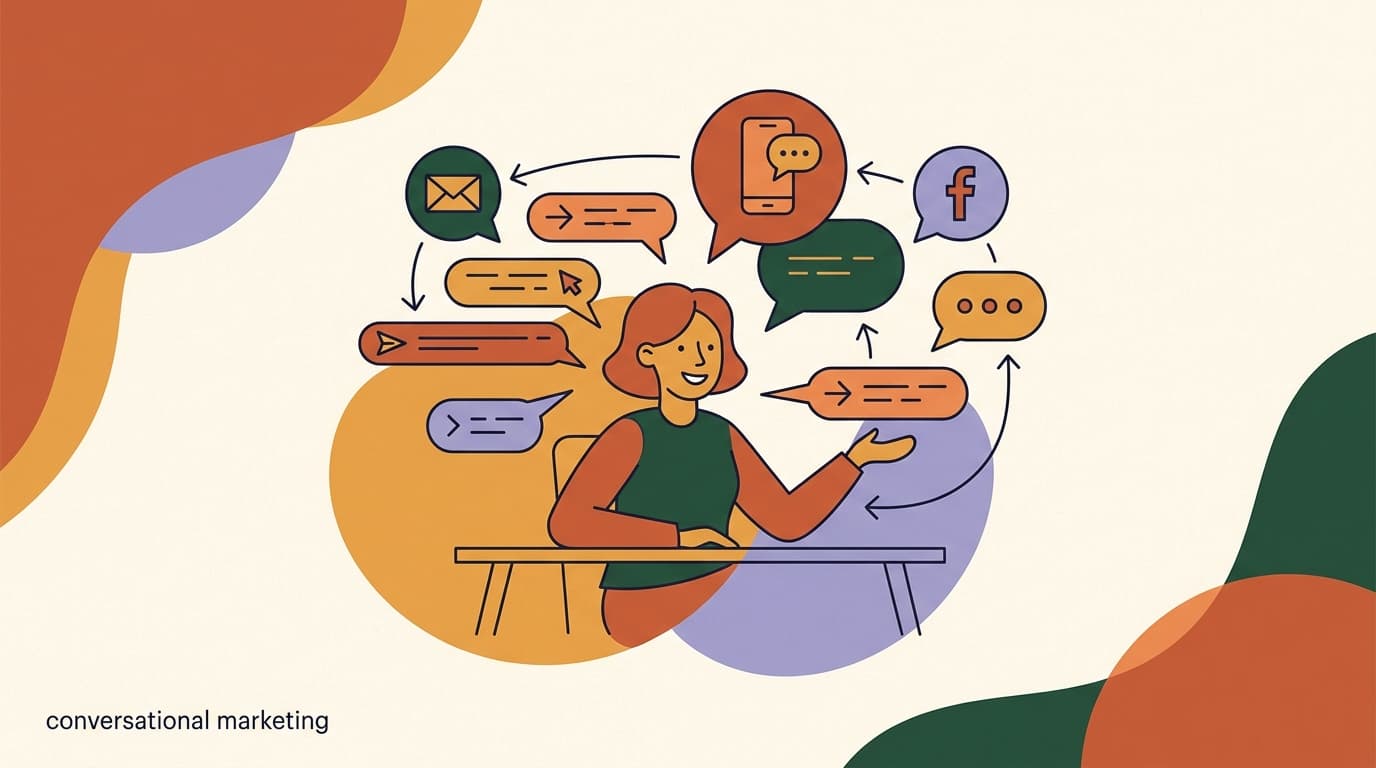
- Multi-channel messaging: one AI layer serving Instagram, WhatsApp, Telegram, Messenger, and more, instead of a separate bot per app.
- Drafting and summarizing for human agents — suggesting replies, summarizing long threads, translating — with a person approving before anything sends.
- Voice that finally feels responsive: speech models with low enough latency that the awkward pause before a reply is shrinking toward conversational.
Where grounded AI earns its keep
- Repetitive FAQ ('do you ship to X?', 'what are your hours?')
- Handled instantly, accurately, 24/7
- Order status, return policy, sizing — all in your knowledge base
- Answered from your own content, not guessed
- Nuanced complaint or edge-case refund
- Routed to a human with the thread summarized
Why has grounded AI become the real story?
A few years ago the exciting demo was a model that could talk about anything. In practice, 'talk about anything' is the same as 'confidently make things up about anything.' The shift that actually moved conversational AI into production was grounding: constraining the model to answer from a specific, trusted source and to say it does not know when the answer is not there.
Grounding does not make hallucination impossible, but it changes the economics of trust. A model answering from your return policy is reasoning over a small, known passage rather than reconstructing an answer from everything it ever read. The failure mode shifts from 'invented a policy that does not exist' to 'could not find the answer and said so' — which is a failure you can live with and route to a human.
This is why the serious products in 2026 are built around knowledge bases, not around bigger and bigger raw models. The model is necessary but it is not the product. The product is the system around it: what it is allowed to read, what it is allowed to say, when it must defer, and how a human stays in the loop. Two products built on the exact same underlying model can behave completely differently depending on how that scaffolding is designed — which is why comparing tools by 'which model do they use' tells you almost nothing.
There is a quieter benefit to grounding that does not get enough attention: it makes the AI auditable. When an answer comes from a specific passage in your knowledge base, you can trace where it came from, check whether the source was right, and fix the source if it was wrong. An ungrounded model gives you an answer with no provenance — you cannot tell whether it was recalled, inferred, or simply confabulated. For anything where being wrong has a cost, that traceability is the difference between a tool you can trust and a tool you have to babysit.
Judge an AI agent by its 'I don't know,' not its best answer
Anyone can make an AI sound brilliant on a softball question. The real test is what happens when the answer is not in its knowledge base. A well-built agent admits the gap and escalates. A hyped one improvises — which is exactly when it invents a policy you never wrote.
What is overhyped in conversational AI right now?
Now the harder conversation. Several claims that dominate the marketing are, in 2026, either premature or simply wrong. Believing them is how teams end up disappointed, over budget, or apologizing to customers. None of these claims are entirely baseless — that is what makes them sticky. Each one contains a grain of something real that has been inflated into a promise the technology cannot keep yet.
The pattern behind almost every overhyped claim is the same: a capability that works in a narrow, controlled setting gets generalized into a blanket guarantee. A bot that handles scoped questions well becomes 'indistinguishable from a human.' An agent that completes one defined task becomes 'fully autonomous.' The demo is real; the extrapolation is not. Learning to spot that move — narrow win, broad claim — is most of what it takes to read this market clearly.
- 'Full autonomy' is the most oversold idea in the category. The more open-ended you let an agent be, the more ways it finds to go wrong — and the more a single bad answer costs you.
- 'AI replaces all support' confuses volume with value. It can absorb volume; it cannot yet own the hard, high-stakes, relationship-defining moments.
- 'Indistinguishable from human' is true for short, scoped exchanges and false the moment the conversation needs real memory, taste, or accountability.
| The hype claim | The reality |
|---|---|
| AI replaces your entire support team | AI handles the repetitive majority; humans still own edge cases, judgment, and trust |
| Fully autonomous agents you can set and forget | Open-ended autonomy is brittle; production agents need scope and oversight |
| The bot is indistinguishable from a human | Often good, but it slips on context, memory, and genuinely novel situations |
| More model power solves everything | Knowledge quality and guardrails matter more than raw model size for most jobs |
| Set it up once and it just works forever | Knowledge drifts, channels change rules, prompts need maintenance |
The cost of over-promising is paid in trust
An AI that confidently gives a customer the wrong refund policy does more damage than no AI at all. The hype encourages you to remove the human too early. The teams that win in 2026 automate aggressively and supervise deliberately — they do not confuse the two.
Is AI really replacing customer support teams?
This is the claim that drives both the most investment and the most anxiety, so it deserves a direct answer: no, not the way the headlines mean it. What is actually happening is a redistribution of work, not an elimination of it.
AI is very good at the high-volume, low-variance layer of support — the same handful of questions asked thousands of times. Removing that load from humans is real and valuable. But the work that is left over is not the easy 80 percent minus AI; it is the hard 20 percent that was always the reason you needed skilled people. Those conversations get more complex on average, not less, because the simple ones have been filtered out.
So the honest framing is: AI changes the shape of a support team, raises the bar on what humans do, and lets a smaller team cover more volume. It does not delete the team. The organizations getting value treat AI as the first line and humans as the escalation path with authority and judgment — not as a replacement that gets switched on and walked away from.
There is also a strategic cost to over-automating that rarely shows up in a spreadsheet. Support conversations are one of the few moments a business actually talks to its customers. They are a listening post — where you learn what confuses people, what they are about to churn over, what feature they wish you had. If you route every one of those conversations to a bot that resolves and closes them, you save money and lose the signal. The teams that think hardest about this use AI to clear the noise precisely so their humans can hear the important conversations more clearly, not to silence the channel entirely.
Two ways to deploy AI in support
- Hype model: AI answers everything, no human path
- Fast until it is confidently wrong, then trust collapses
- Real model: AI handles volume, escalates the hard cases
- Faster responses and humans freed for what matters
What about voice — is it finally good in 2026?
Voice is the area where the gap between 'genuinely better' and 'still not there' is narrowest, which makes it worth a careful look. The progress is real. Speech recognition and synthesis have improved to the point where the voice itself sounds natural, and end-to-end latency has dropped enough that the dead air before a response — historically the thing that broke the illusion — is closing toward the rhythm of a real conversation.
Sub-half-second response models exist, and that threshold matters: below it, an exchange starts to feel like a conversation rather than a transaction with a machine. For scoped voice tasks — checking an order, booking a slot, answering a known question — this is now good enough to deploy.
But the same constraints that apply to text apply to voice, with the volume turned up. A voice agent that hallucinates is harder to correct in the moment, interruptions and cross-talk still trip up many systems, and accents, noise, and emotional nuance remain uneven. Voice removes the safety net of a customer being able to re-read and reconsider. So our read for 2026 is: voice is ready for narrow, grounded jobs and oversold for open-ended ones — the same line we draw everywhere else, just less forgiving.
Voice also raises the emotional stakes of getting it wrong. People forgive a text bot that misunderstands them more readily than a voice that talks over them or barrels past a clearly upset tone. The medium implies presence, and presence implies attentiveness. A voice agent that sounds human but behaves like a script can feel worse than an obvious robot, because it sets an expectation it cannot meet. The deployments that work treat voice as a high-bandwidth channel for simple, well-understood tasks and keep a fast path to a person the moment the conversation turns emotional or unusual.
Latency is necessary but not sufficient
Fast responses make voice feel human; they do not make it correct. A snappy voice agent that gives wrong answers quickly is worse than a slightly slower one that is grounded and knows when to hand off. Speed is a feature; accuracy is the product.
What are the real constraints nobody puts on the slide?
Every conversational AI deployment runs into the same short list of constraints. They are not exotic, but they are routinely left out of the pitch. If you understand them going in, you will build something that lasts; if you discover them later, you will rebuild.
What these constraints have in common is that none of them are solved by a better model. They are properties of the system, the data, the platforms, and the economics — the parts of the problem that no vendor's next release will quietly fix for you. That is actually good news, because it means the work that makes conversational AI succeed is work you can do, today, without waiting for anyone.
- Hallucination is a property, not a bug to be patched outLanguage models generate plausible text; sometimes plausible is wrong. Grounding and escalation reduce the damage, but you design around hallucination — you do not eliminate it.
- Your AI is only as good as your knowledgeAn agent grounded in stale, thin, or contradictory content will confidently repeat your worst documentation. Knowledge quality is the real bottleneck, and it is unglamorous work.
- Channels have rules, and they changeWhatsApp, Instagram, and the rest enforce messaging windows, template approvals, and automation policies. What works this quarter can be restricted next quarter.
- Cost scales with usage in ways that surprise peopleInference is not free. High message volume, long contexts, and voice all carry real per-interaction cost. Model it before you scale, not after the invoice.
- Maintenance never endsKnowledge drifts, products change, prompts need tuning, and edge cases accumulate. 'Set and forget' is the single most expensive assumption in the category.
Grounding and oversight are guardrails, not decoration
Treat the knowledge base as the source of truth, restrict what the agent can claim, and keep a human escalation path for anything sensitive — refunds, account changes, complaints. These are not nice-to-haves; they are what keeps an AI deployment from becoming a liability.
Why does knowledge quality matter more than model size?
There is a persistent belief that the next, bigger model will fix everything. For a narrow set of frontier tasks, more capability genuinely helps. For the everyday job of answering customer questions correctly, it is mostly the wrong lever.
The reason is simple: a more powerful model pointed at bad knowledge just produces more fluent wrong answers. If your return policy is not written down clearly, no model can recite it. If two help articles contradict each other, a smarter model will pick one confidently and you still have a contradiction. The ceiling on most conversational AI quality is set by the content, not the parameter count.
This is liberating once you accept it, because content is something you control. Cleaning up your knowledge base, removing contradictions, writing the answers to the questions you actually get asked — that work compounds and it improves every model you ever plug in behind it. Chasing the latest model while ignoring your knowledge is optimizing the part you do not own and neglecting the part you do.
It also reframes a question many teams get stuck on: 'are we ready for AI yet?' The honest answer is that you are ready when your knowledge is ready. If you cannot point to a clear, current set of answers for your most common questions, no AI is going to invent that clarity for you — it will only reflect the confusion back at customers faster. The preparation that pays off is not technical; it is editorial. Decide what the right answers are, write them down plainly, and resolve the contradictions. Do that and almost any competent grounded agent will perform well. Skip it and the best agent in the world will disappoint you.
Same model, two knowledge bases
- Thin, outdated, contradictory content
- Fluent answers that are confidently wrong
- Clean, current, well-structured content
- Accurate answers and honest 'I don't know's
If the constraints are real and the hype is loud, the practical question becomes: how do you tell the difference when you are actually evaluating a product? You usually cannot run a long pilot before you commit, so you need a faster way to read a demo and a sales pitch. There is one.
How do you tell a real product from a hype-driven demo?
A polished demo is designed to show you the happy path. Your job as an evaluator is to walk off it on purpose. The questions below are not gotchas; they are the same questions you would ask of any system you were going to trust with your customers. How a vendor answers tells you whether they have built something durable or something that photographs well.
Pay attention not just to the answers but to the comfort level. Teams who have actually run conversational AI in production answer the hard questions readily, because they have lived through the failure modes. Teams selling hype get vague or defensive exactly where it matters most — around what happens when the AI is wrong.
- Insist on testing with your own messy, real questions — not the demo's curated ones.
- Ask to see a deliberately out-of-scope question and watch how the AI behaves.
- Check whether you can see and edit exactly what the AI is grounded in.
- Confirm there is a clear, fast human handoff and that you can disable automation per conversation.
| Ask this | A real answer sounds like | A red flag sounds like |
|---|---|---|
| What happens when it does not know? | It says so and escalates, with the thread handed to a human | It always finds something to say |
| Where do answers come from? | From your knowledge base, and we can show the source | From the model — it just knows things |
| How does a human take over? | Instantly, with full context, any time | You usually will not need to |
| What does it cost at our volume? | Here is how usage drives cost | It is all included, do not worry about it |
| How do we keep it accurate over time? | You maintain the knowledge; here are the tools | Set it up once and you are done |
Break the demo on purpose
The most useful thing you can do in an evaluation is ask a question the product was obviously not prepared for. The happy path tells you the ceiling; the failure path tells you what you will actually live with. Spend your demo time off-script.
Does conversational AI actually pay off, and how do you know?
Strip away both the hype and the cynicism and the practical question is whether this earns its keep. For grounded, scoped deployments the answer is usually yes — but the return shows up in places teams often forget to measure, and the costs show up in places they forget to model. Getting an honest read means looking at both sides carefully rather than trusting a deflection-rate number on its own.
On the value side, the gains are real: faster first responses, coverage outside business hours, a smaller team able to handle more volume, and humans freed from repetitive questions to do work that needs judgment. On the cost side, there is the subscription, the per-interaction inference cost that scales with volume and message length, and — the one most people miss — the ongoing human effort to keep knowledge fresh and supervise edge cases. A deployment that looks free because the software is cheap can quietly cost real hours in maintenance.
The trap to avoid is optimizing for deflection — the share of conversations the AI closes without a human. It is the easiest number to celebrate and the easiest to game. An AI can deflect a conversation by answering it well or by stonewalling the customer until they give up; both look identical in a deflection metric. The number that actually matters is resolution with satisfaction: did the customer get the right answer and feel taken care of? Pair deflection with a wrong-answer rate and a satisfaction signal, or you will reward exactly the behavior you do not want.
A high deflection rate can hide a real problem
If you measure only how many conversations the AI closes, you create an incentive to close them at any cost — including by frustrating people into giving up. Always pair deflection with wrong-answer rate and satisfaction, or the metric will mislead you exactly when it matters.
Two metrics, very different stories
- 85% deflection, wrong-answer rate unknown
- Looks great, could be quietly losing you customers
- 70% deflection, low wrong-answer rate, high satisfaction
- The number that actually means it is working
Where is conversational AI genuinely heading?
Strip away the hype and there is still a real trajectory, and it is worth getting right because it tells you what to invest in. The direction is not 'bigger autonomous brains.' It is tighter integration, better grounding, and AI that does more of the work while staying inside boundaries you can trust.
- From answering to doing: agents that, within tight guardrails, take small actions — look up an order, start a return, book a slot — not just describe how.
- Channel convergence: customers expecting the same intelligent experience whether they message on Instagram, WhatsApp, or anywhere else, served by one AI layer.
- Human-AI handoff as a first-class feature, not an afterthought — smooth escalation with full context, and easy takeback when a human wants control.
- Better grounding tooling: easier ways to keep knowledge fresh, catch contradictions, and see exactly what the AI used to answer.
- Mobile-first operation: handling and supervising AI conversations from a phone, because that is where a lot of small teams actually work.
Bet on grounding and handoff, not on autonomy
If you are choosing where to place your attention for the next year, put it on the quality of your knowledge and the smoothness of your human handoff. Those compound. Chasing maximal autonomy mostly compounds your risk.
What will not change as fast as people expect?
It is worth naming the things that will move slowly, because betting on them moving fast is how teams get burned. The fundamentals here are stubborn, and recognizing that saves you from planning around capabilities that are perpetually 'almost here.'
Trust will not transfer to machines as quickly as the technology improves. Even when an AI is reliably right, customers extend trust gradually and revoke it instantly after a single bad experience. That asymmetry — slow to earn, fast to lose — is a human constant, not a model limitation, and it means the careful, oversight-first approach stays correct even as the AI gets better. The same goes for accountability: when something goes wrong, customers and regulators want a person to answer for it, and that expectation will outlast many generations of models.
Hallucination, likewise, is not going to vanish on a known timeline. It can be reduced, contained, and made auditable, but the basic fact that these systems generate plausible text and sometimes plausible is wrong is built into how they work. Plan for that as a permanent feature of the landscape rather than a temporary inconvenience, and you will build systems that stay safe regardless of what the next model release does or does not deliver.
Build for the constraints that persist
Capabilities improve unpredictably; constraints like trust, accountability, and the possibility of a wrong answer persist. Designing around the durable constraints rather than the fast-moving capabilities is what makes a deployment age well instead of needing a rebuild every time the field shifts.
How should a team actually adopt conversational AI in 2026?
If the realistic version is less magical than the pitch, it is also more achievable. You do not need a moonshot. You need a sober, staged rollout that earns trust before it scales. Here is the approach we would recommend to a team starting from scratch.
- Start with one channel and one jobPick your busiest channel and the single most repetitive question type. Prove value on something narrow before you generalize.
- Ground the AI in real, cleaned-up contentWrite or tidy the answers to your top questions first. The knowledge base is the work; the model is the easy part.
- Keep a human in the loop from day oneDefine what the AI handles and what it must escalate. Make escalation immediate and the takeover obvious.
- Measure honestlyTrack resolution rate, escalation rate, and — critically — wrong answers. A high deflection rate hiding bad answers is a trap.
- Expand only after it is trustedAdd channels and broaden scope once the narrow case is reliably good. Earn the right to automate more.
Slow is fast with conversational AI
The teams that rush to full automation usually end up rolling it back after a public mistake. The teams that start narrow, ground well, and expand deliberately end up automating far more in the long run — because they kept the trust they needed to do it.
Where does KlyoChat fit into this picture?
We will keep this brief, because this piece is about the field, not the product. We built KlyoChat around exactly the point of view above: grounded, controllable AI with a human in the loop, rather than autonomy for its own sake. It is an AI-native, mobile-first unified inbox that brings Facebook, Instagram, Telegram, WhatsApp, TikTok, and X into one place, with custom AI agents you ground in your own knowledge base — included, not a separate add-on.
Our design choices follow from the constraints in this article. AI agents answer from your content and escalate when they should. Handoff to a human is built in. And because so many small teams run on their phones, the whole thing is mobile-first. We are also honest about the limits: there is no native SMS or email, we are a newer and smaller community than the incumbents, and the AI is not magic — grounding and oversight are what make it work. If that philosophy matches yours, it is worth a look.
Pick a tool that shares your assumptions about AI
Whatever you choose, favor a platform that treats grounding and human oversight as core rather than as a disclaimer. The right tool is the one whose view of what AI can and cannot do matches reality — because that is the one that will not embarrass you in front of a customer.
The honest state of conversational AI in 2026 is this: it is real, useful, and worth adopting — and it is not the autonomous, human-replacing technology the loudest marketing describes. The wins are concrete wherever the AI is grounded in good knowledge, scoped to a clear job, and backed by a human for the hard cases. The disappointments cluster wherever someone believed the hype about full autonomy, total support replacement, or set-and-forget.
Be the literate buyer. Ask which row of the maturity table a product really occupies. Judge an agent by how it admits what it does not know. Invest in your knowledge before you chase the next model. Keep a human in the loop. Do that, and conversational AI becomes one of the most practical advantages available to a small team in 2026 — not because it is magic, but precisely because it is not.