UGC creator brand deals rarely start with a signed contract in an inbox. They start with a message — a brand replying to your comment, a founder answering your pitch, or a marketer sliding into your DMs after seeing a Reel. If you want a steady stream of paid work as a user-generated-content creator, the DM is where the deal is really made: it is where you get discovered, where you make your case, where rates get negotiated, and where the yes finally lands.
This guide is about the practical mechanics of that conversation. Not the fantasy version where a brand overpays you after one viral post, but the repeatable version: how to make it easy for brands to find and message you (inbound), how to pitch specific brands who have never heard of you (outbound), how to keep dozens of threads organized, how to follow up without being annoying, how to talk about money, and how to close. We will give you pitch templates you can adapt, tables you can steal, and a compliance section on disclosing sponsorships that you should not skip.
One honest note up front: nobody can promise you a specific income from any of this. UGC is a real, growing corner of the creator economy, but rates vary wildly by niche, audience, and deliverable, and outreach is a numbers game with a lot of silence in it. What we can do is show you the system that gives your DMs the best chance of turning into paid deals — and keep the whole thing above board.
What is UGC, and why do brands pay creators for it?
User-generated content is media — photos, videos, reviews, unboxings — created by everyday people rather than by a brand's in-house studio. In the creator-economy sense, a UGC creator is someone a brand hires to produce that authentic-feeling content, often to run as ads or as organic posts on the brand's own channels. You are not always posting it to your own audience; frequently you are handing over footage the brand uses however it likes. That distinction matters, because it changes who your buyer is and what you are actually selling.
Brands pay for this because it converts. Content that looks like a real person talking to a camera in their kitchen tends to outperform glossy studio ads on social feeds, and it is far cheaper to commission than a traditional production. A marketing team can brief ten creators, get ten native-feeling videos back, and test all of them as paid ads. For a fuller definition of the format and its history, see the overview of user-generated content on Wikipedia.
The practical upshot for you: your customer is usually a brand's marketing or social team, a founder at a small company, or an agency buying on a brand's behalf. Those people live in their inbox and their DMs. They are not browsing a marketplace all day waiting to discover you. So the skill that pays is not just making good content — it is starting and steering the conversation that turns your content into a paid brief.
UGC is not the same as influencing
An influencer sells access to their audience. A UGC creator sells the content itself, which the brand may run as its own ad. You can do both, but the pitch, the rate, and the deliverable are different. Be clear in every DM about which one you are offering, because a brand budgeting for content will get confused by an audience-reach pitch, and vice versa.
What actually makes a UGC creator land brand deals via DMs?
It helps to see the whole system before we go deep on each part, because most creators only do one half of it. They either wait passively for inbound (and wonder why the DMs are quiet) or they blast outbound pitches (and wonder why nobody replies). The creators who book consistently run both motions at once and treat every conversation as something to be managed, not just answered.
There are two ways a brand deal starts, and they call for different work. Inbound is everything that makes a brand reach out to you first — a portfolio in your bio, a pinned example, a comment-to-DM funnel, content that signals you do paid work. Outbound is you starting the conversation with a brand that has never heard of you. Underneath both sits the same unglamorous layer: organizing threads, following up, quoting rates, and closing. Get that layer right and both motions convert better.
- Inbound feels better but is unpredictable — you cannot control when a brand messages you.
- Outbound is controllable — you decide how many pitches go out this week — but it needs volume and patience.
- Referrals convert best of all, and they only exist if you deliver on the first deal and ask.
| Motion | Who starts it | Your job | Typical time to a deal |
|---|---|---|---|
| Inbound | The brand | Be easy to find, easy to vet, easy to message | Fast once trust exists |
| Outbound | You | Research, pitch specifically, follow up | Slower, more volume needed |
| Referrals | A past client or peer | Do great work, ask for intros | Fast, highest close rate |
How do you make it easy for brands to reach you (inbound)?
Inbound is really about removing friction. A marketer who likes your content has about thirty seconds of curiosity. If they cannot tell that you do paid UGC, cannot see an example, and cannot figure out how to contact you, that curiosity evaporates. Your job is to answer three silent questions fast: does this person do brand work, are they any good, and how do I start a conversation?
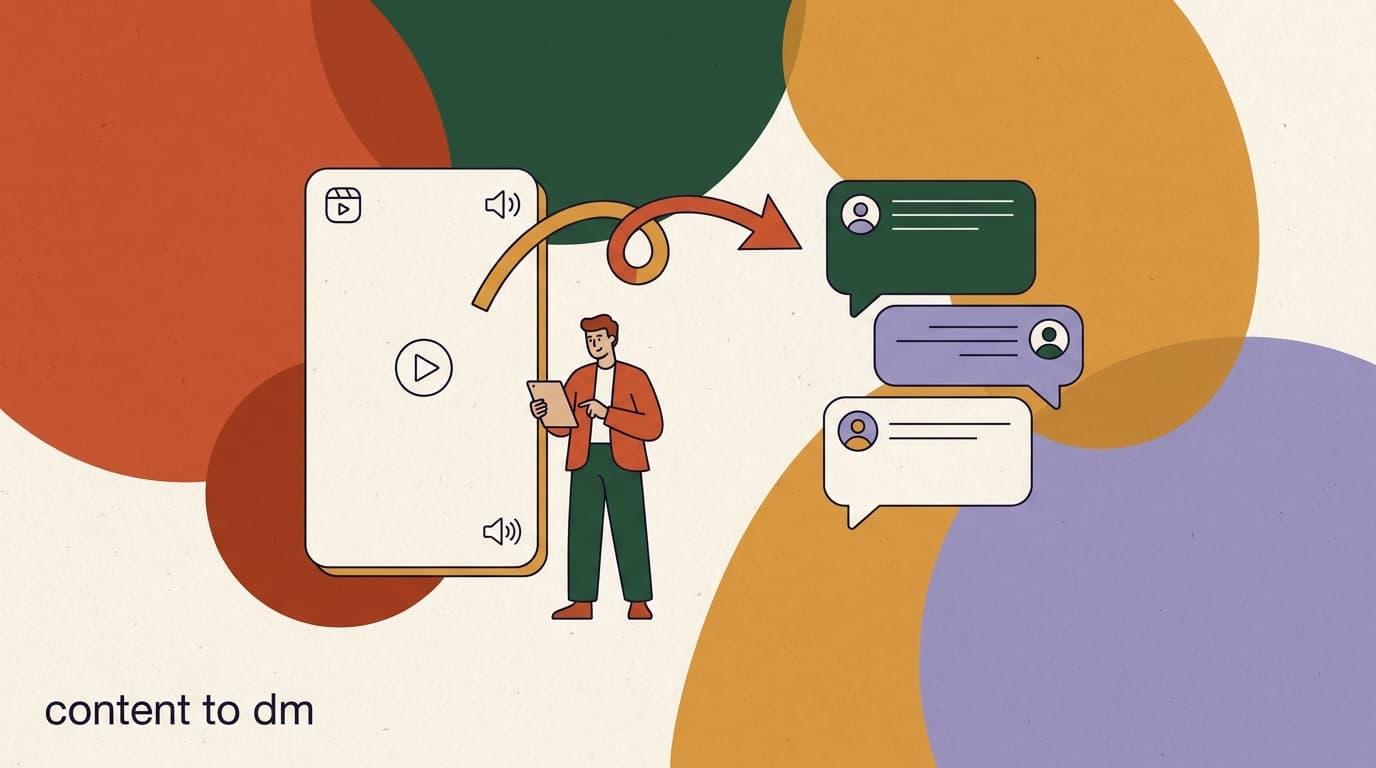
Most of that is set up once and then maintained. Your bio should state plainly that you are a UGC creator and open to collaborations. A pinned post or a highlight should show a real example of branded content. A link should point to a simple portfolio. And critically, your DMs and comments should be wired so that when someone shows interest, the path to a real conversation is short. This is the same content-to-conversation idea we cover in our content-to-DM strategy guide — the post does the attracting, the DM does the converting.
- Make your bio do a jobState that you make UGC and are open to brand work, in plain language. Add a contact route — a link or an email — so a busy marketer does not have to guess.
- Pin proof, not just pretty contentPin or highlight one or two pieces of branded content that look like the work a brand would buy. Real deliverables beat lifestyle posts for this audience.
- Wire a comment-to-DM pathWhen you post work-in-public content, invite interested brands to comment a keyword, then reply in the DM with your rates and portfolio. This turns public interest into a private thread you control.
- Answer fast, then slow downReply to a genuine brand inquiry within a day while interest is warm. After the first reply you can move at a professional pace — speed matters most at the very start.
A pinned example beats a media kit for first contact
Brands deciding whether to message you do not read a ten-page media kit — they glance. One pinned video of you doing exactly the kind of content they would want, plus a one-line bio that says you take brand work, converts more first messages than a polished PDF nobody opens. Save the full kit for after they reply.
How do you find and research brands worth pitching?
Outbound only works when the pitch is specific, and specific pitches come from research. The goal is a shortlist of brands that plausibly need what you make, where you can find a real human to message, and where you have a genuine reason to reach out. A scattershot list of famous brands you love is the wrong list — those brands get pitched a hundred times a day and rarely reply to cold DMs.
Better targets are usually smaller and hungrier: newer direct-to-consumer brands, companies already running creator ads (so you know they have a budget and a process), and businesses in a niche you actually use and understand. If a brand is already posting UGC-style ads, they are proof they buy this content — you are not selling them on the concept, only on you. Build the list in a simple sheet before you write a single DM.
- Log each target with a name, the product, why they fit, and where you will reach them.
- Find the right human where you can — a founder or social lead beats a generic brand inbox.
- Note one specific, true detail about them you can reference — a recent launch, a specific ad, a product you use.
| Signal a brand is worth pitching | Why it matters |
|---|---|
| Already runs creator-style video ads | Proves budget and an existing UGC process |
| Recently launched or newly funded | Needs content volume and is open to new creators |
| Active, responsive social presence | A real person reads the DMs and can say yes |
| In a niche you genuinely use | Your pitch and content will ring true, not generic |
| Smaller following, growing fast | Less pitched than big names, faster to a decision |
Ten researched pitches beat a hundred copy-pastes
Volume matters in outbound, but not at the cost of relevance. A short list of well-researched brands where every message references something real will out-convert a mass blast every time — and it will not get you marked as spam. Quality of targeting is the lever; quantity comes second.
What should a cold brand deal DM actually say?
A cold brand deal DM has one job: earn a reply. It is not the place to negotiate, list every rate, or attach a novel. Keep it short enough to read on a phone in one glance. The structure that works is simple — a specific, genuine opener that proves you did your homework, a one-line statement of what you do and who you are, a concrete offer, and a low-friction question that makes replying easy.
The most common mistake is making it about you. 'Hi, I am a UGC creator with a passion for content and I would love to work with brands' tells a marketer nothing and asks them to do all the work. Flip it: lead with them, name the value, and make the next step obvious. The message should feel like it could only have been written to that one brand.
- Open with something specific and true about them — not flattery, an observation.
- Say what you make in one line, framed as useful to them.
- Make one concrete offer — a sample video, a rate range, a specific idea for their product.
- End with a single easy question so replying takes five seconds.
- Keep the whole thing under about sixty words. Long cold DMs get skimmed and dropped.
One ask per message
A DM that asks a brand to review your portfolio, consider three rate tiers, and schedule a call all at once will get ignored — it is too much work to answer. Each message should have exactly one small ask. Get the reply first; the details come naturally once the thread is alive.
How do you write a UGC pitch that gets a reply?
Templates are a starting point, not a script. The point is to internalize the shape, then rewrite it in your own voice for each brand so it never reads as mass-produced. Below are two examples — one for a cold outbound pitch to a brand that has never heard of you, and one for a warm reply to a brand that just showed interest in your content. Notice how short both are and how each references something specific.
Treat the bracketed parts as prompts to fill with real, particular details. The version that works names their actual product, references their actual ad or launch, and offers something concrete. The version that fails is the same text sent to fifty brands with only the name swapped — marketers can spot that instantly, and it reads as spam.
Why the warm reply converts higher
The warm-reply pitch below goes out after a brand comments, likes your work, or follows you — interest already exists, so you skip the cold opener and move straight to the offer. Warm threads close far more often than cold ones, which is exactly why the inbound setup earlier matters so much: it manufactures warm openings.
Cold outbound pitch DM (adapt, do not copy verbatim)
- Opener
- Saw your new refillable cleanser ad in my feed this week — the before-and-after angle really landed.
- What you do
- I make short UGC videos brands run as ads; skincare is my main niche and I use products like yours daily.
- Concrete offer
- Happy to film a 30-second demo of the refill flow so you can test it against your current creative.
- Easy ask
- Want me to send two example videos so you can see the style?
How do you turn a warm inbound reply into a booked deal?
When a brand comes to you — a comment, a like on your work-in-public post, a 'love this, do you do paid?' — the sale is half done. Do not fumble it by disappearing for three days or by dumping a wall of pricing on them. Acknowledge fast, confirm fit, and move the conversation toward specifics: what product, what deliverable, what timeline. The warm reply below shows the tone.
This is where an organized inbox earns its keep. A warm lead who has to wait while you dig for your rate sheet or forget which product they mentioned goes cold. The brands that convert are the ones where you replied like a professional who has done this before — because you had your examples, your rates, and your notes on hand. We go deeper on monetizing these inbound threads in our guide on how to monetise Instagram DMs.
Speed beats polish on the first warm reply
A quick, friendly, slightly imperfect reply within the hour beats a flawless one two days later. Warm interest has a short half-life. Reply fast to keep the thread alive, then take your time getting the deliverables and rate exactly right once you know they are engaged.
Warm reply DM after a brand shows interest
- Acknowledge
- Thanks for the note — glad the last video landed. Yes, I take on paid UGC.
- Confirm fit
- For your product I would picture a short demo plus a talking-head review, both formatted for feed ads.
- Move to specifics
- My UGC rates start at a set per-video price with usage options — I can send a quick breakdown.
- Next step
- Do you want raw footage only, or edited and ad-ready?
When and how should you follow up without being annoying?
Most deals die from silence, not rejection. A marketer reads your pitch, means to reply, gets pulled into a meeting, and forgets. That is not a no — it is a not-yet that needs a gentle nudge. The creators who book consistently follow up, and they do it without apologizing or guilt-tripping. Follow-up is a normal, expected part of business communication, not an imposition.
The rule of thumb: follow up twice, spaced a few days apart, each time adding something rather than just 'bumping this.' A second message that shares a relevant example or a fresh idea for their product gives them a new reason to reply. After two follow-ups with no response, let it rest — you can circle back in a couple of months when you have new work. Chasing harder than that damages your reputation more than it helps.
- Follow-up one, about three days laterShort and additive. Re-share your best example or add a specific content idea for their product. No guilt, no apology for messaging again.
- Follow-up two, about a week after thatOffer an easy off-ramp: ask if UGC is on their radar this quarter at all. A simple yes-or-no is easy to answer and gives you a real signal.
- Then let it restAfter two nudges, stop. Note the date and the brand, and revisit in a few months with new work. Persistence past this point reads as pushy.
Do not confuse persistence with pressure
Following up twice with value is professional. Sending five messages, screenshots of unread receipts, or 'just checking in again???' is not — it gets you muted and remembered for the wrong reason. Two thoughtful nudges, then move on. The brands worth working with respect a creator who follows up with grace and knows when to stop.
How do you organize brand conversations so nothing slips?
Once you are running both inbound and outbound, you will have more open threads than your memory can hold: pitches waiting on a first reply, warm leads mid-negotiation, deals awaiting a brief, and past clients worth re-pitching. Without a system, warm leads go cold because you forgot to follow up, and you look disorganized to the exact people deciding whether to trust you with a paid brief.
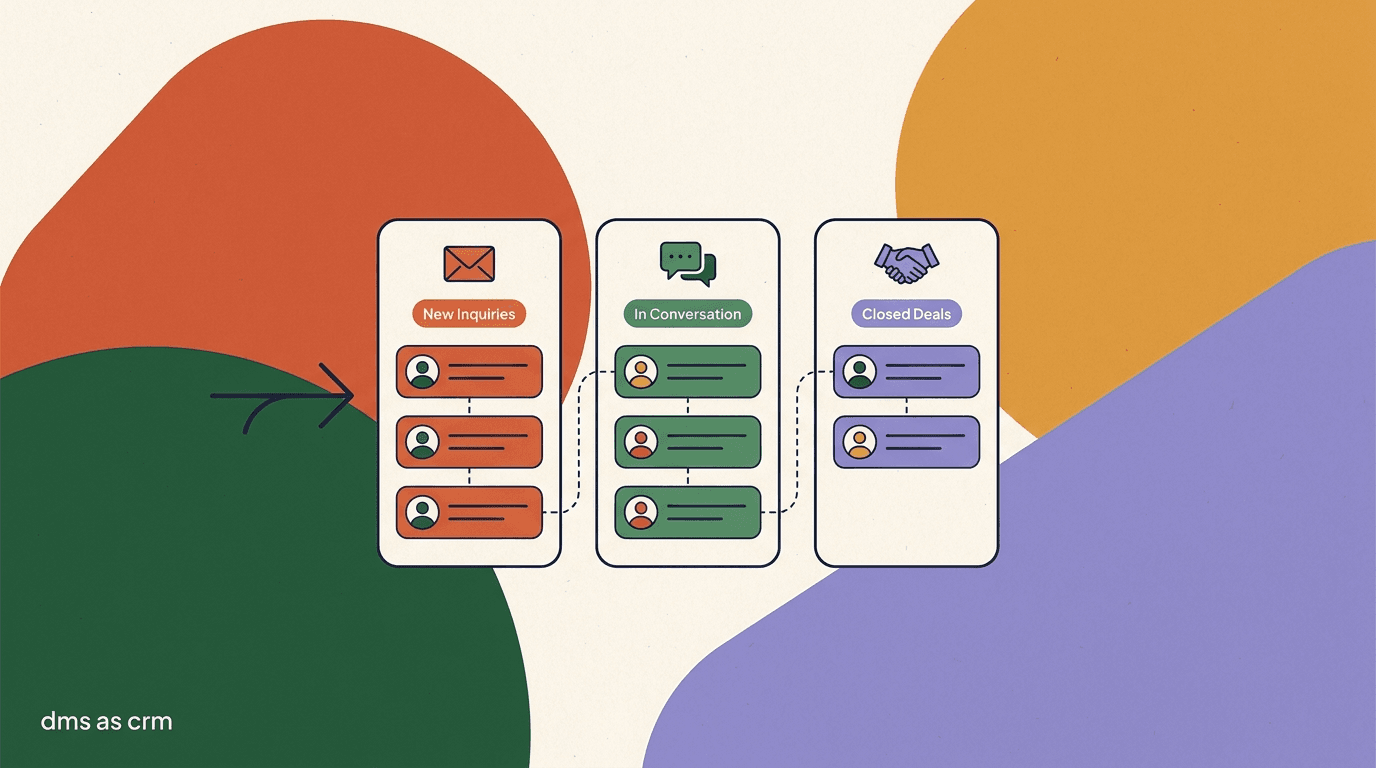
You do not need enterprise software for this — you need a reliable way to know, at a glance, where every conversation stands and what the next action is. Tags or labels for each stage, short notes on what was said and what was quoted, and a habit of setting the next step before you close a thread. Treat your DMs like a lightweight sales pipeline. We wrote a whole guide on running a creator CRM in your DMs that goes deeper on the setup.
- Tag every thread by stage so nothing invisible is quietly dying.
- Write a one-line note after each meaningful exchange — what was said, what was quoted.
- Never close a conversation without deciding the next action and when it happens.
| Conversation stage | What to track | Next action |
|---|---|---|
| Pitched, no reply | Date sent, brand, angle used | Follow up on day three |
| Warm, discussing | Deliverables, rate quoted, timeline | Send breakdown or answer their question |
| Deal agreed | Scope, price, usage terms, due date | Confirm in writing, then produce |
| Delivered / paid | What you made, what worked | Ask for a testimonial and a referral |
How should you set and talk about your UGC rates?
Money is where a lot of creators freeze. You cannot see other people's invoices, rates vary enormously by niche and deliverable, and there is a real fear of naming a number that scares the brand off or leaves money on the table. The fix is not a magic price — it is a structure you can explain with confidence. When you can articulate what drives your rate, brands trust the number more, even when it is higher than they hoped.
Price by deliverable and by usage, not by vibes. A single raw video the brand can use organically is one price. Add editing, add a certain length of paid-ad usage rights, add exclusivity in their category, and the number goes up for clear reasons. Have a starting rate you will not go below, and a way to add scope so a bigger budget maps to more value. We deliberately are not printing specific dollar amounts here, because a number that fits a skincare creator in one market misleads a fitness creator in another — the structure travels, the exact figure does not.
A useful mental move is to separate the making from the using. The making is the work you do once — filming, editing, revisions — and it has a floor based on your time and skill. The using is what the brand does with the result, and it is open-ended: an organic story that vanishes in a day is worth far less to them than an ad they run for a year. When you quote, make sure both are named, because brands who are new to buying UGC often assume the price covers unlimited use unless you tell them otherwise. Naming usage is not being difficult — it is standard practice, and professional buyers expect it.
Finally, resist the urge to underprice yourself into a brand's good graces. Cheap does not read as generous; it often reads as inexperienced, and it anchors every future quote low. If a brand's budget genuinely will not stretch to your rate, shrink the scope — one video instead of three, organic use instead of paid — rather than doing the same work for less. That keeps your rate intact and teaches the brand that more value costs more, which is exactly the relationship you want when their budget grows.
| What changes the price | Lower end | Higher end |
|---|---|---|
| Editing | Raw footage, brand edits it | Fully edited, ad-ready delivery |
| Usage rights | Organic post only | Paid ad usage for a set period |
| Exclusivity | None | You will not work with their competitors for a term |
| Volume | One video | A monthly package of several videos |
Quote a range or a starting-from, not a wall of prices
In a DM, 'my UGC rates start from a set per-video price, with usage and exclusivity priced on top' invites a conversation. A copy-pasted menu of a dozen line items ends one. Give enough to anchor the budget, then tailor the exact quote to their brief once you know the scope.
How do you negotiate and close the deal in the DMs?
Negotiation in DMs is calmer than it sounds if you keep two principles in mind: anchor on value, and always be moving toward a clear next step. When a brand pushes back on price, do not immediately drop your number — first ask what their budget or scope is, then adjust the deliverable to fit. A lower budget can mean fewer videos or organic-only usage rather than a lower rate for the same work. That protects your pricing and still gives them a yes they can afford.
Closing is mostly about reducing ambiguity. Before any money changes hands, both sides should agree in writing — even a few clear lines in the DM — on exactly what you will deliver, the price, the usage rights, the timeline, and how payment works. A short written scope prevents the most common UGC disputes, where a brand assumes they bought unlimited ad rights and you assumed one organic post. Get it in text, then produce.
Payment terms are part of closing, not an awkward afterthought. For a new brand you have never worked with, asking for a deposit up front — a portion of the fee before you start — is normal, reasonable, and protects you from doing the work and then chasing an invoice into silence. Established relationships can move to payment on delivery once trust exists. State your terms plainly and early; a brand that balks at any structure around getting paid is telling you something useful about how the rest of the deal will go. Most legitimate brands expect a professional to have terms, and having them makes you easier to work with, not harder.
- When they push on price, ask about budget and scope before you discount.
- Trade scope for price — fewer videos or narrower usage, not a cheaper rate for the same work.
- Confirm deliverables, price, usage, and timeline in writing before you start.
- Agree how and when you get paid — a deposit up front is normal and reasonable.
- End every exchange with the single next step clearly stated.
Usage rights are where money is quietly lost
The gap between 'one organic post' and 'run this as a paid ad for a year across every market' is enormous, and brands will happily take the broader rights if you never priced them. Always name the usage explicitly in the deal. If they want more reach or a longer term later, that is a new conversation and a new number, not a freebie.
How do you disclose sponsorships and stay compliant?
This section is not optional and it is not just etiquette. When you are paid, gifted, or otherwise compensated to promote something, you are generally expected to disclose that relationship clearly and conspicuously so your audience knows the content is an ad. In the United States this is governed by the Federal Trade Commission, and similar rules exist in many other countries. The safest habit is simple: if there is a material connection between you and the brand, say so, plainly, where people will actually see it.
Practically, that means a clear label like 'paid partnership' or a prominent hashtag such as ad or sponsored placed where a viewer sees it without hunting — not buried at the bottom of a caption behind a 'more' link, and not hidden in a wall of tags. Use the platform's built-in paid-partnership tools where they exist, and disclose in the video itself when the content is a video. The FTC publishes plain-language guidance for creators at ftc.gov, and Instagram documents its branded-content tools in its own help center. Read both; the specifics matter and they change.
To be completely clear: this is general information, not legal advice. Rules differ by country and by platform, they get updated, and your specific situation may have wrinkles this article cannot cover. When a deal is significant or the rules are unclear, check the current official guidance or talk to a qualified professional. Getting disclosure right protects you, your audience, and the brand — and increasingly, brands ask for proper disclosure because their own compliance depends on it.
Disclose paid work clearly — this is general info, not legal advice
If a brand paid you, gifted you product, or gave you anything of value for a post, disclose it conspicuously (for example, 'paid partnership' or a clear ad label) where your audience will see it without digging. Rules vary by country and platform and change over time, so verify current FTC and platform guidance and, for anything significant, consult a qualified professional. This is not legal advice.
What are the most common mistakes UGC creators make in DMs?
Most stalled UGC careers are not blocked by talent — they are blocked by a handful of avoidable habits in the outreach itself. Seeing them listed makes them easy to catch in your own messages. Read your last ten sent pitches against this list and you will probably find at least two of these hiding in plain sight.
The theme running through all of them is the same: making the brand do the work, or making yourself hard to trust. Every fix pulls in the opposite direction — do the research so they do not have to, be specific so they believe you, and stay organized so you look like someone worth paying. None of this is complicated; it is just easy to skip when you are firing off messages quickly.
- Generic pitches — the same text sent to fifty brands with only the name changed reads as spam.
- Making it about you — leading with your passion instead of their need or their product.
- No clear offer — vague 'let us collab' messages give a marketer nothing to say yes to.
- Never following up — one unanswered pitch is not a no, but treating it as one loses most deals.
- Disappearing on warm leads — a slow, disorganized reply lets an interested brand go cold.
- Skipping the written scope — assuming usage and deliverables instead of confirming them in text.
- Forgetting disclosure — treating FTC and platform rules as optional until a problem forces the issue.
Fix the process, not just the message
A brilliant pitch inside a chaotic inbox still loses deals, because the follow-ups never happen and warm leads get buried. The creators who book steadily are rarely the best writers — they are the most organized and the most consistent. Tighten the system around your DMs and the individual messages matter less.
How can KlyoChat help you land more brand deals?
Everything above is a DM job — attract, pitch, follow up, organize, close. That is exactly the surface KlyoChat is built for. It is an AI-native, mobile-first unified inbox that brings your Instagram, Facebook, WhatsApp, Telegram, TikTok, and X conversations into one place, so brand threads are not scattered across six apps you check at different times. When your whole outreach pipeline lives in one inbox, following up on the right thread at the right moment stops being a memory test. You can see how we frame this for creators on our creators solution page.
A few specifics that map directly to the workflow in this guide. You can organize brand conversations with tags and notes, which is the lightweight creator CRM the earlier section described — pitched, warm, agreed, delivered, all visible at a glance. The AI can draft replies for you to review before sending, which speeds up the fast first response to a warm lead without letting a bot negotiate on your behalf; you stay in control of every message. And the comment-to-DM feature turns a public post into private brand threads automatically, which is the inbound engine that manufactures warm openings — you can build those flows on our flows and automation page.
Being honest about the limits, because you should choose tools with clear eyes. KlyoChat does not send native SMS or email, so if a chunk of your brand outreach happens over email you will still need a separate tool for that side. The AI drafts replies but you review them — it is an assistant, not an autopilot, and for relationship-driven brand deals that is the right default. And KlyoChat is a newer product with a smaller community than the largest incumbents, so you will not find as many third-party templates and tutorials yet. If a single unified inbox for social DMs with AI drafting and comment-to-DM fits how you actually work, it is worth a look; if your deals run mostly through email, weigh that gap first.
| Job in this guide | KlyoChat feature | Honest caveat |
|---|---|---|
| Keep every brand thread in one place | Unified inbox across social channels | Social DMs only — no native SMS or email |
| Run a lightweight creator CRM | Tags and notes on each conversation | You still set the stages and habits |
| Reply fast to warm leads | AI drafts replies you review first | You approve every send — not autopilot |
| Manufacture warm inbound | Comment-to-DM flows | Newer product, smaller template library |
A tool organizes the work — it does not do the work
No inbox, KlyoChat included, will land a brand deal for you. It removes the friction — scattered threads, forgotten follow-ups, slow replies — that quietly kills deals. The pitching, the relationships, and the content are still yours. If you want to compare what is included per tier, the pricing page lays it out.
KlyoChat plans at a glance
- Basic
- $19/mo — for a creator getting organized across a couple of channels
- Pro
- $49/mo ($39 billed yearly) — all channels, custom AI agents, room to scale outreach
- Business
- $129/mo — for a small studio or agency handling many brand threads
- Trial
- 7-day free trial, no credit card required
Landing UGC creator brand deals through the DMs is a system, not a lucky break. Set up inbound so brands can find, vet, and message you without friction. Run outbound with researched, specific pitches to brands that plausibly need what you make. Follow up twice with value, organize every thread like a small pipeline, quote rates with a structure you can defend, and confirm scope and usage in writing before you produce. Do that consistently and the volume of conversations turns into a steady flow of paid work.
Two things to carry with you above all else: disclose your paid partnerships clearly every time — it protects you, your audience, and the brand, though remember this is general information and not legal advice — and treat outreach as a numbers game with no income guarantees, where consistency beats intensity. The creators who win are not the loudest or the most talented; they are the ones who show up, stay organized, follow up, and keep the whole thing above board. Pick one improvement from this guide and apply it to your next ten DMs.