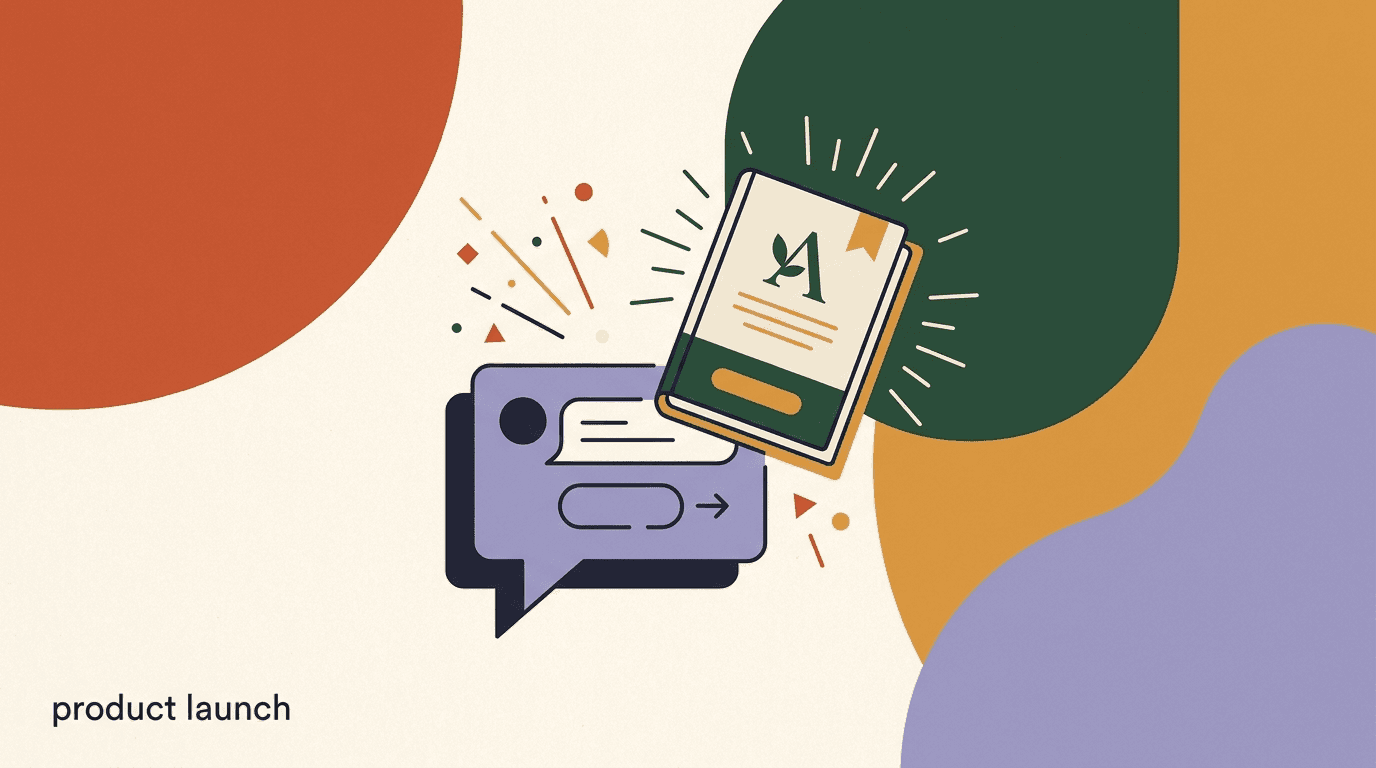
A digital product launch DM is simply a launch where the conversation — not a sales page in isolation — does the heavy lifting. You build anticipation, answer objections, and ask for the sale inside Instagram direct messages, then hand the buyer off to your store or checkout to actually pay and download. This works because a DM is the warmest, highest-attention surface a creator owns. People who reply are not passive scrollers; they raised their hand. That single fact changes the economics of a launch, and it is why ebooks, templates, presets, and mini-courses sell well this way when the funnel is built deliberately rather than improvised the night before cart open.
This playbook walks the entire arc: the pre-launch waitlist, the teaser content that pulls people into DMs, the cart-open push, urgency and scarcity done honestly, objection handling with real reply copy, and the post-launch follow-up that recovers sales most creators leave on the table. It is written for a real launch you could run next month, not a theory of launches.
One thing up front, because honesty matters more than hype: we build KlyoChat, an AI-native tool for managing and automating DMs across Instagram and other channels. So we have a point of view. But the strategy here works regardless of which tool you use, and we will be explicit about what software does and does not do. Critically, KlyoChat is not a checkout or a product-delivery platform. It moves the conversation; your Gumroad, Stan, Shopify, Lemon Squeezy, or Kajabi page takes the money and delivers the file. We make no income claims — what you earn depends on your offer, audience, and price, none of which a DM tool controls.
Why launch a digital product through DMs at all?
Most creators default to a launch that lives entirely in feed posts and a link in bio. It can work, but it leaks. A post gets seen, a fraction tap through, a smaller fraction land on a cold sales page, and an even smaller fraction buy. Every step is a one-way broadcast with no chance to answer the doubt that stops the sale. The DM funnel inserts a conversation exactly where the doubt lives.
A digital product launch DM works because the medium matches the moment. When someone comments "send me the details" on a launch teaser and gets a reply within seconds, you have their attention at peak interest. You can answer the one question holding them back, point them to the checkout, and follow up if they go quiet — none of which a static link in bio can do. For low-ticket digital products especially, removing friction at the decision point is often the difference between a slow launch and a strong one.
There is a second, quieter benefit: data. A DM launch tells you who is interested before you launch, which objections actually come up, and which messages land. That feedback loop makes your next launch better, and it compounds. A feed-only launch teaches you almost nothing about why people did not buy.
A third benefit is durability. The contacts you gather during a DM launch do not vanish when the launch ends. They are a tagged, warm audience you can message for the next launch, the next free resource, or a quick survey about what to build. Over a few launches this becomes the most valuable asset a creator owns: a list of people who have raised their hand, told you their problem, and in many cases already bought from you once. A feed reaches whoever the algorithm decides to show; a DM list reaches the people who actually chose you.
The DM sells the relationship, the store takes the money
Keep this division clear for the whole launch. Your DMs build trust, answer questions, and ask for the sale. Your store or checkout (Gumroad, Stan, Shopify, Lemon Squeezy, Kajabi, and so on) processes payment and delivers the product. A DM tool like KlyoChat hands off; it does not replace your checkout.
Feed-only launch vs DM-led launch
- Feed-only
- Post → link in bio → cold sales page → buy. No way to answer objections; silent drop-off at every step.
- DM-led
- Teaser → comment/DM → conversation that handles the objection → checkout link → follow-up if they stall
What kinds of digital products actually suit a DM launch?
Not every product is a fit, and pretending otherwise wastes your time. DM launches shine for products that are easy to understand quickly, priced where a single conversation can close the sale, and aimed at an audience you already reach on social. The clearer the promise and the lower the deliberation required, the better DMs perform.
High-ticket, high-deliberation offers — a $2,000 cohort program, a done-for-you service — can still use DMs, but as a qualifying and booking channel that leads to a call, not as a place to close cold. Be honest with yourself about which category you are in before you design the funnel.
- Best fit: a single, clear outcome a buyer can grasp in one sentence.
- Best fit: a price low enough that one good conversation can close it.
- Weaker fit: complex offers that genuinely need a long sales page or a call.
- Weaker fit: products for an audience you do not actually reach on social yet.
| Product type | Typical price band | Why DMs fit |
|---|---|---|
| Ebook / guide | $9–$39 | Simple promise, instant download, easy impulse decision |
| Template / Notion system | $15–$79 | Visual proof in seconds, clear before/after, low risk |
| Preset / LUT pack | $12–$49 | Sample images sell it; buyers know the format already |
| Mini-course / workshop | $29–$149 | Needs a little persuasion; DMs answer the "is it for me" question |
| High-ticket program | $500+ | Use DMs to qualify and book a call, not to close cold |
How early should you start, and what's the launch timeline?
The single biggest predictor of a strong DM launch is how warm your audience is when the cart opens. That warmth is built before launch week, not during it. A useful default is a three-to-four week runway: roughly two weeks of waitlist building, a launch week with a clear open and close, and a follow-up tail in the days after. You can compress this for a small, engaged audience or stretch it for a bigger push, but the shape stays the same.
The mistake is launching cold — posting "it's live, link in bio" with no warm-up. A cold launch asks strangers to decide in the same moment they first hear about the product. A warm launch asks people who already said "tell me when it's ready" to act on a decision they half-made weeks ago. Same product, very different result.
| Phase | Timing | Goal |
|---|---|---|
| Pre-launch / waitlist | 2 weeks out | Collect interested people into DMs; tag them |
| Teaser ramp | Final 4–5 days | Show the product; convert content into conversations |
| Cart open | Launch day | Notify the waitlist first; clear ask and checkout link |
| Open cart window | 3–5 days | Daily value + honest urgency; handle objections |
| Cart close | Final 24 hours | Real deadline; last-call sequence |
| Post-launch follow-up | 2–4 days after | Recover stalls, gather feedback, deliver well |
Pick a real close date and honour it
Scarcity only works if it is true. Choose an actual cart-close date or a real bonus deadline and stick to it. If you "close" and then quietly keep selling, your next launch loses all credibility — and your most loyal followers are the ones who notice.
How do you build the pre-launch waitlist in DMs?
The waitlist is the foundation. Everything downstream is easier when you have a tagged group of people who already asked to hear about the product. The mechanics are simple: post something about the upcoming product, invite people to comment a keyword or reply to a story, and capture everyone who responds into a list you can message when the cart opens.
The comment-to-DM pattern is the workhorse here. You post a teaser, say "comment WAITLIST and I'll send you the details," and an automation sends the first DM the moment they comment. This respects Instagram's rules — you are replying to someone who engaged — and it scales without you sitting on your phone. In KlyoChat, this is a comment-to-DM flow, and the people who reply get tagged so you can broadcast to exactly them later.
- Announce that something is comingPost or go live with the problem your product solves and a hint of the solution. Do not reveal everything — create a reason to want the details.
- Offer a low-friction opt-in keywordAsk people to comment a single word (WAITLIST, EARLY, NOTIFY). One word lowers the bar; long instructions kill response.
- Auto-reply and captureTrigger a DM the instant they comment, thank them, set expectations, and tag them as a waitlist contact so you can message them at cart open.
- Give waitlisters a real reason to joinPromise something concrete: first access, a launch discount, or a bonus only the list gets. "Be notified" is weak; "24-hour early access plus 20% off" is strong.
- Keep the list warmSend one or two value-forward messages before launch — a tip, a preview, a behind-the-scenes — so the cart-open message is not the first thing they hear from you in two weeks.
Respect Meta's rules and the 24-hour window
Instagram lets you reply to a user within 24 hours of their last message; outside that window, standard messages are restricted. Build your launch so the key asks land inside active conversations, and never buy lists or message people who did not opt in. Automation that ignores platform rules gets accounts limited or banned.
Waitlist opt-in DM (auto-reply on comment)
- Trigger
- Comment "WAITLIST" on the teaser Reel
- DM 1
- You're on the list 🎉 The [Product] drops [date] and waitlisters get 24-hour early access + 20% off. I'll DM you the second it's live. Quick one — what are you hoping it helps you with?
- Why it works
- Confirms the benefit, sets the date, and asks an open question to start a real conversation and learn the objection
How do you turn teaser content into DM conversations?
Once the waitlist exists, the job of your content shifts from "build awareness" to "start conversations." Every teaser in the final ramp should have a single, obvious next step that lands the viewer in your DMs. Content that ends with no ask is a missed opportunity during launch week.
The strongest teasers show the product doing its job. For a template, that is a screen recording of the finished system. For a preset, it is a before/after slider. For an ebook, it is a single page or framework people can use immediately. Proof plus a question converts: show the result, then ask viewers to DM you for the thing.
Vary the call to action so it does not feel repetitive across the ramp. One day it is a comment keyword, another it is a story poll that triggers a DM, another it is a straight "DM me the word SAMPLE for a free preview page." Each one is a fresh on-ramp into the same conversation.
- Show the product working, then ask for the DM — proof beats promises.
- Use one clear call to action per post; competing asks dilute response.
- Rotate formats: comment keyword, story poll, story question sticker, direct "DM me X."
- Free preview as a hook: a sample chapter, one template, or a watermarked preset converts curiosity into a conversation.
- Reply fast. The value of a DM lead decays by the minute; an instant first reply (automated is fine) keeps the thread alive.
Teaser-to-DM reply (free sample hook)
- Trigger
- Comment "SAMPLE" on the before/after Reel
- DM 1
- Here's a free preview of [Product] so you can see exactly what's inside → [link]. It's the same quality as the full pack, just a taste. Want me to send the full thing when it drops [date]?
- Why it works
- Delivers value first, lets the product prove itself, then sets up the launch ask without pressure
What does the cart-open push look like?
Cart open is the moment the launch turns from anticipation into action. The waitlist gets messaged first — that is the whole point of building one. They were promised early access; deliver it before anyone else hears a word. A broadcast to your tagged waitlist with a clear announcement, the early-access window, and a direct checkout link is the single highest-converting message of the launch.
The cart-open message should do four things in a few short lines: say it is live, restate the core benefit, give the link, and name the early-access deadline. Do not bury the link. Do not write five paragraphs. People on your waitlist already decided they were interested; your job is to remove friction, not re-sell from scratch.
After the waitlist broadcast, open it publicly. Post to feed and stories, point to the link, and keep the comment-to-DM flow running so newcomers who discover the launch can still get pulled into a conversation and a checkout link.
- Broadcast to the waitlist firstMessage only your tagged waitlist with the early-access announcement and checkout link. Honour the promise you made when they opted in.
- Keep the message short and linkedLive + core benefit + link + early-access deadline. Four lines, one link, no friction.
- Open publicly after early accessPost to feed and stories. Restart comment-to-DM so new viewers land in DMs with a checkout link.
- Stay available to replyCart-open day generates the most questions. Have an AI agent or saved replies ready so no buyer waits on the answer that would close them.
The handoff happens here
The checkout link goes to your store — Gumroad, Stan, Shopify, Lemon Squeezy, Kajabi, or similar. That page collects payment and delivers the download. KlyoChat carries the conversation up to the link and follows up after; it does not process the transaction or host the file.
Cart-open broadcast to the waitlist
- Channel
- Broadcast to the "waitlist" tag (people who opted in)
- Message
- It's live 🚀 [Product] is open and as promised you get 24-hour early access + 20% off with code EARLY. Grab it here → [checkout link]. Early access closes tomorrow [time]. Any questions, just reply here.
- Why it works
- Delivers the promised reward, gives the link immediately, sets a real deadline, and invites the objection to surface
How do you do urgency and scarcity honestly?
Urgency and scarcity work because they make a real decision feel time-bound. They become a problem the moment they are fake. A countdown that resets, a "only 10 left" claim on an infinite digital file, a cart that "closes" and reopens the next day — each one buys a sale today and costs you trust forever. For a creator whose whole business is trust, that trade is terrible.
The good news is that honest urgency is plenty powerful. You do not need to invent scarcity; you need to build it into the offer. A real launch discount that ends, a bonus that is genuinely only available during the open window, a founding-member price that actually rises afterward — these are true, they motivate action, and you can defend every word of them.
| Honest scarcity | Dishonest scarcity (avoid) |
|---|---|
| Launch discount that truly ends at cart close | Discount that quietly comes back next week |
| Bonus available only during the open window | "Bonus expires today" repeated every day |
| Founding price that genuinely rises after launch | "Price goes up" that never actually does |
| Limited cohort seats for a live workshop | "Only 5 copies left" of an infinite digital file |
| Real cart-close date you honour | Fake countdown timer that resets on refresh |
Fake scarcity is a one-time trick with a lasting cost
Your audience remembers. If you close a cart and reopen it, or claim a deadline you do not keep, your next launch's urgency means nothing — and the people most likely to notice are your most loyal buyers. Honest constraints convert nearly as well and cost you nothing.
How do you handle objections in the DM?
Objections are not rejections; they are the last question between interest and purchase. In a DM launch you get to answer them one to one, which is a massive advantage over a sales page that has to guess. The four objections that show up in almost every digital product launch are price, fit, timing, and trust. Prepare a genuine answer to each and you will close conversations that a static page would lose.
The key is to answer the real concern, not to argue. "It's too expensive" usually means "I'm not sure it's worth it," so respond with value and proof, not pressure. "Will this work for me" wants reassurance about their specific situation. Short, warm, specific replies win. An AI agent can handle the common ones instantly and around the clock, and hand off to you when a question gets nuanced.
| Objection | What they really mean | How to respond |
|---|---|---|
| "It's too expensive" | I'm not sure it's worth it | Reframe around the outcome and time saved; mention the launch discount honestly |
| "Will this work for me?" | Reassure me about my situation | Ask one question about their context, then point to the relevant part of the product |
| "I don't have time right now" | I'm not convinced it's a priority | Note that it's a one-time download they keep forever, and the launch price ends [date] |
| "I've been burned before" | Can I trust you? | Share a refund policy, testimonials, or a free sample so the risk is on you, not them |
Write your objection replies before launch day
Do not improvise these under pressure. Draft your four core objection responses in advance, load them as saved replies or train an AI agent on them, and you will reply faster, warmer, and more consistently when the questions flood in at cart open.
Objection-handling reply (price)
- Buyer
- Looks great but it's a bit out of my budget right now
- Reply
- Totally fair! Quick context — most people use [Product] to save the [X hours] they'd spend building this from scratch, so it tends to pay for itself fast. The launch price is also 20% off until [date], which is the lowest it'll be. Happy to answer anything else if it helps you decide 🙂
- Why it works
- Validates the concern, reframes price as value, states the real deadline, and leaves the door open without pressure
What's the post-launch follow-up that recovers sales?
Most of the money left on the table in a digital product launch is in the people who almost bought. They clicked the link and did not finish, asked a question and went quiet, or meant to buy and got distracted. A short, respectful follow-up sequence recovers a meaningful share of these — and almost no creator does it well.
The follow-up is not nagging. It is a reminder to people who already showed intent, plus a genuine last call before the offer changes. Two or three messages over the final day or two, spaced out and easy to ignore, is the right dose. One message recovers the distracted; the final-hours message recovers the deadline-driven. After that, stop — pushing past a real close date erodes the trust the whole funnel depends on.
Follow-up also includes the part that builds your next launch: delivering well and asking for feedback. A buyer who has a great experience and feels heard becomes a waitlist member, a testimonial, and a repeat customer for the next product. The launch does not end at the sale; it ends at a happy buyer who will vouch for you.
- Nudge the people who stalledMessage those who clicked the link or asked a question but did not buy. "Saw you were checking out [Product] — anything I can answer?" Light, helpful, easy to ignore.
- Send the last-call messageIn the final hours, a short broadcast to interested-but-unconverted contacts: the cart closes at [time], the discount ends with it, here's the link.
- Confirm and over-deliver to buyersThank every buyer, make sure the download worked, and point them to a quick-start so they get value fast. A great first experience is your next launch's marketing.
- Ask for feedback and a testimonialA few days after delivery, ask how it's going. Happy replies become social proof; problems become fixes before the next launch.
Final-hours last-call broadcast
- Channel
- Broadcast to interested contacts who haven't purchased
- Message
- Last call ⏳ [Product] closes tonight at [time] and the 20% launch discount goes with it. If you've been on the fence, this is the moment → [link]. After tonight it's back to full price. Reply if you have any final questions!
- Why it works
- Honest deadline, restates the saving, removes friction with the link, and still invites the objection
How do you price and structure the offer for a DM launch?
The funnel can be flawless and still flop if the offer is wrong, so it is worth pausing on price and packaging before you build a single flow. The DM is a persuasion channel, but it cannot rescue an offer that is mispriced for its audience or vague about what the buyer gets. The clearer and more concrete the promise, the less work every message downstream has to do.
For a launch specifically, the offer is rarely just the product. A strong launch package is the product plus a reason to buy now: an early-access discount, a launch-only bonus, or a founding price. Each of these gives your cart-open and last-call messages something honest to point at. Stacking a single relevant bonus — a companion checklist with an ebook, a video walkthrough with a template — often lifts conversion more than dropping the price, because it raises perceived value instead of cutting your margin.
Price for the decision you want to be easy. If you want one DM conversation to close the sale, keep the price in the band where a buyer does not need to sleep on it. If the price genuinely requires deliberation, accept that the DM funnel will lead to a call or a longer sales page rather than an in-thread checkout, and design accordingly. Matching the funnel to the price point is one of the most common things creators get wrong.
- Lead with one clear outcome the buyer can repeat back in a sentence.
- Add a launch reason to buy now: early-access discount, launch bonus, or founding price.
- Prefer one relevant bonus over a deeper discount — it lifts value without cutting margin.
- Keep impulse-priced products in a band where a single conversation can close the sale.
- If the price needs deliberation, route the DM to a call or longer page, not a cold checkout.
Test the offer on your waitlist before you build the whole funnel
Your waitlist replies are free market research. When people tell you what they hope the product helps with, you learn whether your promise matches their problem — and whether your price will land — before you have invested a week in flows and creative. Read those replies; do not just collect them.
How do you measure whether the launch worked?
A launch you cannot measure is a launch you cannot improve. The vanity number is total revenue; the useful numbers are the conversion rates between each step, because those tell you where to fix the funnel next time. Track the journey from waitlist to buyer and you will see exactly which stage is leaking.
You do not need a complex dashboard. Five numbers tell most of the story: how many joined the waitlist, how many opened or replied to the cart-open message, how many clicked the checkout link, how many bought, and how many objections clustered around the same theme. The last one is qualitative but often the most valuable — if half your DMs say "too expensive," your price or your value framing is the problem, not your funnel.
- Waitlist size and opt-in rate — is your teaser content actually starting conversations?
- Cart-open reply/open rate — did the waitlist stay warm and engaged?
- Link click rate — is your offer message compelling and frictionless?
- Purchase conversion — of those who clicked, how many bought? (Read this from your store, not your DM tool.)
- Top objections — what did people say when they hesitated? This guides your next offer.
Purchase data lives in your store, not your DM tool
A DM tool can show you opens, replies, and link clicks. The actual sale, refund, and revenue numbers live in your checkout platform. Read conversion from your store's analytics and connect the two halves manually — no DM tool sees inside your Gumroad or Shopify checkout.
What mistakes sink a DM launch?
Most failed DM launches fail for predictable, avoidable reasons. None of them are about the product being bad. They are about execution — usually skipping the warm-up, breaking platform rules, or being slow to reply when it mattered most.
Run through this list before you launch. Each item is a sale-killer we have watched creators hit, and each is fixable with a little planning.
- Launching cold: no waitlist, no warm-up, just "it's live." The single most common cause of a flat launch.
- Slow replies: a DM lead that waits an hour for an answer has usually moved on. Automate the first reply.
- Fake urgency: a deadline you do not keep poisons every future launch.
- Burying the ask: too much chat, no clear link, no obvious next step. Make buying easy.
- Ignoring platform rules: messaging outside the 24-hour window or to people who did not opt in risks the account that runs your whole business.
- No follow-up: stopping at cart open leaves the almost-buyers — often a third of your sales — untouched.
- Treating the DM tool as the checkout: it is not. Always send buyers to a real store to pay and download.
Speed is the cheapest edge you have
The clearest predictor of DM conversion is reply speed. A first reply within seconds — automated is completely fine — keeps the thread alive at peak interest. An hour later, the moment is gone. If you fix one thing, fix this.
How does KlyoChat help run a DM launch?
Everything above can be done by hand. It just does not scale past a few dozen conversations, and launch week is exactly when volume spikes. This is where a tool earns its place. We build KlyoChat to run the mechanical parts of a digital product launch DM so you can focus on the offer and the conversations that actually need you.
Concretely: comment-to-DM flows capture your waitlist automatically when people comment your keyword and tag them so you can broadcast to exactly that group at cart open. Broadcasts send your early-access and last-call messages to tagged segments. AI agents answer the common objections — price, fit, timing — instantly and around the clock, then hand off to you when a question needs a human. A unified inbox keeps Instagram and your other channels in one place so nothing gets missed during the rush, and analytics show opens, replies, and link clicks so you can see where the funnel leaks.
The honest limits matter as much as the features. KlyoChat is not a checkout and not a product-delivery platform — buyers pay and download on your store, and you send them there with a link. KlyoChat respects Meta's rules and the 24-hour messaging window by design, which is a feature, not a bug. It has no native SMS or email, so an email backup list lives elsewhere. We are a newer, smaller community than the incumbents. And we make no income guarantees — what your launch earns depends on your offer, audience, and price, not on us.
- Comment-to-DM flows: auto-capture and tag your waitlist from launch teasers.
- Broadcasts: send early-access and last-call messages to the right segment.
- AI agents: answer common objections instantly, hand off the nuanced ones.
- Unified inbox: handle the launch-week volume across channels without dropping threads.
- Analytics: track opens, replies, and link clicks to find the leak.
- Honest limit: not a checkout or delivery tool — hand off to your store; no native SMS/email; no income claims.
| Launch job | What KlyoChat does | What you still need |
|---|---|---|
| Build the waitlist | Comment-to-DM capture + tagging | A teaser post and an opt-in keyword |
| Cart-open push | Broadcast to the waitlist tag | A checkout link from your store |
| Objection handling | AI agent answers common questions | Your real answers to train it on |
| Follow-up | Broadcast last-call to unconverted | A real, honoured close date |
| Take payment + deliver | Not supported — hands off via link | Gumroad / Stan / Shopify / Lemon Squeezy / Kajabi |
Try it on one launch before you commit
KlyoChat plans start at $19/month (Basic), $49/month for Pro ($39 billed yearly), and $129/month for Business, with a 7-day free trial and no credit card required. Run one real launch on the trial, measure it, and decide. See /pricing for the full breakdown and /features/flows for the comment-to-DM and broadcast tools.
A digital product launch DM is not a trick or a shortcut — it is a deliberate funnel that puts a conversation where the decision happens. Build a waitlist before you sell, turn teaser content into real conversations, open the cart with honest urgency and prepared objection replies, then follow up with the people who almost bought. Do those four things and you will outperform a feed-only launch with the same product and the same audience, because you removed the friction at the exact moment it costs you sales.
Keep the division clear the whole way through: the DM carries the relationship and the pitch, and your store takes the money and delivers the file. A tool can automate the capture, the broadcasts, and the first-line replies — that is what we built KlyoChat to do — but it cannot manufacture a good offer or guarantee a result. Plan the launch honestly, honour your deadlines, reply fast, and let the conversation do the work it is uniquely good at. For the next layer, see our pieces on building an Instagram course sales funnel, monetising Instagram DMs, and turning Reels into DM revenue.