An Instagram course sales funnel that actually converts does not live on a landing page — it lives in the DM thread. The page is where the card gets entered, but the decision happens in conversation: a question answered, an objection met, a preview that proves you can teach. If you sell a course and your funnel is a link in bio plus hope, you are leaving most of the work to a stranger who has to self-serve through every doubt alone. This guide rebuilds that path as a sequence of specific DM steps you can run by hand today and automate later.
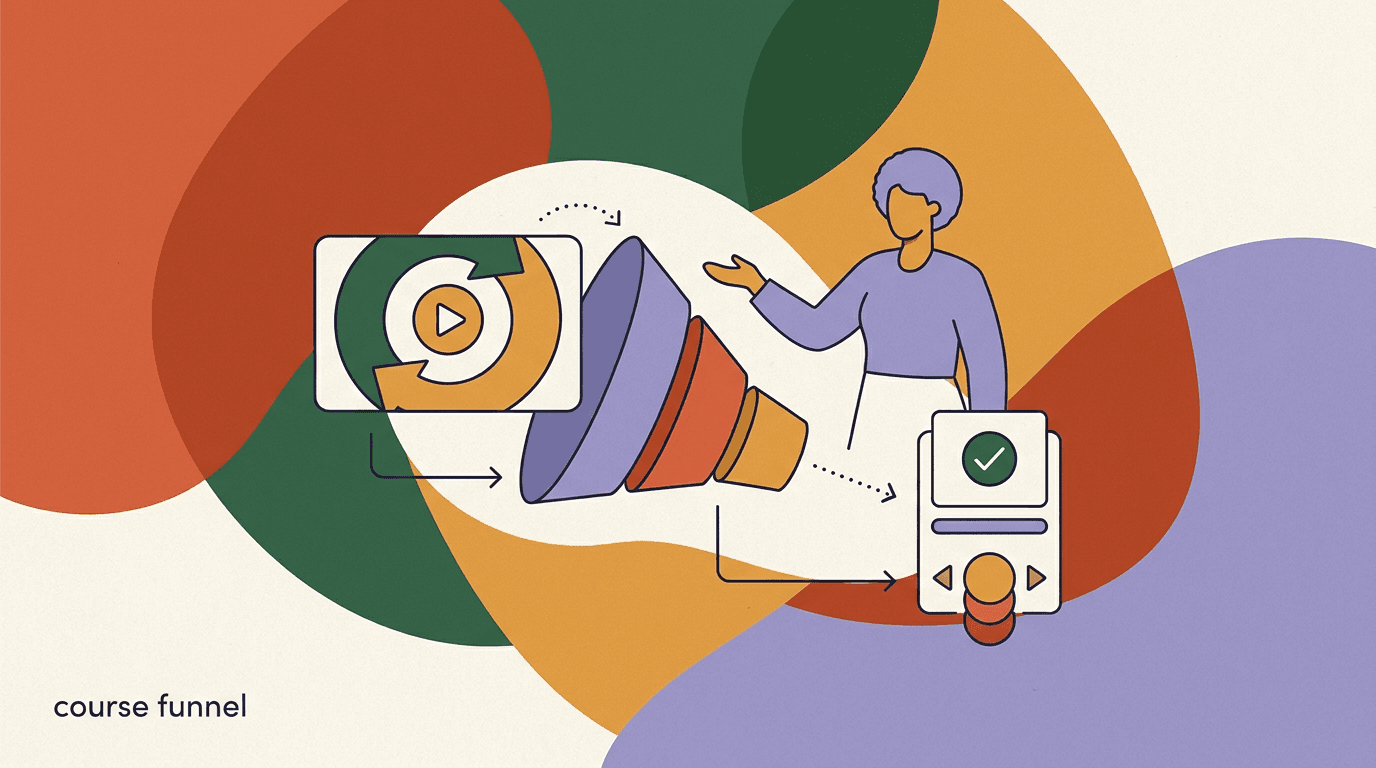
We are going to treat the funnel as a chain of distinct stages, each with a clear job: hook content that earns a comment, a comment-to-DM trigger that opens the thread, qualifying questions that separate buyers from browsers, a value preview that earns trust, the offer itself, structured objection handling, a follow-up cadence that respects the person, and a post-purchase onboarding that protects your refund rate. None of it relies on going viral, and none of it relies on guarantees about what you will earn.
Full disclosure: we build KlyoChat, an AI-native tool for running exactly this kind of DM funnel. We will show where it fits near the end, honestly, including what it does not do. The strategy works whether you run it manually or with software — the steps are the same.
Why does a course funnel belong in Instagram DMs?
Most course funnels were designed for cold traffic: an ad, a landing page, a webinar, an email sequence. That works, but it is expensive and it treats every visitor identically. Instagram flips the economics. The traffic is already warm — these are people who follow you, watched your Reel, or stopped to comment — and the medium is a one-to-one conversation, which is the highest-converting sales context that exists short of a phone call.
A DM funnel lets you do three things a landing page cannot. You can ask a question and branch on the answer, so a beginner and an advanced buyer get different paths. You can answer the specific objection that is actually blocking this person, instead of pre-empting all twelve possible objections in body copy nobody reads. And you can follow up without being creepy, because the thread is already open and the platform expects back-and-forth.
The trade-off is that DMs do not scale by themselves. One person can hold maybe a few dozen real sales conversations a day before quality collapses. That ceiling is exactly why the funnel needs structure: repeatable openers, qualifying questions, and saved responses, so the conversation feels personal without being improvised from scratch every time. Structure is what lets a DM funnel hold its conversion rate as volume climbs.
DMs convert because they are conversations, not pages
A landing page asks one cold visitor to overcome every doubt alone. A DM thread lets you ask, branch, and answer the one objection that is actually in the way. That is why a course funnel built in DMs usually out-converts the same offer on a static page — the medium does the heavy lifting.
What does the full funnel look like, stage by stage?
Before we build each piece, here is the whole path on one screen. Read it top to bottom — every row is a stage, the job it does, and the signal that tells you the person is ready to move to the next one. If a stage has no clear next-step signal, it is decoration, not a funnel step.
| Stage | What happens | Signal to advance |
|---|---|---|
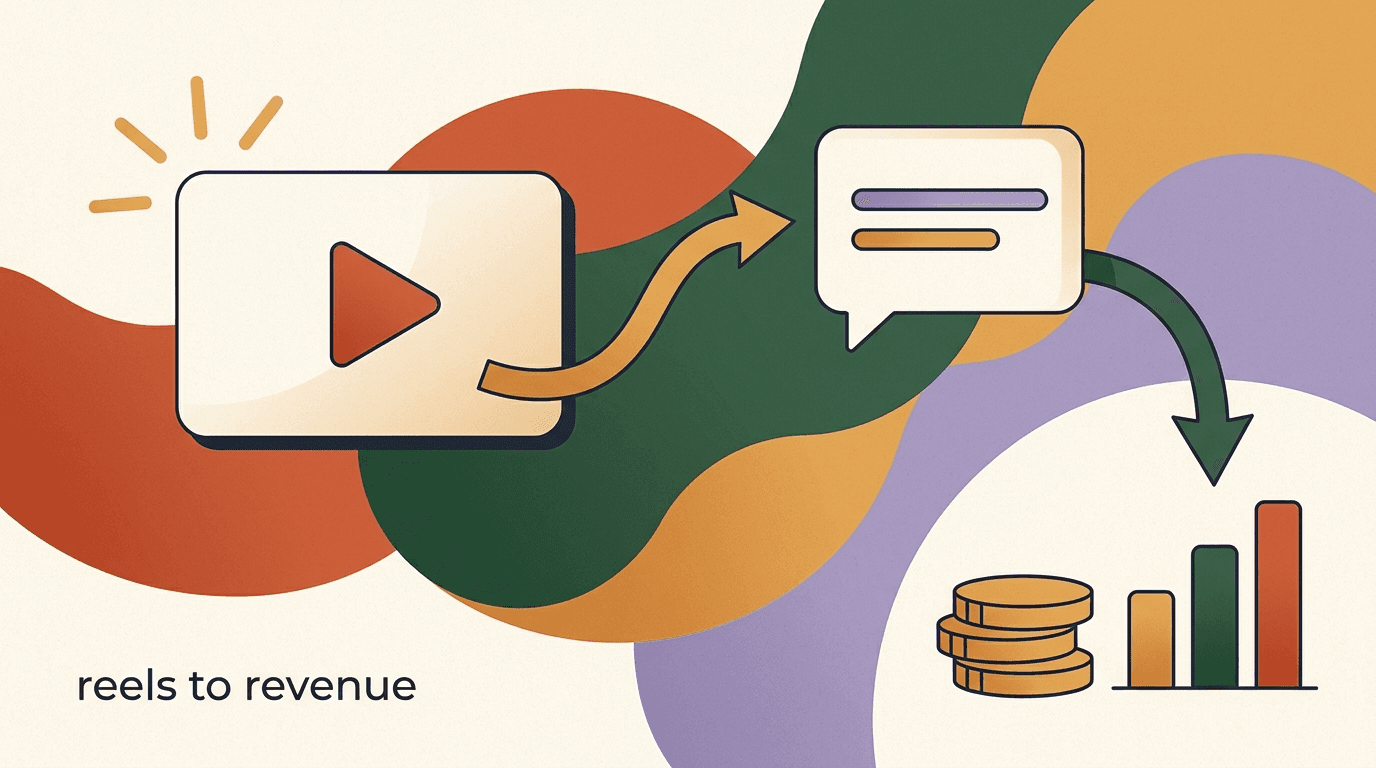
| 1. Hook content | A Reel or post promises a specific outcome and asks for a comment | They comment your keyword |
| 2. Comment-to-DM | The comment triggers an automatic opening message | They reply in the DM |
| 3. Qualify | Two or three short questions surface their goal and level | They answer and engage |
| 4. Value preview | You deliver a real, useful resource or lesson snippet | They react or ask a follow-up |
| 5. Offer | You present the course, price, and what it solves for them | They consider or ask a question |
| 6. Objection handling | You address the specific blocker — price, time, fit | Objection resolved |
| 7. Follow-up | A short, spaced cadence for people who went quiet | They re-engage or buy |
| 8. Onboarding | Post-purchase welcome that gets them to first win | They start the course |
Build one stage at a time
Do not try to wire up all eight stages before you sell anything. Get hook content and comment-to-DM working first, run real conversations by hand through the middle, and only systematize a stage once you have seen it work live. A funnel built from real transcripts beats one built from a whiteboard.
Stage 1: How do you make hook content that earns the comment?
The funnel cannot start until someone comments, so the entire job of your hook content is to make commenting the obvious next action. That means promising one specific, believable outcome and attaching a single keyword to claim it. Vague content — three generic tips, a motivational quote — gets likes, not comments, and likes do not enter the funnel.
The structure that works is simple: name the outcome, name who it is for, and give the comment instruction in plain language. A Reel that says "I will send you my exact 7-day lesson plan for going from zero to your first paid client — comment PLAN and I will DM it" outperforms "link in bio for my course" because it asks for a small, free, low-risk action and tells the viewer precisely what they get.
Keep the keyword short, memorable, and unique to that piece of content so you can attribute which post drives the best conversations. Use a different keyword per campaign and you will learn, within a week, which hooks pull qualified people versus tire-kickers. That attribution is half the value of running the funnel this way.
- Promise one specific outcome, not a category — "your first paid client" beats "grow your business."
- Use a single, short keyword (PLAN, START, GUIDE) and say it out loud and on-screen.
- Pin a comment with the instruction so latecomers know how to enter.
- Vary the keyword per post so you can see which hooks attract buyers.
- Respect Meta rules: do not require a follow to receive the resource, and do not promise results you cannot back up.
Hook line: weak vs strong
- Weak
- New course out now — link in bio to learn more about content strategy.
- Strong
- Comment CALENDAR and I will DM you the 30-day posting plan I built for beginner coaches.
Stage 2: How does comment-to-DM open the conversation?
Comment-to-DM is the bridge between public content and a private thread. When someone comments your keyword, the system sends them an opening DM — automatically, within seconds, before their interest cools. Speed matters here more than polish: a reply in ten seconds while they are still in the app is worth far more than a perfect message an hour later when they have moved on.
The opening DM should do exactly what the post promised and nothing more. Deliver the resource or the link to it, then ask one light question to turn the delivery into a dialogue. The mistake is dumping the resource and a sales pitch in the same breath. You promised a free thing; give the free thing first, then open the door to the next stage with a question they will want to answer.
There is a deliverability nuance worth knowing. Instagram is stricter about the first message to someone you have not talked to, so keep the opener clean, value-first, and free of aggressive links or spammy phrasing. The funnel only works if the messages actually land, and the surest way to get throttled is to treat the opener like a billboard.
- Detect the keywordWatch comments on the hook post for the exact keyword, case-insensitive, and trigger the moment it appears.
- Send the promised resource fastDeliver the lesson plan, guide, or link in the first DM. Lead with the value you promised, not a pitch.
- Ask one opening questionEnd with a single light question so the thread becomes a conversation rather than a one-way drop.
- Reply publicly tooDrop a quick public reply on the comment ("Sent! Check your DMs") so other viewers see the funnel working.
Sample comment-to-DM opener
- Line 1
- Hey! Here is the 30-day posting plan I promised — grab it here: [link].
- Line 2
- Quick one so I can point you to the right next step: are you posting consistently yet, or just getting started?
Stage 3: How do you qualify without sounding like an interrogation?
Qualification is where a DM funnel earns its conversion rate, because it lets you stop selling the same way to everyone. Two or three short questions tell you whether this person is a fit, where they are in their journey, and which objection is most likely to surface. A beginner who has never posted needs a different pitch than someone with 10,000 followers stuck on monetizing — and qualification is how you find out which one you are talking to.
The trick is to make the questions feel like help, not screening. Frame each one as "so I can point you to the right thing," because that is true and because it lowers the guard. Ask about their goal, their current level, and the one obstacle in their way. Those three answers give you everything you need to personalize the rest of the funnel.
Do not ask more than three questions before you give something back. A DM that is all questions feels extractive. Trade value for information: answer their first reply with a genuinely useful nugget, then ask the next question. The conversation should feel like a helpful exchange where you happen to be learning what they need.
- Ask about the goal first — what outcome are they actually after?
- Ask about current level so you can match the pitch to a beginner or an intermediate.
- Ask about the obstacle — their answer is usually the objection you will handle later.
- Cap it at three questions before you give value back, or it feels like a form.
- Tag the answers (beginner, advanced, price-sensitive) so follow-up can branch on them.
Their obstacle is your objection-handling script
When you ask "what is the one thing holding you back?" the answer is gold. Whatever they say — no time, not sure it works for my niche, tried courses before — is the exact objection you will need to resolve at the offer stage. Save these answers; patterns across them tell you how to rewrite your pitch.
Stage 4: Why deliver a value preview before you pitch?
Between qualifying and pitching, insert a preview — a real, standalone piece of teaching that solves one small problem completely. This is the stage most creators skip, and skipping it is why their DMs feel like cold selling. The preview proves three things at once: that you can actually teach, that your method works, and that the paid course is more of something they have already found valuable for free.
The preview should be sized to the qualification. If they told you they are a total beginner, send the single most important first step with a concrete example. If they are further along, send the one tactic that addresses the obstacle they named. Specificity is the point. A generic "here is a tip" reads as filler; a preview that speaks to the exact situation they just described reads as proof.
Keep the preview self-contained — it should deliver a complete small win, not a teaser that withholds the useful part. Counterintuitively, giving away something genuinely good is what makes the pitch land. The buyer reasons: if the free preview was this useful, the structured paid version is worth it. Withholding value to force the sale does the opposite; it signals the paid product is also going to be thin.
The preview is the proof, not the bait
A preview that withholds the useful part to force a purchase signals a thin product. A preview that completely solves one small problem signals a rich one. Give the small win for real — the pitch that follows lands because you have already shown your teaching works.
Value preview matched to the lead
- Beginner lead
- Here is the exact 3-line hook formula I use on every Reel, with two examples you can copy today.
- Intermediate lead
- Since you are posting daily but not converting, here is the comment-to-DM setup that turns viewers into leads — full walkthrough.
Stage 5: How do you make the offer inside the DM?
Now you pitch — but a DM pitch is not a sales page pasted into a message. It is two or three tight lines that connect what they told you to what the course delivers, plus a single clear next action. The structure: name the problem they described, state the outcome the course produces, and give the link with one sentence on price and what is included. That is it. Anything longer invites them to drift away mid-read.
Tie the pitch back to qualification explicitly. If they said their obstacle was consistency, the pitch leads with "the course is built around a system that makes posting consistent even on busy weeks." That callback makes the offer feel made for them, because it was. The personalization you collected in stage three is what turns a generic pitch into a relevant one.
Make the call to action singular and frictionless. One link, one button, one next step. If you offer a payment plan or a bonus, mention it in a single line, do not branch into a menu of options. Decision fatigue kills DM sales — the more choices you present, the more likely the answer becomes "let me think about it," which is the answer that never converts.
| Pitch element | Do | Avoid |
|---|---|---|
| Length | 2-3 lines tied to their situation | A wall of copy or a full sales page |
| Personalization | Reference the obstacle they named | Generic benefits for everyone |
| Call to action | One link, one next step | A menu of options and plans |
| Price | State it plainly in one line | Hiding it or making them ask twice |
Sample DM offer
- Line 1
- Based on what you said about losing momentum, the course is built around a repeatable weekly system so consistency stops depending on motivation.
- Line 2
- It is $X, includes the templates I showed you plus the full module library. Here is the link to start: [link]. Want me to walk you through what is inside first?
Stage 6: How do you handle objections in the thread?
Most DM sales stall on one of four objections: price, time, doubt that it will work for their specific situation, and a bad experience with a previous course. The advantage of the DM is that you do not have to guess which one — they will usually tell you, or you already know from qualification. Handling objections in a thread means meeting the actual blocker with a specific, honest response, not a canned rebuttal.
Prepare a short, genuine answer for each common objection ahead of time, then adapt it to the person. "Will this work for my niche?" is met with a concrete example from a similar niche. "I do not have time" is met by honestly addressing the time commitment and how the course is structured for busy people — not by pretending it takes no effort. The honesty is the persuasion; overpromising to clear an objection just creates a refund later.
Know when to let go. Not every objection should be overcome, and pushing past a genuine "no" damages your reputation and your DM deliverability. If someone is not a fit — wrong stage, no budget, not actually interested — thank them, leave the door open, and move on. A clean exit keeps the relationship warm for a future launch and keeps your conversation quality high, which the platform notices.
| Objection | Honest response | Mistake to avoid |
|---|---|---|
| Too expensive | Reframe around the outcome and offer a plan if you have one | Discounting on the spot — it trains buyers to wait |
| No time | Show the realistic weekly commitment and how it is structured | Claiming it takes no effort |
| Will it work for me? | Give a concrete example from a similar situation | Vague promises of universal results |
| Burned before | Acknowledge it, explain what is different, offer a preview | Trash-talking other courses |
Never overpromise to close
Clearing an objection with a promise you cannot keep just moves the problem to your refund rate and your reviews. We make no income guarantees and neither should you. An honest answer that loses a marginal sale is cheaper than a refund, a chargeback, and a bad word-of-mouth review.
Stage 7: What does a respectful follow-up cadence look like?
Most people who go quiet are not rejecting you — they got distracted, the timing was off, or they wanted to think. A follow-up cadence recovers a meaningful share of these conversations, but only if it respects the person. The goal is to be a helpful nudge, not a nag, and the difference is whether each follow-up carries new value or just repeats "are you still interested?"
A workable cadence is three touches over about a week, each one adding something. The first follow-up, a day or two later, can answer a question they did not ask or share a relevant win. The second, a few days after, can address the most common objection for their stage. The third closes the loop gracefully — a last useful resource and an open invitation, with no pressure. After that, stop, and fold them into your broadcast audience for the next launch instead.
Branch the cadence on what you learned. Someone who got all the way to the offer and went quiet gets a different follow-up than someone who never answered the qualifying questions. Tags from stage three make this easy — price-sensitive leads get a payment-plan reminder, busy leads get a note about time structure. Relevance is what separates a follow-up that re-engages from one that gets you muted.
- Touch 1 — add value (day 1-2)Share something useful and relevant to their goal. No ask. Just remind them you are helpful.
- Touch 2 — resolve the objection (day 4-5)Address the blocker most common for their stage — price, time, or fit — with an honest answer.
- Touch 3 — graceful close (day 7-8)Offer one last resource and an open door. No pressure. If silent, move them to your launch list.
- Stop and nurtureAfter three touches, end the direct push. Keep them warm with broadcasts for the next launch instead.
Follow up with value, and know when to stop
Three spaced, useful touches recover sales. A daily "just checking in" with no new value gets you muted and hurts your deliverability. Cap the direct follow-up, then move quiet leads into your nurture audience. The next launch is a better moment than the fifth nag.
Stage 8: How does onboarding protect the sale you just made?
The funnel does not end at checkout — a sale you do not onboard is a refund waiting to happen. The moment someone buys, the clock starts on their first impression of the product, and the single biggest predictor of whether they stay, finish, and recommend the course is whether they get a quick early win. Onboarding in the DM is how you engineer that win instead of leaving it to chance.
Send a welcome DM immediately on purchase that does three things: confirms access so they are not anxious about whether it went through, points them to the one first step (not the whole curriculum, which overwhelms), and sets a light expectation for what to do this week. The thread that sold them is now the thread that activates them, which is a continuity buyers appreciate.
Then check in once, a few days later, to see if they hit that first step. This single check-in catches the people who bought and stalled before the refund window closes, and it converts a passive buyer into an engaged student. It also generates the testimonials and case examples that feed your next round of hook content — a buyer who got an early win is the person who comments on your next Reel and tells their friends.
- Send the welcome DM instantly — confirm access and kill purchase anxiety.
- Point to one first step, not the entire curriculum, to avoid overwhelm.
- Check in within a few days to catch anyone who stalled before they ask for a refund.
- Ask engaged students for a quick note on their early win — it feeds future hook content.
- Keep the buyer in a separate segment so launch broadcasts do not re-pitch what they own.
First win in the first week
Refunds cluster around buyers who never started. An onboarding DM that drives one concrete early win — a single lesson completed, one template used — is the cheapest refund prevention you have, and it manufactures the proof you will use to sell the next person.
How do you keep the funnel honest and inside the rules?
A DM funnel only keeps working if it stays inside Meta's rules and treats people like people. The fastest way to lose the asset is to get the account restricted, and the second fastest is to burn trust with manipulative tactics that earn one launch and poison the next. Honesty here is not just ethics — it is what keeps the funnel durable.
The practical guardrails are straightforward. Do not gate the free resource behind a forced follow, do not blast unsolicited DMs to people who never opted in, and keep your opening messages value-first so they are not flagged as spam. On the claims side: make no income guarantees, do not invent testimonials, and describe outcomes as possible, not promised. Your qualification and honest objection handling already do the selling; you do not need hype on top.
Build in a rhythm of pruning and listening. Watch which hooks attract qualified conversations versus time-wasters, retire the ones that bring noise, and read your own transcripts every couple of weeks. The funnel is never finished — it is a living script that gets sharper every time you notice which line moved someone to the next stage and which one lost them.
Respect the platform that hosts your funnel
Your DM funnel sits on top of Meta's rules, and those rules change. Keep openers value-first, never require a follow to receive a free resource, and avoid spammy bulk messaging. Treat deliverability as an asset you are protecting, because a restricted account takes the entire funnel down with it.
How do you measure whether the funnel is working?
You cannot improve a funnel you are not measuring, and the good news is that a DM funnel produces clean, stage-by-stage numbers. Each transition has a rate: comments per post, DMs opened per comment, qualified replies per DM, previews delivered, offers made, and sales closed. Track the drop-off between stages and you will see exactly where the funnel leaks, instead of guessing.
The most useful single metric is not total sales — it is the conversion rate from offer to close among qualified leads. That number isolates how well your pitch and objection handling are working, separate from how much traffic your content drives. If that rate is healthy and sales are low, you have a top-of-funnel volume problem; if that rate is low, fix the pitch before you make more Reels.
Review by cohort, not in aggregate. Group leads by the hook keyword that brought them and you will find that some hooks attract buyers and others attract freebie-seekers who never convert. Double down on the hooks that produce qualified conversations and quietly retire the ones that fill your inbox with people who were never going to buy. The math of the funnel rewards quality of entry far more than raw volume.
| Metric | What it tells you | When to act |
|---|---|---|
| Comment-to-DM rate | Whether the hook earns the action | Low: rewrite the hook and keyword call-out |
| Qualified reply rate | Whether your opener invites a real conversation | Low: soften the opener, lead with value |
| Offer-to-close rate | How well the pitch and objections land | Low: fix the pitch before driving more traffic |
| Refund rate | Whether onboarding delivers an early win | High: strengthen the welcome and check-in |
Where does KlyoChat fit into an Instagram course sales funnel?
Everything above can be run by hand, and you should run it by hand first so you learn the conversation before you automate it. But once you are holding more DM threads than you can keep warm, the funnel needs tooling — and tooling is what we build. KlyoChat is an AI-native, mobile-first unified inbox designed for exactly this: comment-to-DM triggers, no-code flows for the qualifying and follow-up stages, AI agents that qualify and answer, broadcasts for the nurture audience, and analytics to read the stage-by-stage numbers.
Concretely: the comment-to-DM feature fires your opener the instant someone uses your keyword, so you capture interest at its peak instead of hours later. No-code flows handle the repeatable parts — the qualifying questions, the value-preview delivery, the spaced follow-up cadence — while an AI agent can field common questions and book or hand off the conversation when a human is needed. Broadcasts keep your quiet leads warm for the next launch, and the analytics show you where the funnel leaks.
We are honest about the limits, because a funnel built on false expectations breaks. KlyoChat has no native SMS or email — if part of your funnel relies on email, capture the address inside the DM and hand it to your email tool. We are a newer, smaller community than the incumbents, so you will find fewer third-party templates floating around. And we hold the same line you should: respect Meta's rules, and no income guarantees. What we offer is the plumbing to run this DM funnel without it eating your whole day.
| Funnel stage | KlyoChat feature | Honest note |
|---|---|---|
| Comment-to-DM | Keyword-triggered opener | Must follow Meta rules on first contact |
| Qualify & preview | No-code flows + AI agent | AI assists; review tone on high-value leads |
| Follow-up & nurture | Flows + broadcasts | Capture email in DM, hand to your email tool |
| Measure | Built-in analytics | Smaller community, fewer outside templates |
Run it manually first, then automate the repeatable parts
Automation amplifies whatever script you give it. Run real DM conversations by hand until you know which openers, previews, and follow-ups convert, then move those proven scripts into KlyoChat flows. Automating a funnel you have not validated just scales a guess.
KlyoChat plans for creators
- Basic
- $19/mo — entry plan for a single creator getting the funnel live.
- Pro
- $49/mo ($39 billed yearly) — all channels, custom AI agents, room to scale the funnel.
- Business
- $129/mo — higher limits and integrations for a growing course business.
- Trial
- 7-day free trial, no credit card — test the full funnel before you pay.
An Instagram course sales funnel is not a single clever trick — it is eight ordinary stages done deliberately: hook content that earns a comment, a comment-to-DM opener that strikes while interest is hot, qualifying questions that personalize the path, a value preview that proves you can teach, a tight offer, honest objection handling, a respectful follow-up cadence, and an onboarding that turns a buyer into a finisher. Each stage is a specific message with a specific job, and each has a signal that tells you the person is ready to move on.
Start small. Get one hook and one comment-to-DM opener working, run the middle stages by hand, read your transcripts, and only then systematize what you have seen convert. When the volume outgrows your hands, the same scripts move into automation. For the broader playbook see our guide to course-creator DM automation, for the whole-business view see the Instagram revenue system, and for turning Reels into DMs see our piece on Reels-to-DM revenue.