Community building DM by DM is the quietest, most underrated growth lever a creator has. Your follower count is a vanity number until the people behind it start talking to you, and the place that conversation actually happens is the direct message thread. A like is a nod across a crowded room. A comment is a wave. A DM is someone walking up to you and starting a conversation — and that is where followers turn into the small, loyal group of superfans who buy what you make, defend you when you stumble, and tell their friends without being asked.
Most creators get this backwards. They pour everything into reach — more posts, more Reels, more hooks — and treat the inbox as an afterthought, a place to skim and ignore. Reach without relationships is a leaky bucket. You attract attention, the algorithm moves on, and the people who would have stayed never got a reason to. The creators who build something durable are the ones who treat the DM as the front door to a community, not a notification to dismiss.
This guide is about how to do that on purpose. We will cover why DMs build community when public content cannot, the conversation rituals that turn a one-off reply into a relationship, how to find and nurture your most engaged followers, where automation genuinely helps and where it quietly destroys trust, and how community converts into income that does not vanish with the next algorithm change. We build KlyoChat, an AI-native inbox for exactly this kind of work, so we have a point of view — but the strategy here works with any tool, and we say plainly where automation should never go.
Why do DMs build community when public content does not?
Public content is a performance. You post to an audience, the audience reacts in public, and everyone is aware of being watched. That dynamic is great for reach and terrible for intimacy. People behave differently when a thousand strangers can see their comment than when it is just them and you in a private thread. The DM removes the audience, and removing the audience is what lets a real relationship form.
There is a simple psychological reason this works. Reciprocity is one of the strongest forces in human relationships: when someone gives you attention, you feel a pull to give it back. A public like costs a follower nothing and means almost nothing. A reply in their DMs — a real one, that shows you read what they said — costs you something, and they feel it. That small debt of attention is the seed of loyalty.
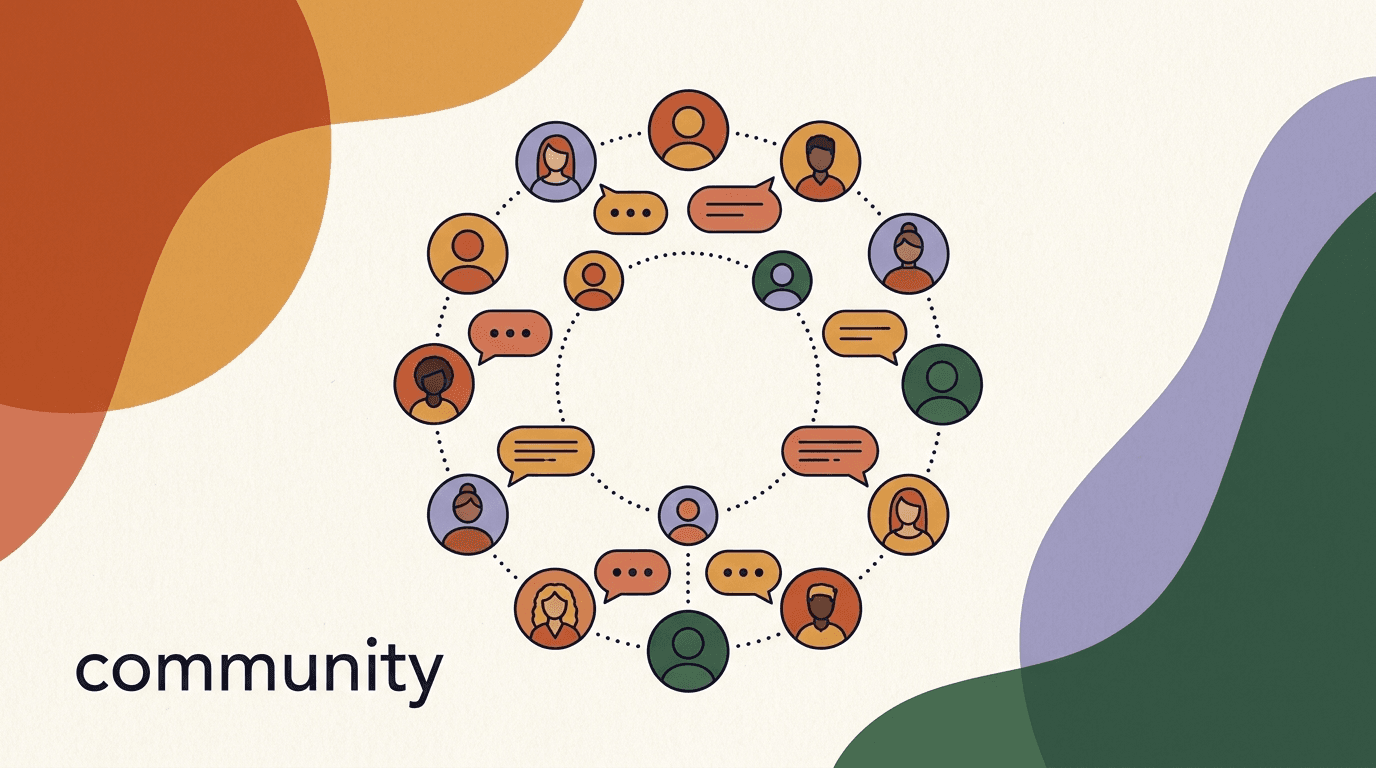
Community is not the same as audience. An audience watches you. A community talks to each other and to you, shows up repeatedly, and feels a sense of belonging. You cannot manufacture belonging with a caption. You build it one conversation at a time, and the DM is the only place on a social platform where those conversations can actually happen at the depth community requires.
There is also a practical reason DMs matter more every year: the public feed is increasingly rented, not owned. The algorithm decides who sees your posts, and that decision changes constantly. A follower might never see a single thing you publish for months. But a DM thread is a direct line that does not depend on a ranking system to deliver it. When you build relationships in the inbox, you are building on ground you actually control, which is a rare and valuable thing on a platform you do not own.
The DM is a room, not a megaphone
If you only ever use DMs to push — links, promos, broadcasts — you are using a megaphone in a room built for conversation. The room rewards listening. The creators who win in the inbox talk less than they think they should and ask more than they expect to.
Audience versus community
- Audience
- Follows, watches, occasionally likes. Relationship is one-way and shallow.
- Engaged follower
- Comments, replies to stories, opens your DMs. Relationship is warming.
- Superfan
- Messages you unprompted, buys, refers friends, defends you. Relationship is real.
What does the journey from follower to superfan actually look like?
Nobody becomes a superfan in one interaction. There is a path, and understanding it lets you meet people where they are instead of asking for too much too soon. Most creators try to sell to a brand-new follower and wonder why it does not work — it is the equivalent of proposing on a first date. The path from passive follower to superfan has recognisable stages, and each stage calls for a different kind of attention.
The point of mapping the journey is not to be cynical about it. It is the opposite. When you know someone just discovered you, you welcome them. When you know someone has been quietly engaging for weeks, you can deepen the relationship rather than restart it. Treating everyone the same — blasting the same message to a first-day follower and a year-long supporter — is the single fastest way to feel impersonal at scale.
| Stage | What they do | What they need from you |
|---|---|---|
| Passive follower | Follows, scrolls past most posts | A reason to engage once — a question, a hook, a prompt |
| Engaged follower | Likes, comments, replies to stories | Acknowledgement that you noticed them |
| Conversationalist | DMs you, asks questions, replies to broadcasts | Genuine back-and-forth, not a canned reply |
| Buyer | Purchases a product or joins something paid | Confidence you will deliver and stay present |
| Superfan | Buys repeatedly, refers others, defends you | To feel like an insider, not a transaction |
Move people one stage at a time
The goal of any single DM is rarely to make a sale. It is to move someone one step along the path — from passive to engaged, from engaged to conversation. Pile up enough one-step moves and the sale takes care of itself.
How do you start conversations with followers who never DM you?
The hardest part of community building in DMs is the cold start. Most of your followers will never message you first, not because they dislike you but because there is no obvious reason to and a small social cost to being the one who reaches out. Your job is to lower that cost and create the reason. You do this by opening doors, not by waiting at them.
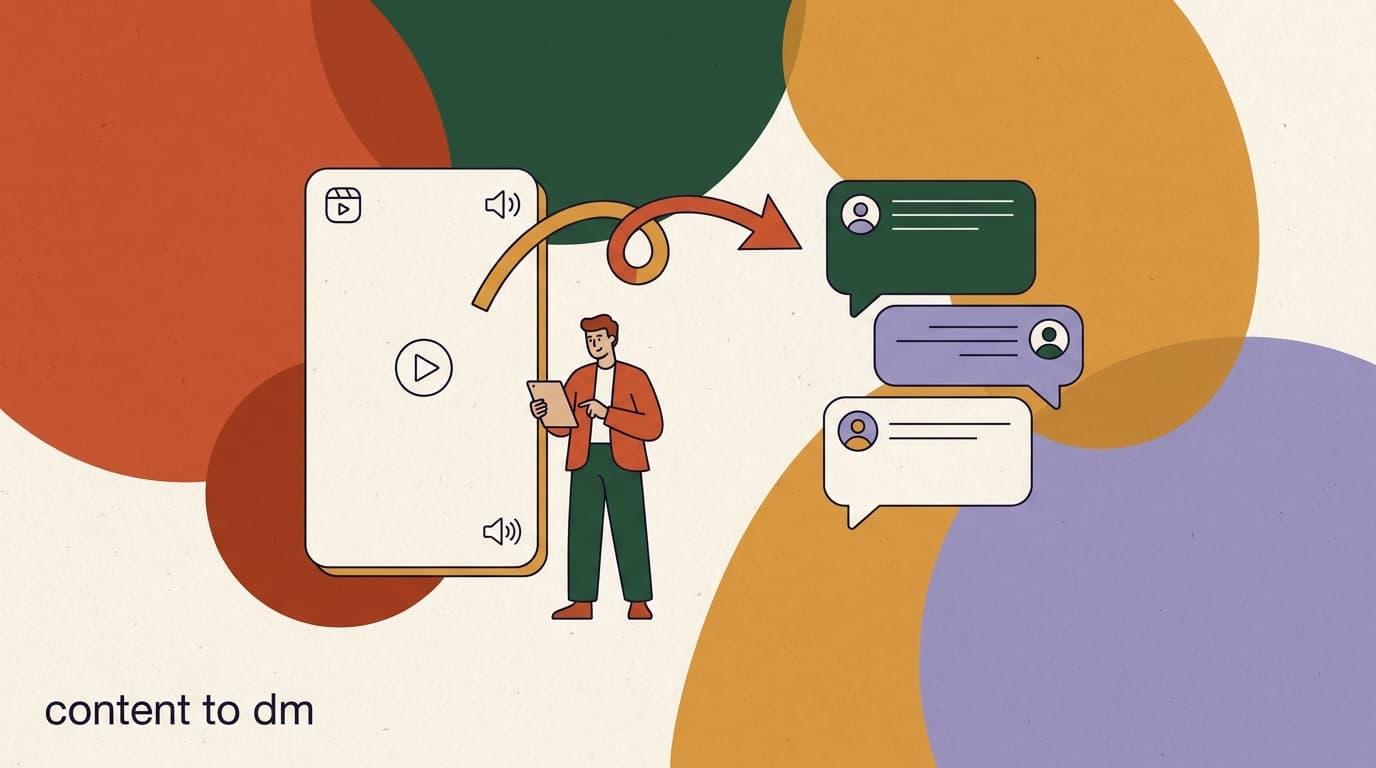
The most reliable door is your own content. Every post, story, and Reel is a chance to invite a reply. A story poll, a question sticker, a Reel that ends with a genuine question — these are explicit permission slips for someone to slide into your DMs. When you ask a question and someone answers, you have a thread, and a thread is the beginning of everything.
The second door is the comment section. Someone who comments has already raised their hand in public. Moving that exchange into a DM — answering their question privately, or sending the resource they asked about — converts a public wave into a private conversation. This comment-to-DM motion is one of the most natural ways to start relationships, because the person reached out first; you are just meeting them somewhere quieter.
- End content with a real questionNot 'thoughts?' — something specific people can answer in five words. 'What's the one thing you're stuck on with this?' invites a reply you can build on.
- Use story stickers as conversation startersPolls and question stickers feel low-stakes to answer. Every answer is a DM thread you can continue with a genuine follow-up, not an autoresponder.
- Follow up on comments in the DMWhen someone asks a real question in your comments, reply briefly in public, then send the full answer in their DMs. You have just started a private relationship.
- Reply to story reactions like a personAn emoji reaction to your story is an opening. 'Ha, glad that one landed — what part?' turns a tap into a conversation most creators leave on the table.
Comment-to-DM in practice
- Public comment
- 'Which mic do you use for these?'
- Public reply
- 'Sending you the exact one in your DMs!'
- DM
- Link, a one-line tip on placement, and 'are you recording at home or on the go?'
What are conversation rituals and why do they matter?
A ritual is something predictable that people can count on and look forward to. Communities are held together by rituals — the weekly check-in, the Friday question, the recurring thread. In the DM, rituals turn scattered one-off exchanges into a relationship with a rhythm. They give people a reason to come back, and they give you a repeatable structure instead of starting from a blank message every time.
Rituals work because they reduce friction on both sides. Your follower does not have to wonder whether it is okay to message you — there is a known moment for it. You do not have to invent a reason to reach out — the ritual is the reason. Over time, the ritual itself becomes part of why someone feels like they belong. Missing it feels like missing a standing coffee with a friend.
The best rituals are small and sustainable. A grand weekly broadcast you abandon after a month does more harm than a simple question you actually keep up. Consistency is the entire point; a ritual you break is just a broken promise. Start with one ritual you can genuinely maintain, and let it earn the right to grow.
- The weekly question: one broadcast a week asking your most engaged followers something you genuinely want their answer to.
- The welcome ritual: every new conversation starts with the same warm, human opener — not a sales pitch.
- The milestone check-in: reach back out to people a few weeks after they first engaged, just to see how they are doing.
- The behind-the-scenes share: a recurring DM that gives your inner circle something the public feed never sees.
- The gratitude note: periodically thanking people who have shown up, by name, with no ask attached.
One ritual you keep beats five you drop
Pick a single ritual and run it for three months before adding another. The value is in the reliability. A community learns to trust a rhythm only when the rhythm holds — and they notice immediately when it stops.
How do you find and nurture your most engaged followers?
Not all followers are equal, and pretending otherwise wastes your limited attention. A small fraction of your audience drives most of the meaningful engagement and almost all of the eventual revenue. Finding those people and giving them disproportionate care is the highest-leverage thing you can do in your inbox. The trouble is that without a system, your most engaged followers are invisible — lost in a flood of notifications.
This is where segmentation comes in. Segmentation is just the practice of grouping people by how they relate to you so you can treat them appropriately. The follower who replies to every broadcast, asks thoughtful questions, and has bought from you is not the same as someone who followed yesterday — and your inbox should know the difference. Tags and segments turn an undifferentiated stream of messages into a map of your community.
Once you can see your most engaged people, nurturing them is mostly about consistent, specific attention. Remember what they told you last time. Reference their situation. Reach out before they reach out to you. None of this is complicated; it is exactly what you would do with a friend. The challenge is doing it across hundreds of people, which is precisely where a little structure — and a little honest automation — earns its keep.
- Tag people as they reveal themselvesWhen someone replies to a broadcast, asks a buying question, or shares a win, tag them. Over time the tags become a living picture of who your community actually is.
- Build a 'superfans' segmentGroup your most engaged — repeat repliers, buyers, referrers — into one segment. This is the small room you give your best attention to.
- Give the segment something the public never getsAn early look, a question you only ask them, a discount, a thank-you. The point is that membership in the inner circle feels real, not just labelled.
- Review the segment monthlyPeople move in and out of engagement. Promote newly active followers, and quietly check in on superfans who have gone quiet before you lose them.
| Segment | How you spot them | How you treat them |
|---|---|---|
| New followers | Recent follow, first interaction | Warm welcome, one easy question |
| Engaged | Replies, comments, story reactions | Personal acknowledgement, invite deeper |
| Buyers | Have purchased at least once | Check delivery, ask for feedback, stay present |
| Superfans | Repeat buyers, referrers, defenders | Insider access, early news, real gratitude |
Segmentation is care, not surveillance
Tagging people is only valuable if it helps you treat them more like individuals, not less. The moment segments become a way to mass-target instead of personalise, you have lost the plot. Use them to remember people, not to process them.
Where does automation actually help in community building?
Automation has a bad reputation in community building, and often deservedly so. A bot that pretends to be you, a fake-warm autoresponder, a sequence that ignores what someone actually said — these erode trust the moment they are detected, and people detect them faster than creators think. But used honestly, automation does one genuinely valuable thing: it clears the repetitive work off your plate so you have the time and energy for the conversations that matter.
The right mental model is that automation handles the predictable, you handle the personal. A new follower asking your posting schedule, someone wanting the link to your free guide, a routine 'where do I buy this' — these do not require your unique presence, and answering them by hand a hundred times a week leaves nothing for the messages that do. Let automation catch the routine so that when a superfan opens up about something real, you are actually there for it.
There is a clean line between support and deception. Automation that gets someone the thing they asked for, instantly, is support — they wanted an answer and got one. Automation that fakes a relationship — pretending a bot's reply is a personal one, manufacturing intimacy that is not there — is deception. The first builds community by freeing you up. The second hollows it out. Stay on the right side of that line and automation becomes one of the best tools you have.
| Task | Automate it? | Why |
|---|---|---|
| Answering 'what's your posting schedule?' | Yes | Predictable, factual, no relationship needed |
| Sending a requested free resource | Yes | They asked; instant delivery is better service |
| Routing a buying question to you fast | Yes | Automation triages, you close the relationship |
| Replying to a superfan's personal news | No | This is exactly the moment to be human |
| Faking a 'personal' check-in from a bot | Never | Deception; destroys trust when discovered |
Never let automation pretend to be you
The fastest way to lose a community is to get caught faking intimacy. If an automated message could be mistaken for a personal one, either make it clearly an instant helper or hand it to a human. People forgive 'here's your link automatically.' They do not forgive being tricked into thinking a bot cared.
How do you automate the routine while keeping it human?
Keeping automation human is mostly about design and restraint. The goal is a system where the boring stuff handles itself, your most important conversations land in front of you, and nothing ever pretends to be something it is not. Done well, your followers experience faster, more helpful responses and more of your real attention — both at once.
Start by separating triage from relationship. Automation is excellent at triage: catching a message, understanding what it is, answering if the answer is routine, and flagging it for you if it is not. The relationship part — the listening, the empathy, the memory of what someone told you — stays with you. An AI agent that drafts a routine reply and then steps aside the moment a conversation gets personal is doing exactly the right job.
The other half is voice. Automated messages should sound like your community is used to you sounding, and they should be honest about what they are. 'Grabbing that link for you now' delivered instantly is fine and even welcome. A long, faux-personal paragraph fired by a trigger is not. Write your automated copy as if you are saying it out loud to someone you respect, keep it short, and let it get out of the way.
- Map your repetitive questionsList the messages you answer the same way every week — schedules, links, FAQs. These, and only these, are your first automation candidates.
- Write honest, on-voice repliesDraft each automated answer in your own voice and keep it brief. If a reply needs to fake warmth to work, it should not be automated at all.
- Set clear hand-off triggersDefine the moments automation must step back — buying signals, emotional messages, anything from a tagged superfan — and route those straight to you.
- Review what the automation saidRead a sample of automated replies weekly. You are checking that it still sounds like you and still hands off when it should. Adjust as your voice evolves.
- Spend the time you saved on real conversationsThe whole point is the trade. Take the hours automation frees and put them into the threads that build superfans. Automation that just saves time without redirecting it is a wasted opportunity.
Triage that stays human
- Incoming DM
- 'Hey, is your course still open? Also going through a rough patch and your stuff helps.'
- What automation does
- Detects buying intent + emotional content, sends nothing canned, flags for you immediately
- What you do
- Reply personally — answer the question and actually acknowledge the rough patch
What conversation habits separate creators with real community?
Beyond systems and segments, there are everyday habits that quietly decide whether your DMs feel like a community or a customer-service queue. These cost nothing but attention, and they compound. A creator who practises them for a year ends up with a relationship to their audience that no amount of reach can buy.
The first habit is listening more than broadcasting. It is tempting to use every thread to mention your offer, your launch, your link. Resist it. The creators with the deepest communities ask questions, remember the answers, and let many conversations exist purely to connect. The trust they build is what makes the occasional ask land.
The second is specificity. 'Thanks so much!' is a wall; 'That point about your morning routine stuck with me — did the 6am thing actually hold?' is a door. Specific replies prove you read what someone wrote, and being genuinely heard is rarer and more powerful online than almost anything else you can offer.
The third habit is patience with the quiet ones. A large share of your eventual superfans will lurk for a long time before they ever say a word — reading, watching, deciding whether you are trustworthy. When one of them finally messages, it is tempting to treat it as a small interaction because it is your first. To them it may be the culmination of months of quiet attention. Answer that first message as if it matters, because for that person it almost certainly does, and you may be one good reply away from a relationship that lasts years.
- Reply to everyone while you still can — early on, every single response plants a relationship.
- Use people's names and reference what they told you last time; memory signals that they matter.
- Ask follow-up questions instead of closing the loop; the goal is to continue, not conclude.
- Sit with hard messages instead of deflecting them; presence in a tough moment makes a superfan.
- Give before you ask — show up with value many times before you ever pitch anything.
- Be honest when you cannot help; 'I don't know, but here's who might' builds more trust than a hollow answer.
Reply to everyone for as long as you possibly can
There is a window, before your inbox becomes overwhelming, where you can personally answer everyone. That window is precious. The relationships you build in it become the core of your community for years. Automate later; right now, just be present.
How does a DM community turn into durable income?
Community is not a substitute for revenue — it is the most reliable foundation for it. A creator with a genuine community sells differently than one with a cold audience: less convincing, less discounting, fewer launches that flop. When people already trust you because you have shown up for them in the DMs, an offer is not an interruption; it is a natural next step in a relationship they value.
The mechanism is straightforward. Trust lowers the cost of every sale. A superfan does not need a five-email funnel and a countdown timer to buy — they need to know the thing exists and that you made it. The work of persuasion was done quietly, over months, one helpful reply at a time. This is why community-driven income is so durable: it does not depend on the algorithm sending you a viral moment. It depends on relationships you already own.
It also compounds in ways pure reach never does. Superfans refer other people, who arrive pre-warmed by a trusted recommendation and move through the journey faster. They give you feedback that makes your products better. They forgive your missteps and stick around through quiet stretches. A thousand true superfans is a more reliable business than a hundred thousand passive followers, and it is built entirely in conversations.
It is worth naming the patience this requires, because it is the reason most people never get the reward. The income from community arrives long after the work that earned it, which makes it feel, in the early months, like you are getting nothing back for a lot of effort. You are replying, asking, remembering, showing up — and the sales are not there yet. That gap is exactly where most creators quit and go back to chasing reach, which pays faster and shallower. The ones who push through the gap end up with something the reach-chasers never build: a group of people who would buy almost anything you made, because the relationship came first and the transaction came second.
Sell to the relationship, not the list
When you sell, talk to the people, not the metrics. A broadcast to your superfans that reads like a note to a friend will outperform a polished blast to your whole list. The community you built in private is what makes the offer welcome.
Two launches, same product
- Cold audience
- Heavy promotion, discounting, anxious launch — sales depend on reach that week
- DM community
- A few honest broadcasts to engaged segments, friends telling friends, steadier sales
What mistakes quietly kill DM communities?
Most DM communities do not die from a single dramatic failure. They erode from small, repeated mistakes that slowly teach followers their messages do not matter. Knowing the common failure modes lets you avoid the ones that quietly cost you the most, often without you noticing until the inbox has gone cold.
The biggest killer is using the inbox only to sell. If every message a follower gets from you is an ask, they learn to ignore you, and your open rates collapse. The DM is a relationship channel first; the moment it becomes a sales channel only, the relationship — and eventually the sales — disappear.
- Treating DMs as a broadcast pipe: only ever pushing, never listening, until people tune out.
- Over-automating: handing the personal conversations to a bot and wondering why the warmth left.
- Generic replies: 'Thanks!' and copy-paste answers that prove you did not actually read the message.
- Inconsistency: starting a ritual, building expectation, then dropping it without a word.
- Selling too early: pitching brand-new followers before any relationship exists.
- Ignoring superfans: letting the people who show up most become invisible because they are not a problem to solve.
Silence toward your most loyal people is the costliest mistake
Creators pour energy into winning new followers and forget the ones already devoted. Superfans who feel taken for granted drift away quietly, and they are the hardest to replace. A small, regular gesture toward your inner circle protects the part of your community that matters most.
How can KlyoChat help you build community in DMs?
Everything in this guide can be done by hand, and early on you should do it by hand — replying personally is the whole point. KlyoChat becomes useful at the moment the volume starts to outrun your hours, when you are losing good conversations in the flood and your most engaged followers are getting the same generic attention as everyone else. We built it to protect the human part of community work, not to replace it.
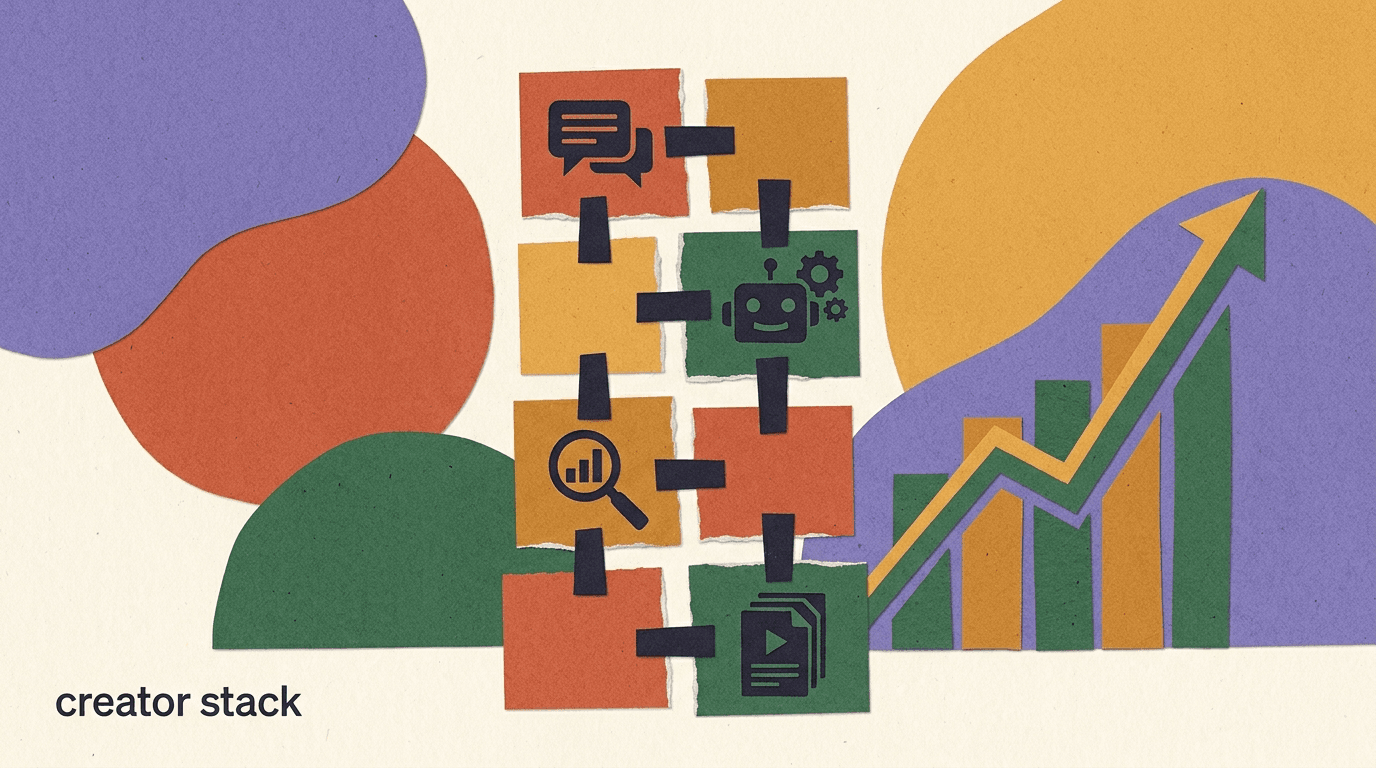
KlyoChat is an AI-native, mobile-first unified inbox. Every conversation across your connected channels lands in one place you can manage from your phone, so a superfan's message does not get buried under a hundred routine ones. Tags and segments let you build and maintain that 'superfans' group from earlier, so you always know who your inner circle is and can give them the disproportionate care they have earned.
On the automation side, AI agents handle the routine questions — schedules, links, FAQs — and step back the moment a conversation turns personal or shows a buying signal, flagging it for you. Comment-to-DM turns public commenters into private conversations automatically, and broadcasts let you run conversation rituals to a segment without copy-pasting to hundreds of people. The repetitive work gets lighter; the real conversations stay yours.
- Mobile-first unified inbox so no superfan's message gets lost in the noise.
- Tags and segments to find, group, and nurture your most engaged followers.
- AI agents that handle the routine and hand the personal straight back to you.
- Comment-to-DM and broadcasts to start conversations and run rituals at scale.
What KlyoChat is honestly not
KlyoChat is an inbox and automation layer, not a community platform — if you want forums, threads, or a members' space, pair it with Discord or Circle. It has no native SMS or email, so it works alongside your email tool rather than replacing it. And we are newer and smaller than the incumbents. Automation here supports relationships; it never fakes them, and it is not a shortcut around actually showing up.
KlyoChat plans at a glance
- Basic
- $19/mo — unified inbox, tags and segments, comment-to-DM, one AI agent
- Pro
- $49/mo ($39 billed yearly) — all channels, custom AI agents, broadcasts to segments
- Business
- $129/mo — higher volume, more seats, advanced segmentation
- Trial
- 7-day free trial, no credit card required
How do you start building your DM community this week?
You do not need a new tool or a grand plan to begin. Community building in DMs is a practice, and the only way to start a practice is to start. The creators with the deepest communities did not wait for the perfect system; they replied to one more person, asked one more question, kept one more ritual, and let it compound. Here is a concrete first week.
Keep it small enough that you actually do it. The temptation is to design an elaborate funnel and never ship it. Resist that. One ritual, a handful of conversations, and the simple habit of replying like a person will teach you more in a week than any amount of planning. Build the system later, once you have proof of what your particular community responds to.
- Reply to every DM you have, like a personClear your backlog with specific, genuine replies. Reference what each person actually said. This alone will surprise you with how it warms people up.
- Open one door from your contentPost something that ends in a real question or a story sticker. Continue every reply into a short conversation rather than letting it die at one message.
- Start one ritual you can keepPick a single recurring touch — a weekly question, a welcome message — and commit to it for three months. Reliability is the whole value.
- Name your first ten superfansIdentify the people who engage most and tag or note them. Give them one small piece of insider attention this week, with no ask attached.
- Automate only your most repetitive questionOnce the human habits are in place, take the single question you answer most and let a tool handle it — honestly — so you have more time for the rest.
Start before you feel ready
There is no threshold of follower count you need to reach before community building matters. With a hundred followers you can reply to every one and build a core that carries you for years. The smaller you are, the bigger the advantage of being genuinely present.
Community building DM by DM is slow, unglamorous, and almost entirely invisible from the outside — which is exactly why so few creators do it well, and why it is such a durable advantage for the ones who do. While everyone else chases the next viral moment, you are quietly turning followers into people who actually know you, talk to you, buy from you, and bring their friends. That is a business that does not evaporate when the algorithm changes its mind.
The strategy comes down to a few honest principles: treat the DM as a room for conversation, not a megaphone; meet people where they are on the journey; build rituals you keep; give your most engaged followers disproportionate care; automate the routine so you can be human where it counts; and never fake a relationship that is not there. Do that consistently and the income follows, because trust is the cheapest sales tool there is. If you want help carrying the volume without losing the human part, KlyoChat is built for exactly that — and a 7-day free trial costs nothing to try.