The link in your bio is the most over-asked, under-performing piece of real estate in social media marketing. You spend hours making a post good enough to earn attention, the algorithm rewards you with reach, a viewer feels a flicker of interest — and then your call to action is "link in bio." You have handed them a chore. Tap the profile, find the link, tap again, load a page of buttons, guess which one matters, tap a third time, land on a website that knows nothing about why they came. Most people do not finish that journey. They were interested for about four seconds, and you spent those four seconds asking them to navigate.
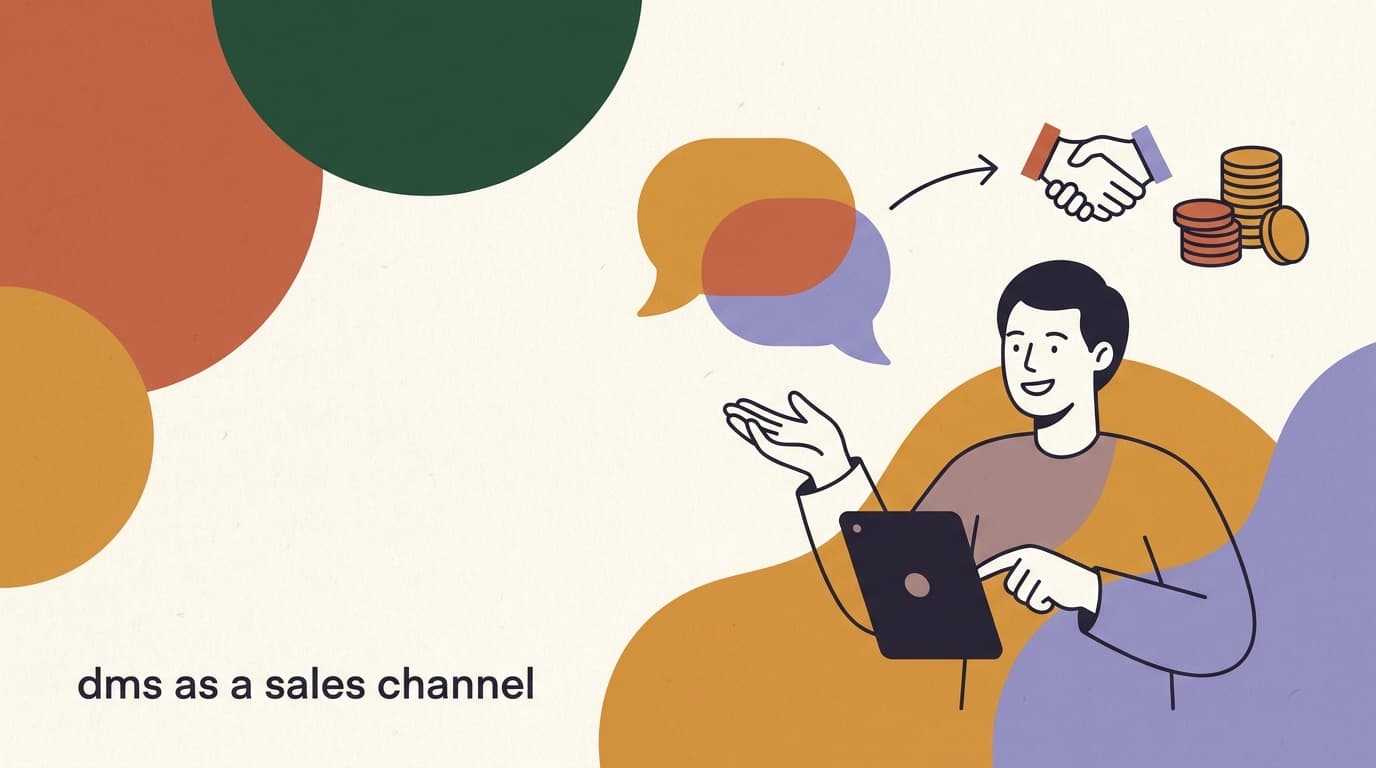
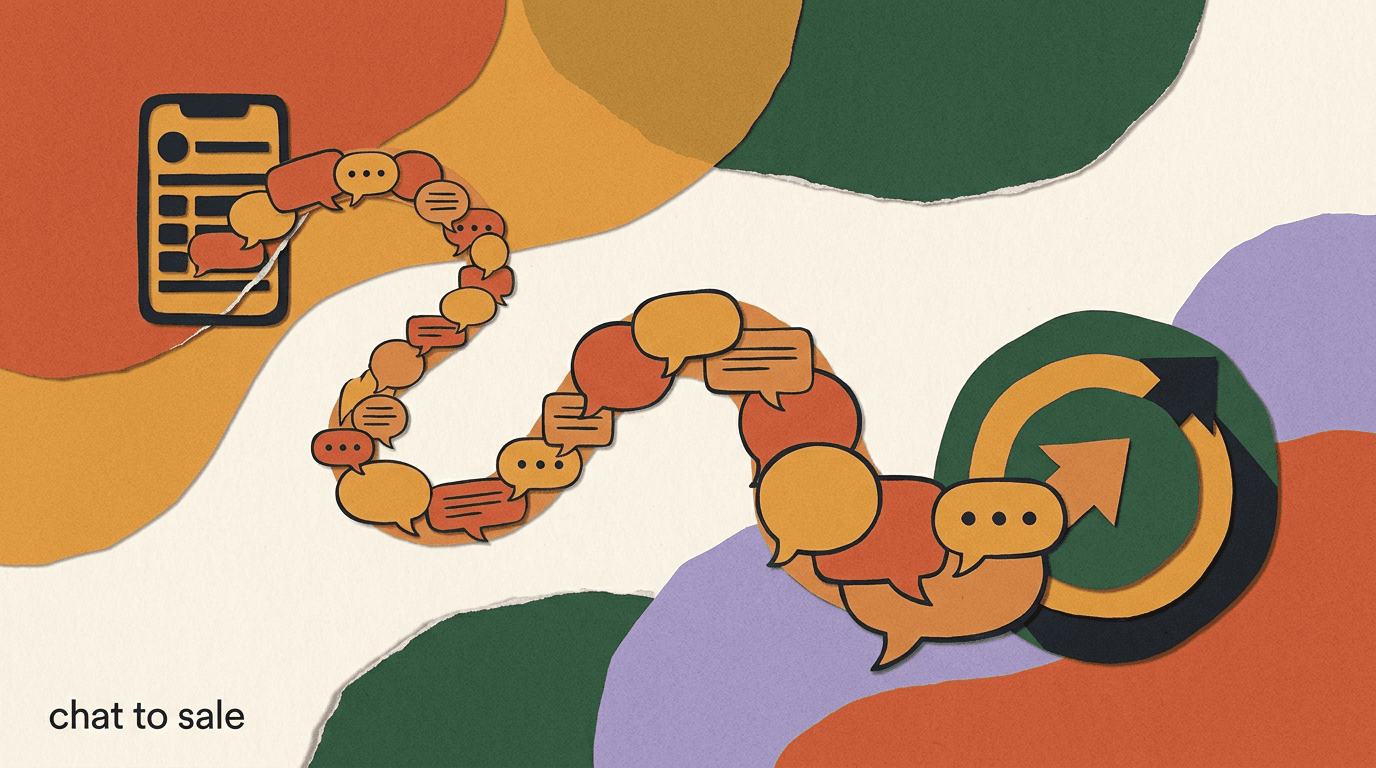
A chat-to-sale funnel inverts the whole motion. Instead of sending a warm viewer to a cold page, you start a conversation in the place they already are — the comments, the DMs, the reply to a story. You ask one question, they answer, and now you are talking. From there you can qualify, recommend, handle the objection, and send the right link at the right moment to a person who has told you what they want. The link still exists. It just arrives at the end of a conversation instead of standing in for one.
This is a strategy piece, not a build tutorial. We are going to argue why a conversational funnel out-converts a static link page for a large class of creators and brands, walk through the conversion logic underneath it, show you how to design one, and — because we would rather be useful than sell you something — be honest about the cases where link-in-bio is genuinely the better tool. Full disclosure: we build KlyoChat, a platform for running exactly these funnels, so we have a side. We have tried to keep the reasoning sound enough that it holds up even if you never touch our product.
What is a chat-to-sale funnel, exactly?
A chat-to-sale funnel is a path that moves a person from a public social interaction into a private conversation, and through that conversation toward a purchase. The trigger is usually a comment, a keyword, a DM, or a story reply. The middle is a guided exchange — sometimes automated, sometimes human, usually a blend — that figures out what the person needs and matches them to it. The end is a checkout, a booking, a signup, or whatever your conversion actually is.
Contrast that with the link-in-bio model, which is fundamentally a redirect. Link-in-bio collects all of your possible destinations into one page and asks every visitor, regardless of who they are or why they came, to self-select. It is a directory. A chat funnel is a conversation. The directory treats everyone identically; the conversation adapts to each person.
The distinction matters because the two models optimize for different things. A link page optimizes for breadth — it can point to everything you offer at once. A chat funnel optimizes for conversion on a specific intent — it gets one person from interest to action with as little friction as possible. Most businesses default to the directory because it is the standard, then wonder why their click-through-to-purchase numbers are quietly terrible.
Same viewer, two paths
- Link-in-bio path
- See post → tap profile → tap link → scan a page of buttons → pick one → load website → start over with zero context
- Chat-to-sale path
- See post → comment a keyword → get a DM that asks one question → answer → get a tailored recommendation and the exact link
Why does conversation convert better than a cold link?
The short answer is that buying is a sequence of small decisions, and a static link asks the buyer to make all of them alone. Is this for me? Which version do I need? Will it actually solve my problem? What about the thing I am worried about? On a link page, every one of those questions is the visitor's job to answer by reading, clicking, and inferring. Each unanswered question is a place to drop out. A conversation answers them one at a time, in order, in response to what the person actually said.
There is also a psychological asymmetry. A link is a demand: go here, do this. A question is an invitation: tell me about you. People respond to invitations far more readily than to demands, because answering a question costs almost nothing and feels like being helped rather than being sold to. The moment someone replies — even with a single word — they have made a micro-commitment, and the conversation has momentum that a one-way link can never build.
Finally, context compounds. By the time a chat funnel sends a link, it knows the person's situation, their objection, and their stated intent. The link lands on someone who is pre-qualified and pre-warmed. The same link in a bio lands on a stranger. Identical destination, wildly different conversion, because of everything that happened — or did not happen — before the click.
There is one more factor that rarely gets named: timing. Interest has a half-life. The moment someone sees your post and feels the pull to act is the moment with the highest conversion potential, and it decays fast. A link in a bio asks the person to hold that interest across a multi-step navigation; by the time they have found the link and loaded the page, the spark has often faded. A conversation captures the spark where it lives, in the comment or the DM, and keeps it alive by responding. You are not asking the person to carry their motivation somewhere else; you are meeting it where it already is.
The friction you cannot see is the friction that matters
Every extra tap, every page that loads without context, every moment a buyer has to figure something out alone is invisible friction. You never see it in your analytics because the person who hit it just left. A conversation removes friction by answering the question before it becomes a reason to leave.
What is wrong with link-in-bio, specifically?
It is worth being precise, because "link-in-bio is bad" is too blunt to be useful. Link-in-bio is not bad. It is a directory being asked to do the job of a salesperson, and it is structurally unsuited to that job. Here are the specific failure modes.
- It requires navigation. The viewer has to leave the content, find the profile, find the link, and then choose — three or four taps before anything useful happens.
- It is context-blind. The page is identical for someone who saw your tutorial, someone who saw your sale post, and someone who found you cold. It cannot adapt.
- It offloads qualification onto the buyer. The visitor has to figure out which of your offers fits them, which is work most people will not do.
- It cannot handle objections. If the buyer's real blocker is "is this beginner-friendly?" a link page has no way to answer, so the buyer leaves with the objection intact.
- It loses the lead. A click that does not convert is gone — you have no way to follow up, because you never captured a conversation.
- It breaks attribution. You rarely know which post drove which click, so you cannot tell what content actually sells.
This is a design mismatch, not a moral failing
Link-in-bio tools are well made and useful for what they are. The problem is using a static directory as your primary conversion mechanism. The directory is fine as a backup or a catch-all; it is weak as the main path from interest to purchase.
How does the conversion logic of a chat funnel work?
Underneath any good chat-to-sale funnel is a simple conversion logic borrowed from how a competent salesperson actually behaves. They do not open with the price. They open with a question, listen, narrow down, address the one thing standing in the way, and only then ask for the sale. A chat funnel encodes that sequence so it runs at scale, on every interested person, at any hour.
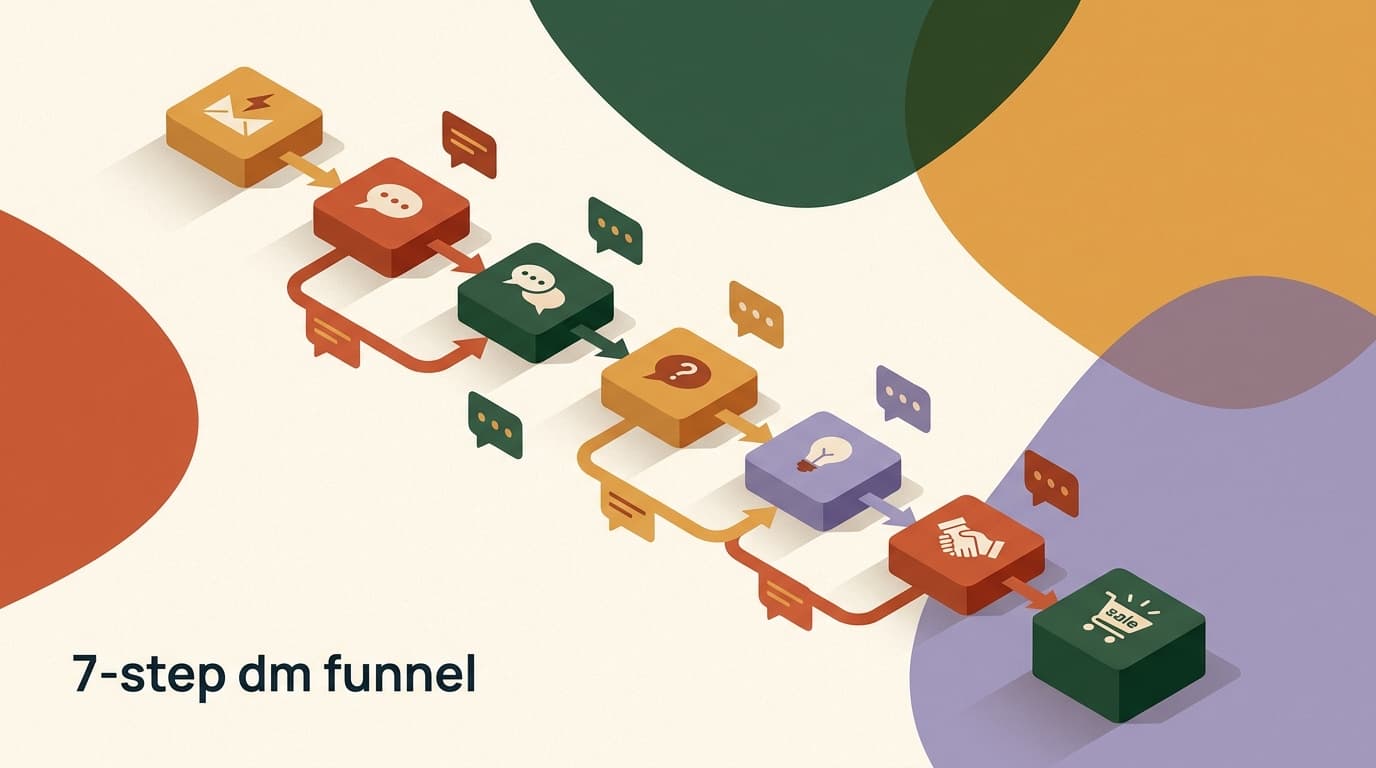
The logic moves through four jobs, in order. Get them talking. Understand what they need. Remove the blocker. Make it trivial to act. Each job is a stage, and each stage has a job to do before the next one earns the right to run. Sending a link before you have understood the need is exactly the mistake link-in-bio makes — you just get to make it less often.
What makes this work is sequence discipline. A weak funnel collapses the stages — it tries to qualify, reassure, and sell in a single breathless message — and the reader feels rushed, which reads as pressure, which kills the sale. A strong funnel respects that each stage produces information the next stage needs. You cannot make a relevant recommendation until you have qualified. You cannot handle the right objection until you know which one is in the way. The order is not arbitrary; it is the order in which a buyer's questions naturally arise. Run the stages out of order and you are answering questions the person has not asked yet while ignoring the one they have.
| Stage | Job | What good looks like |
|---|---|---|
| Open | Start the conversation | A low-effort first reply — one question or one keyword response, never a wall of text |
| Qualify | Understand the need | One or two questions that sort the person into the right offer or path |
| Address | Remove the blocker | Answer the specific objection this person has, not a generic FAQ |
| Close | Make acting trivial | The exact link, the exact next step, with the context already handled |
One stage per message
The fastest way to ruin a chat funnel is to cram qualifying, objection-handling, and the link into a single message. It reads like a sales pitch and people bail. Move one step at a time and let each reply pull the next message.
How do you design a chat-to-sale funnel from scratch?
Designing a funnel is mostly deciding, before you build anything, what conversation a great human would have with each interested person — then writing it down as a path. The build is the easy part once the conversation is clear. Here is the order we recommend.
- Pick one conversion, not all of themA funnel converts one specific thing well. Choose the single offer or action this funnel exists to drive — a product, a booking, a waitlist. Resist the urge to make it a menu; that is what your link page is for.
- Write the trigger into your contentDecide how people enter — comment a keyword, reply to a story, DM a word. Then make your posts actually ask for it. The funnel only works if the content invites the action that starts it.
- Script the opening messageWrite the first DM as a low-effort invitation. One warm line plus one question. The only job here is to get a reply, because a reply is the first micro-commitment.
- Design the qualifying questionAdd one or two questions that branch the path. If you sell to beginners and pros, ask which they are. The answer routes them to the right recommendation and lets every later message be relevant.
- Pre-write the top objectionsList the three reasons people hesitate, and write the message that handles each. Most hesitation is predictable; predictable hesitation can be answered before it costs you the sale.
- Place the link at the moment of intentSend the link only after the need is clear and the blocker is gone. It should feel like the obvious next step, not an interruption. Include the context so the destination is not a cold start.
- Add the human handoffDecide where a person takes over — high-value questions, anything the script cannot handle, anyone who wants to talk to a human. Automation opens the door; people close the hard sales.
What does a concrete example funnel look like?
Abstract logic is easy to nod along to and hard to act on, so here is a full funnel for a believable business: a creator who sells a paid course on a specific skill, plus a free starter guide. The post is a short tutorial clip. The conversion is a course sale, with the free guide as a fallback for people who are not ready to buy.
Notice how the path does the four jobs in order, branches once on intent, handles the most common objection, and only then sends the buying link. Notice too that nobody was ever told to find a link in a bio.
The fallback is not a failure
A person who takes the free guide instead of buying is not a lost sale — they are a captured lead in a conversation you can continue. That is the part link-in-bio cannot do: when the click does not convert, you still have the relationship.
Course-creator chat-to-sale funnel
- Trigger
- Clip ends with: comment LEARN and I'll send you the full breakdown
- Open (DM)
- Thanks for the comment. Quick one so I send the right thing — are you just starting out, or already practicing?
- Qualify
- Reply branches: beginner gets the free starter guide first; practicing gets the course pitch directly
- Address
- If they hesitate on price: here's what's inside, the time it saves, and a 14-day refund if it's not for you
- Close
- Sounds like the full course is your fit — here's the link, your spot's reserved for 24h: [checkout]
- Fallback
- Not ready? No problem — here's the free guide, and I'll check in once you've tried it
What does the conversational landing experience replace?
It helps to name what a chat-to-sale funnel actually replaces, because it is not really the link page — it is the landing page behind the link page. When someone taps a link in a bio, the landing page is supposed to do the selling: explain the offer, answer questions, build trust, and drive the action. The conversation does the same jobs, but it does them interactively rather than all at once on a scroll.
Think about what a good landing page is trying to be. It is trying to anticipate every visitor's question and answer it somewhere on the page, in an order it hopes matches how people think. It is a one-size-fits-all script printed in advance. A conversation is the same script, except it only shows each person the parts relevant to them, in the order their own questions arrive. The landing page guesses at the visitor; the conversation asks.
This reframing matters because it tells you where a chat funnel earns its keep. The harder it is to write a landing page that converts everyone — because your audience is varied, your offer needs explaining, or the objections differ by segment — the more a conversation outperforms it. Conversely, when a landing page can be dead simple because everyone wants the same obvious thing, the conversation adds little. You are replacing the work the landing page was doing, so the value of replacing it scales with how much work that was.
If your landing page is hard to write, build a conversation instead
Struggling to make a landing page that converts your whole audience is a signal, not a copywriting failure. It usually means your audience is varied enough that no single page fits them. That is precisely the case where a conversation — which adapts per person — pulls ahead.
Landing page job versus conversation job
- Landing page
- Anticipates every question and answers all of them on one scroll, for everyone, in a fixed order
- Conversation
- Asks what this person needs, then shows only the relevant answers in the order they arise
- Where it wins
- Varied audiences, offers that need explaining, objections that differ by segment
When is link-in-bio still the better choice?
We would be doing you a disservice if we pretended a chat funnel wins every time. It does not. There are real cases where a static link page is the right tool, and forcing a conversation into them just adds friction. Honesty here is the whole point — a strategy you cannot trust is worthless.
Link-in-bio is the better choice when the purchase needs no context, when intent is already high, and when speed of access beats depth of conversation. If someone already knows exactly what they want, a conversation is a speed bump, not a help.
- Simple, one-click purchases: a single low-priced product, a ticket, a tip jar — anything where the buyer already decided and just needs the button.
- High, pre-existing intent: people coming from a podcast mention or a press hit who are actively searching for your link want it immediately, not a chat.
- Pure information directories: a personal hub linking to your other profiles, your newsletter, and your portfolio is genuinely a directory job.
- No capacity to respond: if you cannot staff even a light human handoff and your offer truly needs human help to close, a clear link page can beat a half-abandoned funnel.
- Very broad, undifferentiated audiences: when you cannot meaningfully qualify because everyone wants the same single thing, a conversation adds steps without adding fit.
Do not run a funnel you cannot answer
A chat-to-sale funnel that opens conversations and then goes silent is worse than a plain link, because it raises expectations and breaks them. If you cannot cover the human handoff — even with automation doing most of the work — a clean link page is the more honest choice until you can.
Chat funnel vs link-in-bio: how do they actually compare?
Put side by side, the trade-offs are clear. Neither is universally better; they are tuned for different jobs. The table below is the comparison we wish more people made before defaulting to whichever is the standard.
| Dimension | Link-in-bio | Chat-to-sale funnel |
|---|---|---|
| Best for | Simple, high-intent, one-click actions | Considered purchases needing context |
| Friction to act | Multiple taps, navigation required | Stays in the conversation, near-zero navigation |
| Personalization | None — same page for everyone | Adapts to each person's answers |
| Objection handling | Cannot — buyer leaves with doubts | Built in — answers the specific blocker |
| Lead capture | A non-converting click is lost | Conversation stays open for follow-up |
| Attribution | Weak — hard to tie click to content | Strong — entry triggers tie sale to post |
| Setup effort | Minutes | Hours to design the conversation well |
| Ongoing effort | None | Some — needs a human handoff path |
Run both, not one
The smart play is rarely either/or. Keep a clean link page for high-intent visitors and direct seekers, and run chat-to-sale funnels off your highest-performing content. Let each tool do the job it is good at.
What does a chat funnel look like for a product brand?
The course example earlier is a creator selling knowledge, where conversation feels natural. It is worth showing a second, different shape — a direct-to-consumer product brand — because the logic holds even when the thing being sold is physical and the objection is about fit rather than skill level.
Picture a skincare brand running a Reel about a serum. The conversion is a purchase, but the real obstacle is not price; it is uncertainty about whether the product suits the buyer's specific skin. A link page cannot ask about your skin. A conversation can, and that single question is what turns a browser into a confident buyer. Watch how the funnel does the four jobs with a product instead of a course.
The qualifying question is the whole advantage
For a product brand, the difference between a chat funnel and a link page often comes down to one question the link could never ask. Knowing the buyer's skin type, size, or use case before recommending is what converts uncertainty into a confident purchase — and cuts returns from buying the wrong thing.
Skincare brand chat-to-sale funnel
- Trigger
- Reel ends with: DM the word GLOW and I'll help you find your match
- Open (DM)
- Happy to help you find the right one. Quick question so I point you right — what's your main skin concern: dryness, breakouts, or dullness?
- Qualify
- Reply routes to the matching product; sensitive-skin answers branch to the gentler formula
- Address
- If they worry about reactions: it's fragrance-free and patch-test friendly, and there's a 30-day return if it doesn't agree with you
- Close
- Based on what you said, this is your match — here's the link, and use GLOW10 for your first order: [product]
- Fallback
- Want to think it over? I'll send a free skin-type quiz and check back in a couple of days
How do you measure chat-to-sale versus click-through?
If you only measure clicks, you will keep optimizing link-in-bio, because clicks are the only thing a link page produces. The reason chat funnels look unimpressive on a click dashboard is that they are not trying to maximize clicks — they are trying to maximize conversations that end in a sale. You have to measure the thing you actually want.
The honest comparison is conversion per interested person, end to end. For link-in-bio that means: of the people who reached your link page, how many bought? For a chat funnel: of the people who entered the conversation, how many bought? Same denominator logic, different mechanism. Track these metrics and you will stop arguing about clicks.
There is a second reason to measure the full path rather than the click: a chat funnel is diagnosable in a way a link page is not. When a link page underperforms, all you know is that fewer people bought than clicked — the failure is a black box, because everything between the click and the non-purchase happened on a page you cannot watch people abandon. A chat funnel exposes every stage. You can see how many people replied to the opening, how many made it past qualification, how many got the link and still did not buy. Each drop-off points to a specific message you can rewrite. The funnel does not just convert; it tells you where it is leaking.
Be careful, though, not to over-optimize the wrong stage. A common trap is celebrating a high reply rate or a high continuation rate while the end-to-end conversion stays flat. Those middle metrics are useful only as diagnostics — they tell you where people leave, not whether the funnel pays. The number that matters is conversion per entrant, and the middle metrics earn their place only when they help you move that final number.
| Metric | What it tells you | Why it beats raw clicks |
|---|---|---|
| Entry rate | Share of viewers who start the funnel or visit the link | Measures whether your content actually invites action |
| Reply / continuation rate | Share who keep going past the first step | Shows where the conversation or page loses people |
| Qualified rate | Share who match a real buying intent | Separates curious browsers from genuine prospects |
| Conversion per entrant | Share of entrants who complete the sale | The end-to-end number that actually pays you |
| Cost of silence | Conversations opened but never answered | Catches the failure mode link metrics hide |
Compare end-to-end, not stage-to-stage
A link page may win on raw click-through while a chat funnel wins on conversion per interested person — and the second number is the one that funds your business. Always compare the full path from interest to sale, not one slice of it.
How do automation and AI fit into a chat funnel?
The objection most people raise is time. A conversation with every interested person sounds like a full-time job, and at any real volume it is — if a human does all of it. This is where automation changes the economics. The repetitive parts of the funnel — the opening message, the qualifying question, the common objection, the link delivery — are predictable, and predictable work is exactly what automation is good at.
The right division of labor is automation for breadth and humans for depth. A no-code flow can open thousands of conversations, qualify them, and handle the routine objections without anyone lifting a finger. An AI agent can go further, reading what the person actually wrote and replying in context rather than following a rigid tree. The human steps in for the high-value, the unusual, and the moment a real person wants to talk to a real person.
The point is not to remove the human. It is to make sure the human only spends time where their time changes the outcome. Automation handles the conversations that would otherwise never happen because nobody had the hours; the human closes the ones that are worth closing personally.
It is worth being clear about the difference between two kinds of automation, because they are not equally good. The first is a rigid decision tree — press 1 for this, 2 for that — which is really just a menu pretending to be a conversation. It works for the simplest funnels but breaks the moment someone writes something the tree did not anticipate, which is most of the time. The second is an AI agent that reads the actual words a person typed and responds to their actual meaning. The difference in feel is large: a tree makes the buyer adapt to the machine, while an agent adapts the machine to the buyer. If you have the choice, the agent-driven funnel is closer to the human conversation you are trying to scale.
None of this removes the need for judgment about where the line sits. Some businesses can let automation carry a conversation all the way to a low-priced purchase. Others should use automation only to open and qualify, then hand every genuine prospect to a person, because their sale is too considered or too valuable to trust to a script. There is no universal answer — the right amount of automation depends on your price point, your margin, and how much a human touch moves your specific conversion. Decide it deliberately rather than letting the tool decide for you.
- Automate the opening, qualifying, and routine objection messages — they are the same every time.
- Use an AI agent for free-text replies so the conversation adapts instead of forcing menu choices.
- Reserve human attention for high-value sales, edge cases, and explicit requests to talk to a person.
- Keep a clean handoff so the person never feels dropped from a bot to a human mid-thought.
Automation is the door, not the close
Use automation to open and shape conversations at scale, but do not pretend a bot closes every deal. The funnels that work treat automation as the thing that makes human time possible, not the thing that replaces it entirely.
What mistakes kill a chat-to-sale funnel?
Most failed chat funnels fail for the same handful of reasons, and all of them are avoidable. If your funnel is opening conversations but not closing sales, it is almost certainly one of these.
- Pitching in the opening message. Leading with the offer skips the conversation and reads like spam. Open with a question.
- Skipping qualification. Without it, every person gets the same generic pitch, which is just link-in-bio with extra steps.
- Ignoring the objection. If you never address the real blocker, you lose the sale at the exact moment a conversation could have saved it.
- Sending the link too early. The link before the need is understood is a demand, not a help — the same mistake link-in-bio makes.
- No human handoff. When the script runs out and there is no person behind it, high-value buyers hit a wall.
- Content that does not invite entry. The best funnel in the world is empty if your posts never ask people to start it.
Funnel symptom and the actual cause
- High entry, no replies
- Your opening message pitches instead of asking — rewrite it as one question
- Replies, no sales
- You skip qualifying or never handle the objection — add those stages
- Sales but lots of refunds
- You are closing the wrong people — tighten the qualifying question
- Almost no entries
- Your content does not invite the trigger — make the post ask for it
How does a chat funnel change your content strategy?
Once your conversion mechanism is a conversation rather than a link, your content has a different job. A post no longer needs to carry the entire sale — it only needs to earn one small action: start the conversation. That is a much lower bar, and it frees your content to be genuinely good rather than constantly salesy.
This shifts how you write a call to action. Instead of "link in bio," which asks for navigation, you ask for a reply, a comment, or a keyword — actions that happen in place, in one tap, while the person is still warm. Your best-performing content becomes the top of a measurable funnel, and because each entry trigger is tied to a specific post, you finally learn which content actually sells rather than which content merely gets likes.
Over time this creates a feedback loop link-in-bio never could. You see which posts drive qualified conversations, you make more of those, and your content strategy starts optimizing for revenue instead of vanity reach. The funnel does not just convert better — it tells you what to make next.
Change the call to action, not just the funnel
If you build a chat funnel but keep ending posts with "link in bio," you have changed the back end and left the front end broken. Ask for the in-place action — a comment, a reply, a keyword — that actually starts the conversation.
How does KlyoChat run chat-to-sale funnels?
We built KlyoChat because we kept watching creators and brands lose warm attention to the link-in-bio gap, and the tools for closing that gap were either bolted-on or priced to punish growth. KlyoChat is an AI-native, mobile-first platform built around the conversation, not the redirect.
In practice that means the whole funnel lives in one place. Comment-to-DM turns a public comment into a private conversation automatically. No-code automation builds the open-qualify-address-close path without you writing logic by hand. Custom AI agents — included, not a separate add-on — read free-text replies and respond in context so the conversation adapts to each person. Everything runs across Facebook, Instagram, Telegram, WhatsApp, TikTok, and X from a single unified inbox you can run from your phone, with analytics that tie entries and sales back to the content that drove them.
- Comment-to-DM moves people from public interaction into a private conversation automatically.
- No-code flows build the open-qualify-address-close path without manual logic.
- Custom AI agents are included on Pro, so replies adapt to free text instead of forcing menu choices.
- One mobile-first inbox unifies Facebook, Instagram, Telegram, WhatsApp, TikTok, and X.
- Every plan starts with a 7-day free trial, no credit card required.
Where we are honest about our limits
KlyoChat does not do native SMS or email — if those are core to your funnel, factor that in. We are also a newer platform with a smaller community than the incumbents, so the template marketplace is thinner. And as we have said throughout: for simple, high-intent, one-click purchases, a plain link page may serve you better than any chat funnel, ours included.
KlyoChat plans at a glance
- Basic
- $19/mo — 2 channels, 1,000 contacts, 1 AI agent, core automation
- Pro
- $49/mo ($39 billed yearly) — all channels, 10,000 contacts, custom AI agents, comment-to-DM, analytics
- Business
- $129/mo — higher limits, more seats, integrations for scaling teams
The case for a chat-to-sale funnel is not that link-in-bio is broken. It is that a static directory is the wrong tool for the job most creators and brands actually have: turning warm attention into a sale that requires a little context, a little reassurance, a little fit-finding. A conversation does those jobs because that is what conversations are for. A link cannot, because a link is a destination, not a dialogue.
Pick one conversion, write the conversation a great human would have, automate the predictable parts, keep a human for the rest, and measure conversion per interested person rather than raw clicks. Keep your link page for the high-intent and the directory cases — it still earns its spot. Then run chat funnels off your best content and watch the gap between interest and purchase close. For the deeper mechanics, see our pieces on the DM as a sales channel, on automating the DM funnel, and on building a full revenue system on Instagram.